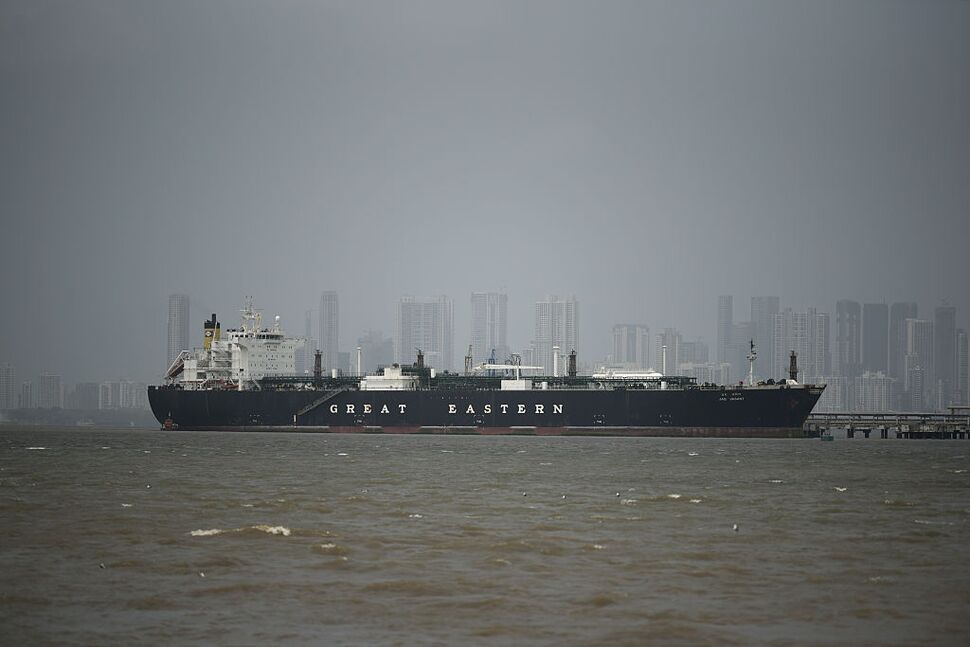
The Washington Post takes a probing look at the Iran War’s economic consequences. American forces pull off a daring mission to rescue a downed American pilot in Iran. And a battered but defiant Tehran faces a new deadline for opening the Strait of Hormuz.
When it comes to the latest war in the Middle East, a lot happened over the weekend. Here at Decision Points, we thought we’d give you the main developments.

Sign Up for U.S. News Decision Points
Your trusted source for breaking down the latest news from Washington and beyond, delivered weekdays.
By clicking “Sign Up”, you will receive the latest updates, including emails, from U.S. News & World Report and our trusted partners and sponsors, and you agree to our Terms and Conditions & Privacy Policy.
More Economic Shocks?
The war has already wreaked havoc on parts of the world economy – in fact, unless you have family serving in the U.S. military, it’s probably the main way you’ve felt the effects of the conflict: soaring gas and diesel prices that threaten to make everything more expensive.
“Amazon is adding a fuel surcharge to its e-commerce deliveries,” he wrote. “Mortgage rates have risen to their highest mark in seven months. And consumers may soon see higher prices for soda bottles and detergents.” Rising energy bills and supply shortfalls will hurt, Lynch said.
Still, he notes, the U.S. economy has proven quite resilient since the pandemic. Asia and Europe will feel the crunch first – and worst.
But Lynch quoted experts as warning that the war will push U.S. inflation higher.
A Daring Rescue
If a Hollywood screenplay had Iranians shooting down an American fighter jet on Good Friday and the U.S. announcing the rescue of a crew member on Easter, you might roll your eyes.
But that’s what happened. On Friday, Iran shot down an F-15E in the first known downing of a manned American aircraft by enemy fire since the war began. Both crew members ejected. U.S. forces quickly rescued the pilot, but the weapons officer proved to be harder to find and exfiltrate from Iran.
The New York Times has a riveting account of the operations that ultimately led President Donald Trump to exult “WE GOT HIM” just after midnight on Sunday morning. The CIA played a pivotal role in locating the second officer, paving the way for special operators to rescue him.
Of note: The wounded airman “evaded Iranian forces for more than 24 hours, eventually hiking up a 7,000-foot ridgeline and hiding in a crevice,” the Times reported.
Not everything went smoothly.
“In a final twist after the weapons officer was rescued, two transport planes that would carry the commandos and the airmen to safety got stuck at a remote base in Iran,” the Times reported. “Commanders decided to fly in three new planes to extract all the U.S. military personnel and the airman, and they blew up the two disabled planes rather than have them fall into Iranian hands.”
If all of this is accurate – and early reports from war zones often are not – wow.
A New Deadline, Again
Trump has apparently set another new deadline for Iran to reopen the Strait of Hormuz – or face the prospect of devastating strikes on its power plants and bridges. “Tuesday, 8:00 P.M Eastern Time!” he posted on social media Easter afternoon.
For weeks, Trump has fumed at Iran and American allies alike over the closure of the narrow waterway, a conduit for about 20% of globally traded oil, as well as fertilizer crucial for farmers and helium that is vital for making microchips.
He has also set – then postponed – the deadline by which he wants Iran to stop throttling ship traffic. Just on Saturday, at 10:05 a.m., he had posted that Iran had just “48 hours before all Hell will reign (sic) down on them.”
“Tuesday will be Power Plant Day, and Bridge Day, all wrapped up in one, in Iran. There will be nothing like it!!! Open the F—— Strait, you crazy bastards, or you’ll be living in Hell – JUST WATCH!” he posted, adding: “Praise be to Allah.”
That prompted the speaker of Iran’s parliament, Mohammad Bagher Ghalibaf, to respond on social media“Our whole region is going to burn because you insist on following (Israeli Prime Minister Bibi) Netanyahu’s commands.”
Iran has said it would retaliate for strikes on its power plants with strikes on critical infrastructure in Israel and some of its Arab neighbors, a move that could have both a human and economic toll.