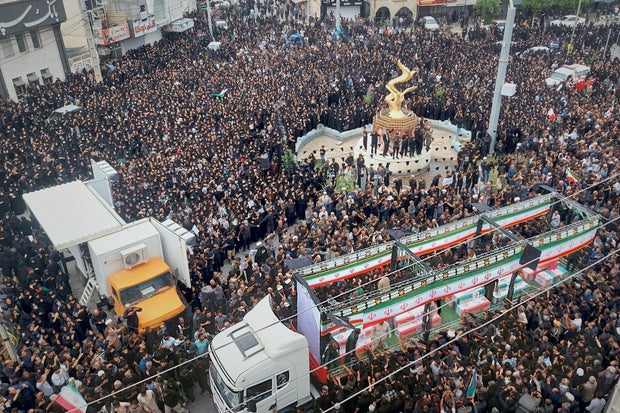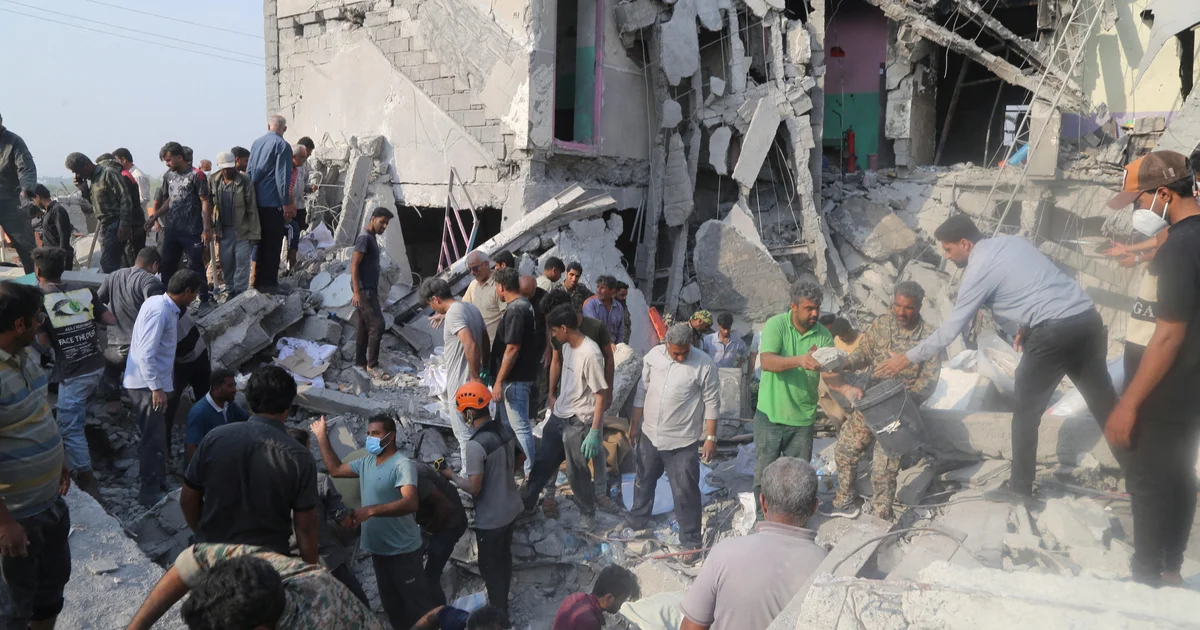
Mourners gathered in the Iranian city of Minab last week for the funerals of victims of what Iranian authorities say was a deadly air strike at a girls’ school on the first day of the U.S.-Israeli military offensive.
Defense Secretary Pete Hegseth and Secretary of State Marco Rubio have said that the Pentagon is investigating. Israel’s military was not operating in the area at that time, two sources told CBS News.
A preliminary U.S. assessment suggests that the United States was “likely” responsible for the deadly attack but did not intentionally target the school and may have hit it in error, possibly due to the use of dated intelligence which wrongly identified the area as still part of an Iranian military installation, a person briefed on the preliminary intelligence told CBS News.
Iranian authorities said the explosion in Minab, in Iran’s southern Hormozgan province, took place on Saturday, Feb. 28, and is the largest single loss of civilian life so far reported in the conflict. Iranian health officials and state media say about 170 people were killed, most of them schoolgirls between the ages of 7 and 12 years old.
Journalists from international news organizations have not had unfettered access to the location to independently verify the toll or the circumstances. Iranian authorities have to give explicit approval to foreign media organizations wishing to report outside Tehran.
Here is what we know so far:
Video footage and photos
Footage filmed from a parking lot showed black smoke billowing from a damaged building adorned with murals featuring drawings of crayons, children and an apple.
CBS News has geolocated the clip to a building in Minab. Iranian media identified the building as the Shajareh Tayyebeh elementary school. Saturdays are regular school days in Iran.
CBS News has also confirmed the building was located in close proximity to two sites controlled by the Islamic Revolutionary Guard Corps, including the IRGC Seyyed Al-Shohada Barracks.
Abbas Zakeri/Mehr News/WANA via Reuters 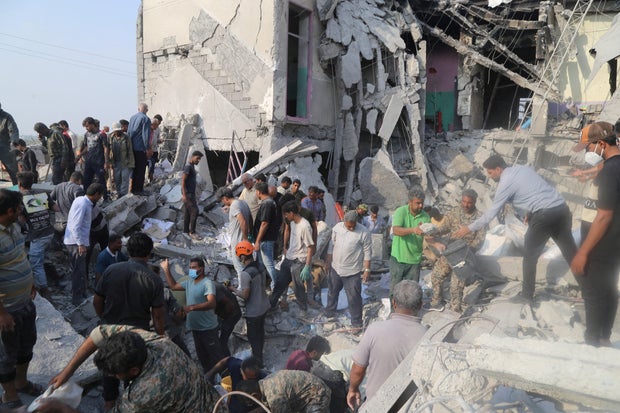
The Shahid Absalan clinic, under the supervision of the IRGC navy’s medical command, lies 780 feet from the site, Agence France-Presse reported.
Minab is strategically located close to the Strait of Hormuzone of the world’s most vital shipping lanes, especially for oil and gas.
CBS News analysis of satellite images provided by Planet Labs shows that the school appears to be one of several buildings struck in the area on Feb. 28. Before-and-after images show a building that appears to be within the compound of a known Iranian military base that was destroyed, along with another building in which a hole can be seen in the roof on the later photo.
Planet Labs PBC via Storyful/CBS News analysis 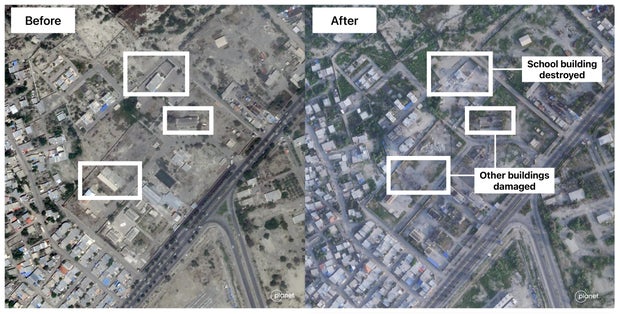
Newly surfaced video, uploaded on Sunday by Mehr News, a semi-official Iranian news agency, appears to show a Tomahawk cruise missile striking an Revolutionary Guard facility near the school, according to a CBS News analysis and multiple weapons experts.
The United States was the only country involved in the conflict at the time that is known to have this kind of weapon in its arsenal, two experts told CBS News.
Dr. N.R. Jenzen-Jones, director of the Armament Research Services (ARES), told CBS News that the weapon is a U.S. Tomahawk missile. “Given the belligerents, the use of this munition indicates it is a U.S. strike, as Israel is not known to possess Tomahawk missiles,” he said. He added that neither Iran, Israel, nor the Gulf states have Tomahawks in their arsenals.
Wes J. Bryant, a defense and national security analyst and former Pentagon adviser on precision warfare and civilian protection, also identified the missile in the video as a Tomahawk. Additionally, Trevor Ball, a munitions expert who was first to verify the footage for Bellingcat, a research collective, said the missile is a Tomahawk.
What Iran says
Iranian state television and a local official identified the site as the Shajareh Tayyebeh girls’ elementary school in Minab.
Iran has said more than 170 people were killed in what President Masoud Pezeshkian described as U.S.-Israeli strikes on the school.
Pezeshkian said on social media that “attacks on schools target a nation’s future,” and that a hospital was also hit.
“Targeting patients and children blatantly violates humanitarian principles,” he said. “The world must condemn it. I stand with my grieving nation. Iran will not remain silent or yield to these crimes.”
According to state media, Iran on Tuesday held funerals for at least 165 people including students killed in the alleged strike.
Iranian Foreign Media Department/WANA/Handout via REUTERS 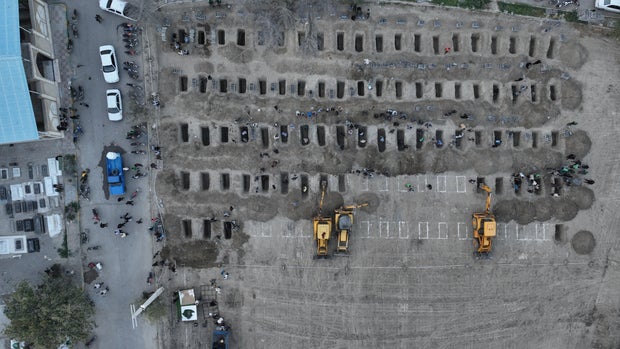
Hossein Kermanpour, a spokesman for Iran’s health ministry, claimed in a post on X that dozens killed at the school were “young child martyrs.”
State television carried images showing a large crowd of mourners in Minab weeping over what appear to be bodies wrapped in white shrouds. Other images released by state media on Tuesday show individuals preparing coffins draped in the Iranian flag — some bearing photographs of children.
A third clip also shared by state media shows a large crowd gathered around similar caskets with a caption in Persian reading: “Prayer service for the children of Minab who perished.”
Another aerial image showed excavators digging out at least 100 graves at an unidentified mass burial sites.
Pentagon investigation
When asked by BBC News on Wednesday about the alleged incident at a news briefingDefense Secretary Pete Hegseth said the Pentagon was investigating.
“All I can say is that we’re investigating, and that we of course never target civilian targets,” Hegseth said, without elaborating.
Secretary of State Marco Rubio on Monday said that the United States would not intentionally target a school.
“The United States would not deliberately target a school. Our objectives are missiles, both the ability to manufacture them and the ability to launch them,” he told reporters.
The White House principal deputy press secretary Anna Kelly said in a statement Friday: “This investigation is ongoing. There are no conclusions at this time, and it is both irresponsible and false for anyone to claim otherwise. As we have said, unlike the terrorist Iranian regime, the United States does not target civilians.”
But a person familiar with the ongoing inquiry says investigators believe the U.S. may have been responsible, because the U.S. was operating in the area while Israel was not. No final conclusions have been reached, the source said.
Israel not aware of “any connection”
Two sources familiar with the situation tell CBS News that Israel was not operating in the area of the school. This includes an Israeli source, who said Israel was not behind the attack and that the Israeli air force was not operating near the school.
Israeli military spokesman Nadav Shoshani told CBS News that the IDF had not “found any connection to our operations,” when asked about the incident.
Asked by CBS News’ Matt Gutman if he was saying the claim of a strike on the school was Iranian misinformation, Shoshani said he was suggesting “caution when using information that’s provided by a regime that massacres their own people.”
Shoshani also told reporters: “At this point not aware of an Israeli or an American strike there. … We’re operating in an extremely accurate manner.”
“Ensure accountability”
United Nations human rights chief Volker Turk is calling for a prompt, impartial and thorough investigation into the attack.
U.N. human rights office spokeswoman Ravina Shamdasani said, “The onus is on the forces that carried out the attack to investigate it.”
Norway-based rights group Hengaw said it was seeking information about the identities of the victims. In a statement, the organization said that at the time of the incident, the Shajare Tayyebeh school was holding its morning session and reportedly had about 170 students present.
The rights group said that the strike’s intended targets were reportedly the nearby IRGC facilities — a claim that news outlets have not been able to independently verify.
“The establishment and expansion of military facilities in close proximity to schools and public spaces place civilians at heightened risk,” Hengaw said.
Abbas Zakeri/Mehr News Agency via AP