


By Amir Orusov and Anastasiia Kozlova
April 23 (Reuters) – European logistics companies are expected to report higher first-quarter profits, benefiting from the turmoil created by the U.S.-Israeli war with Iran, but analysts said the conflict clouds their future outlook.
While heightened supply‑chain complexity typically supports profitability for logistics companies such as DHL, DSV and Kuehne+Nagel, many analysts have warned that the longer‑term effects of the energy shock and broader economic fallout could weigh on demand later in the year.
In a note to clients, Jefferies analysts said Kuehne+Nagel’s management do not expect further yield pressure in sea or air business in the first quarter. That reinforced their view that earnings have stabilised and are set to improve, the brokerage said.
Jefferies analysts also said periods of geopolitical turmoil have historically promoted sea-to-air spillover, where DHL is structurally advantaged.
AIRFREIGHT VOLUMES RISING FASTER
While airfreight volumes are expected to grow at a high single‑digit rate in the quarter, seafreight volumes are forecast to rise only at a low single‑digit pace year on year, Bernstein analysts said in a note.
Seafreight volumes have been weighed down by tough comparisons after shippers front‑loaded cargo ahead of U.S. import tariffs in April 2025, they said.
Attention is also turning to DSV’s capital markets day on May 12, where analysts are looking for updated medium‑term financial targets. “The potential for upside surprises on the day is meaningful,” Bernstein said.
MIDDLE EAST CONFLICT IMPACT ON FREIGHT MARKETS
Following a weekend escalation in the Middle East conflict, ships have largely been avoiding the Strait of Hormuz, deepening uncertainty along a major trade route that had already been disrupted by the conflict.
The resulting strain on regional transport networks has also contributed to sharply higher air cargo costs, as strong demand collides with elevated jet fuel prices and tighter capacity linked to the prolonged disruption.
The impact is being felt well beyond the Gulf. Heightened regional tensions have also reinforced risks in the Red Sea, delaying expectations for a near‑term resumption of transits through the Suez route.
Rico Luman, senior economist at ING Research, said “full resumption is now pushed back multiple months and perhaps even until the end of the year,” which should be supportive for logistics companies in the short term.
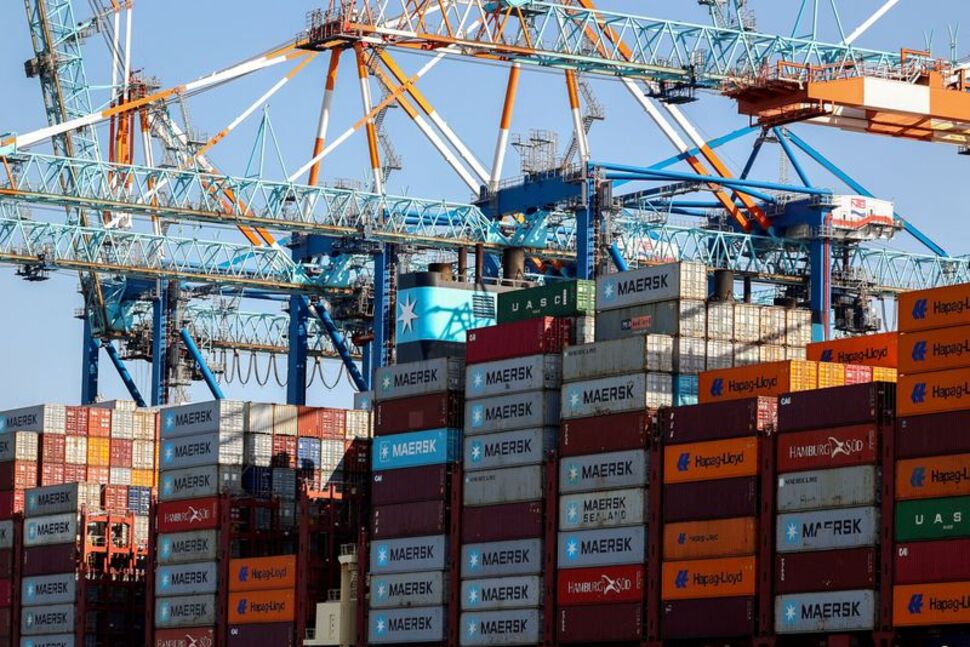
Global shippers including Maersk and Hapag‑Lloyd have rerouted vessels around the Cape of Good Hope since the outbreak of the war, a shift that is keeping freight rates elevated and boosting margins as higher prices flow quickly through shipping lines’ largely fixed cost bases, Morningstar analyst Ben Slupecki said.
Even if the conflict is resolved, analysts do not expect global freight markets to normalise quickly.
Freight rates may fall after a peace deal allows traffic to resume through the Strait of Hormuz, but any decline is likely to be gradual as supply chains have adjusted and congestion has abated, with shippers expected to continue exploring alternative routes and ports, suggesting pre‑conflict trading patterns may not fully return, Luman said.
(Reporting by Amir Orusov and Anastasiia Kozlova; Editing by Matt Scuffham)
Copyright 2026 Thomson Reuters.
Photos You Should See – April 2026

