The U.S. and Israel underestimated Iran’s capabilities and it’s unlikely the regime will collapse, according to a Middle East analyst, who warned that Iran could now be more determined to obtain nuclear weapons.
In an interview with CBS News on Tuesday, Danny Citrinowicz, a nonresident fellow at the Atlantic Council, a nonpartisan think tank, said he believes the chances of regime change are “very slim,” especially without the use of ground troops — which would be a potentially disastrous gambit, he said.
“We had our hopes too high,” he said. “If somebody thinks that by air campaign, you can topple this regime, despite the fact that it’s weak, but it’s still very strong, I think we should think twice.”
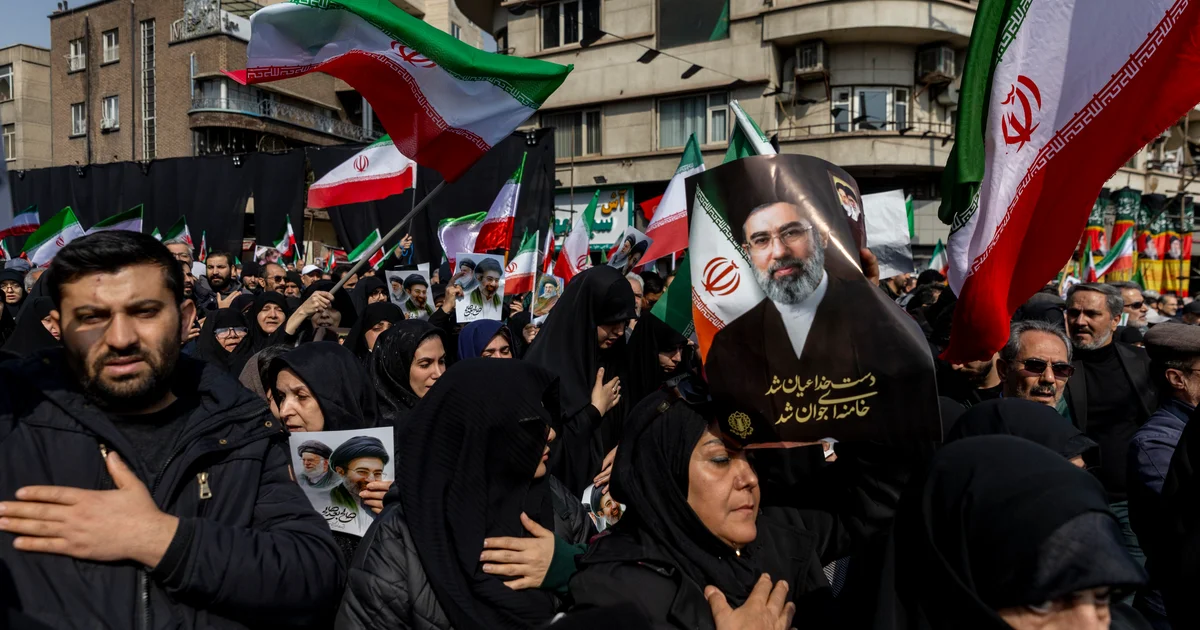
Mojtaba Hosseini Khameneithe second son of former Supreme Leader Ayatollah Ali Khamenei who has operated quietly behind the scenes for years, was named Iran’s new supreme leader after his father was killed during the initial airstrikes on Tehran on Feb. 28.
Citrinowicz said that if the war ended today, he would not consider it a victory for the U.S. “because the regime is not going to capitulate, not in a million years.”
“As long as this regime is there, [there will be] no unconditional surrender,” he said, adding that the regime is not going to give up its missile or nuclear capacity.
He said the new supreme leader could instead “cross the Rubicon towards a nuclear bomb.” According to Citrinowicz, the late ayatollah “was afraid to cross that threshold,” though he pushed to enrich uranium.
“They don’t have anything else that can deter Israel or U.S. to attack them in the future,” he said. “They will have to find something else. And the something else might be a nuclear bomb.”
Citrinowicz, who served for 25 years with Israeli military intelligence, also questioned the U.S. and Israel’s planning of the strikes on Iran and the exit strategy, arguing it was based on a “flawed assumption” that the regime would collapse if Ali Khamenei was killed.
“All the Iranian experts knew that it’s not going to be the case, that this institution is much more stronger than the human being,” he said. “But it was very hard to convince those in [the] administration.”
“This is why it’s very hard to think now how this war is going to end,” he added, saying there are “major problems in the strategy.”
President Trump has offered shifting timelines for when the war could end, ranging from weeks to “very soon.”
On Monday, Mr. Trump said the U.S. has “already won in many ways, but we haven’t won enough. We go forward more determined than ever to achieve ultimate victory that will end this long running danger, once and for all.”
When asked Wednesday if he could declare victory if the supreme leader remains the ayatollah’s son, Mr. Trump said, “I don’t want to comment on that.”
Gulf states have also been drawn into the war, as Iran hits them with missile and drone strikes. Citrinowicz said it could be a strategy by Iran to put pressure on the Trump administration and Israel to end the military operation.
“For them, the Gulf States are the weakest part of the chain in terms of the fact that they assume they can pressure them,” he said. “They don’t have resilience. And this is why they will pressure, eventually, President Trump to stop the war. And I’m not sure that they are mistaken, by the way.”