


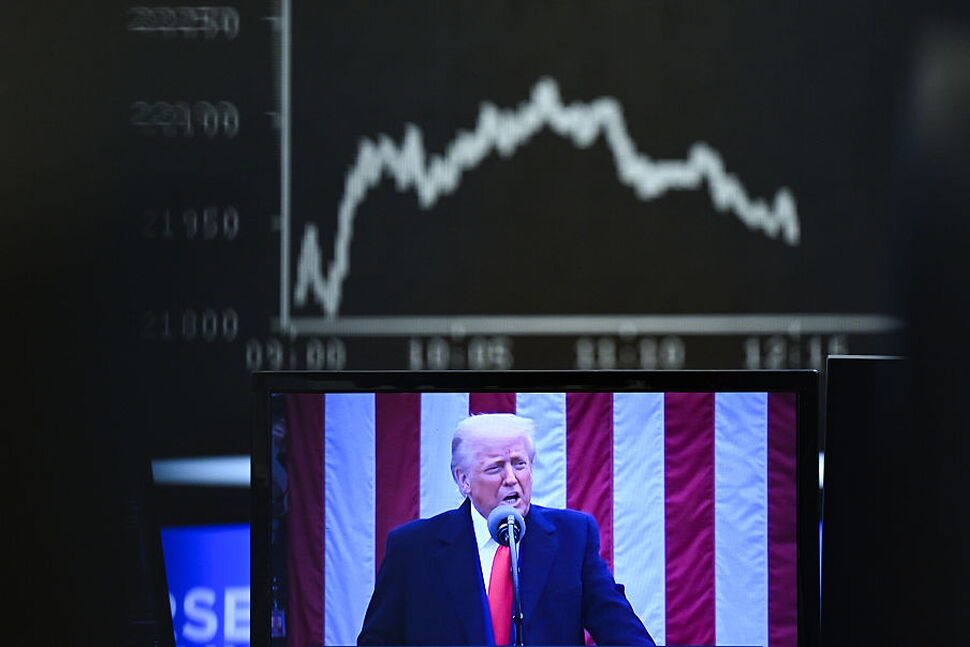
President Donald Trump made it to the White House for a second time largely on promises to lick inflation and rev up the U.S. economy with deregulation, tax cuts and increased business investment.
And he has had success. Technology firms are investing billions in software and equipment to further their use of artificial intelligence, tax cuts brought fatter IRS refund checks to Americans this spring and businesses are pushing mergers as regulators appear more friendly.
But inflation is the 800-pound gorilla in the room. Recent reports showed consumer prices rising in April at a 3.8% annual pace, the highest since 2023, while wholesale costs rose 6% in the month. That is the largest spike since 2022, when President Joe Biden was grappling with the effects of the COVID-19 pandemic.


Sign Up for U.S. News Decision Points
Your trusted source for breaking down the latest news from Washington and beyond, delivered weekdays.
By clicking “Sign Up”, you will receive the latest updates, including emails, from U.S. News & World Report and our trusted partners and sponsors, and you agree to our Terms and Conditions & Privacy Policy.
It is often a mistake to place too much credit or blame for the economy on presidents – many external and international forces can affect what happens. But Trump’s pursuit of a war with Iran and the resulting surge in energy costs – gasoline is now at $4.50 a gallon – were his own doing. And so were his sweeping import tariffs announced in April 2025, which sent $100 billion in added costs trickling down to consumers before most were struck down by courts.
In other words, Trump’s economy would be doing even better if it weren’t for, well, Trump. Without those two moves, inflation would probably be closer to 2% (the Federal Reserve’s official target) than 4%.
The official word from the Fed is that the U.S. economy “has been expanding at a solid pace.” Gross domestic product rose 2% in the first quarter, which after a 0.5% bump in the fourth quarter is starting to form what economists like to call a trend. Even the labor market is showing some signs of improvement, with 115,000 jobs created in April, well above expectations. And the stock market has been hitting new highs. While around 62% of Americans own stock, that is concentrated heavily among those who earn $100,000 or more a year.
Which brings us back to the price of eggs and the average consumer. While egg prices may currently be down, the cost of beef rose 2.7% in April, and fruits and vegetables were up 1.8%. Unlike gasoline, grocery prices don’t seem to fall once they have risen.
Then there is the cumulative effect of higher prices dating back more than five years, during which prices on many necessities have increased by 25% to 30%.
“If you go back to January of 2021 when inflation started to pick up, now I am poorer than I was before and even a little bit of inflation is a problem,” says Dan North, senior economist for North America at Allianz Trade.
Trump seems somewhat out of step with most consumers, who have a hard time seeing how oversized bets on artificial intelligence or a booming stock market help them with everyday concerns like the cost of groceries or health care.
Asked recently whether he was concerned the war with Iran was affecting the finances of Americans, the president was adamant.
“I don’t think about Americans’ financial situation,” Trump said. “I don’t think about anybody. I think about one thing – we cannot let Iran have a nuclear weapon. That’s all.”
The problem is Americans seem more concerned with their pocketbooks than Trump is.