


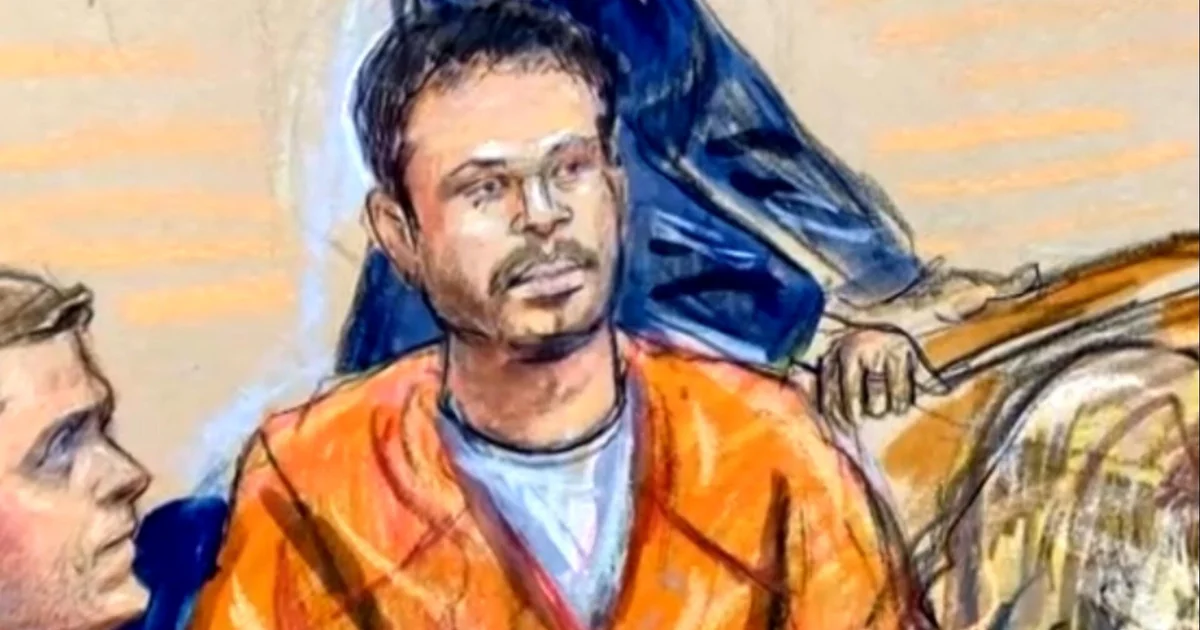
A federal judge on Monday sharply criticized the treatment of accused White House Correspondents’ Dinner attacker Cole Allenat one point apologizing to the defendant for what he saw as overly restrictive and punitive conditions at the D.C. jail where he is being held.
Prosecutors have charged Allen with attempting to assassinate the president and two firearm charges. They say Allen — armed with a shotgun — sprinted through a security checkpoint one story above the ballroom for the April 25 dinner at the Washington Hiltonwhere President Trump, top administration officials and members of the press corps were among the 2,600 guests.
Lawyers for Allen have agreed that the alleged would-be presidential assassin will remain jailed while awaiting trial, but have pushed back on his treatment there. They say Allen was placed on suicide watch shortly after arriving at jail last week, meaning he was held in a padded cell with the lights on constantly and no access to a phone or tablet. A day later, he was downgraded to suicide precautions, which still sharply limited his access to a phone and ability to leave his cell, his lawyers said.
On Friday, Allen’s lawyers said he was reassessed and deemed not to be a risk, but was still held in a form of protective custody that resulted in him being held separately.
U.S. Magistrate Judge Zia Faruqui on Monday pressed a representative of the D.C. Department of Corrections about conditions at the jail, including allegations from Allen’s lawyers that the defendant was denied access last week to a Bible, that his tablet has not been set up yet, and that he wasn’t able to meet with his legal team privately last week.
At one point, Faruqui told Allen he was “very troubled” by the “conditions you’ve been treated to.”
The judge also apologized to Allen for the issues in the first week of his detention.
Tony Towns, the D.C. Department of Corrections’ acting general counsel, said the issues raised at the hearing will be worked out in the coming days. Towns said a tablet that would allow Allen to read court filings and access legal materials would be set up soon.
Towns said a psychiatrist had assessed that Allen was a suicide risk, though the medical form from that evaluation was not in the record. Faruqui said he wanted to see the form.
Towns also said there is a separation order for Allen, meaning he did not travel to court Monday with other defendants and is kept in his cell separately from other inmates.
“We don’t really know how to keep him safe, your honor, outside of separation,” Towns said.
Faruqui replied: “That seems to be a problem then.”
Faruqui — a frequent critic of the Justice Department’s handling of cases — said he was worried about what might be happening to lower-profile criminal defendants.
He also said he is “fascinated and concerned” that Allen has been treated differently from many now-pardoned Jan. 6 defendants, who Faruqui said were often assigned to medium- or low-security prisons and weren’t held in complete isolation.
“A lot of people seem to have forgotten January 6,” Faruqui said. “Pardons may erase convictions, but they do not erase history.”
While the charges against Allen “could not be more serious,” Faruqui said, “I’m not understanding how we are where we are.”
U.S. Attorney for D.C. Jeanine Pirro criticized Faruqui after the hearing, writing on X that Faruqui “believes a defendant armed to the teeth and attempting to assassinate the president is entitled to preferential treatment in his confinement compared to every other defendant.”
Assistant U.S. Attorney Jocelyn Ballantine, who is prosecuting the case, alleged Monday that Allen told FBI agents after the attack that he did not expect to live.
“It’s clear he did not expect to survive it, which gives rise to potential concern for suicide,” Ballantine said.
Faruqui ordered the D.C. Department of Corrections to update the court by Tuesday morning on how long it will take for officials to determine where Allen will be detained ahead of trial.
If the answer is not soon, Faruqui said he would schedule another hearing to hear a justification.
Towns told Faruqui that the process to determine where Allen will be held is still underway, but that he would get an answer as soon as possible.
“DOC’s main concern is his safety as well as his health,” Towns said, adding that a prison housing board meeting would be held soon to determine where he stays.