


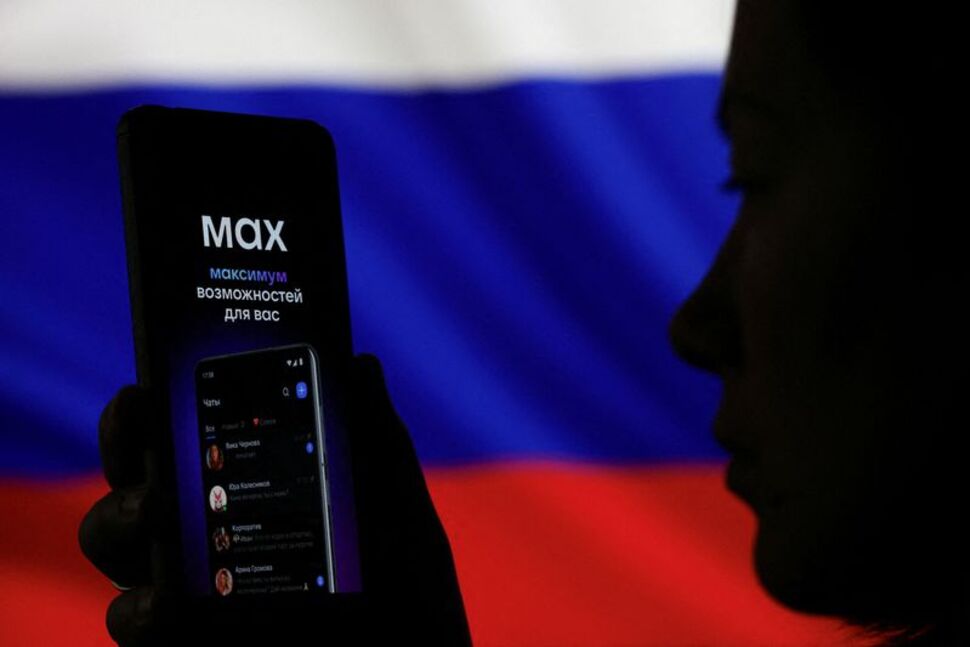
April 3 (Reuters) – The Kremlin is pushing Russians to use state-backed messenger MAX, but some are wary about the service and say they do not want to download it at all.
In what has been cast by diplomats as Russia’s “great crackdown”, Russia has repeatedly blocked mobile internet and granted sweeping powers to cut off mass communications while jamming messenger services and virtual private networks.
In their place, Russia has aggressively promoted MAX, which casts itself as a “national messenger” and is owned by a company whose boss is the son of one of Putin’s top aides.
‘I TRY TO USE IT AS LITTLE AS POSSIBLE’
For some Russians, the corralling is a step too far.
Irina Matveeva, a saxophonist in Moscow, installed MAX because she needed it to communicate with her students.
“But I am not happy with this situation,” Matveeva told Reuters at the Rhythm & Blues Cafe in Moscow where she plays in the “Good Gollys” band. “I try to use it as little as possible.”
Matveeva said the blocking of Telegram was confusing and annoying, and described the frustrations of switching between different messaging apps while grappling with VPNs and internet jamming.
Ten other Russians expressed similar scepticism about MAX. Another two said they enjoyed using it and had largely forgotten Telegram and WhatsApp, which are partially jammed in Moscow.
OFFICIALS CHAMPION ‘NATIONAL MESSENGER’
Russian officials say a national messenger is needed because hostile intelligence services have penetrated foreign messaging applications such as Telegram and that Moscow has to ensure security with a push towards a “sovereign” internet.
MAX’s owner, VK, did not reply to a request for comment. It said on March 26 that MAX had added 107 million users since it was launched a year ago, and that the app was used across the world including Russia and former Soviet states, as well as Asia, Africa, Latin America and the Middle East.
Opposition activists say Russian security services have access to data on MAX and that artificial intelligence scans the data to watch for potential threats to the state – and even to understand domestic opinion and dissent.
One Russian who gave his name only as Danil said he was happy to support a domestic messenger and that he used MAX without concern.
But others are perturbed after years of enjoying the relative freedom of messaging.
“I intentionally ask my inner circle not to download it because Telegram is closer to me,” Olga Kravets said.
Russians have a long history of quietly resisting censorship, from sophisticated satire under the Tsars to the clandestine publishing and copying, or “samizdat”, of banned poetry and literature in the late Soviet period.
APPS ‘SHOULD BE A PERSONAL CHOICE’
One Russian said that she was forced to download MAX because the state service portal known as Gosuslugi – which administers everything from passports and driving licenses to university entrance and hunting permissions – demanded a confirmation number be sent to the app.
“I kept it on my phone to use it in case everything else is shut down. But I do not plan to use it,” said Anna, who refused to give her second name given the sensitivity of the situation.
Denis Kuskov, the head of the TelecomDaily information portal, said he felt it was wrong to demand the entire population downloaded MAX before the app was working perfectly.
He was not installing it for now.
“Not because I am afraid to do so,” he said. “But because I believe that installing an app or ordering a service should be a personal choice.”
(Reporting by Ekaterina Maksimova and Evgeniy Matveev; Writing by Guy Faulconbridge; Editing by Andrew Heavens)
Copyright 2026 Thomson Reuters.
Photos You Should See – April 2026

