


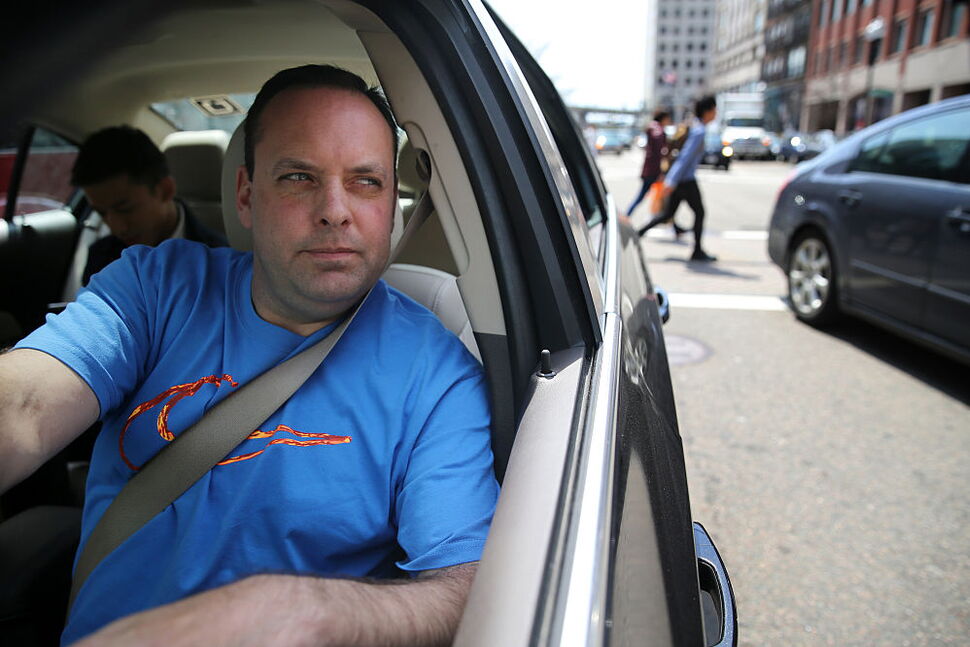
Massachusetts may have just taken the wheel when it comes to “gig” worker rights.
Drivers for apps like Uber or Lyft have officially unionized in the Bay State – an unprecedented step that could set the stage for similar collective bargaining drives across the country.
This week’s announcement from the App Drivers Union is by no means the end of the road. But for the roughly 70,000 drivers the ADU says it will represent – and workers like them around the country – it could be a road map to better benefits. What it means for consumers is an open question.
(I’ll try to spare you more driving imagery. Don’t want you to tire of my writing. Oops.)
The ADU is something of a start-up but is backed by the 32BJ Service Employees International Union and the International Association of Machinists and Aerospace Workers, both potent labor unions.


Sign Up for U.S. News Decision Points
Your trusted source for breaking down the latest news from Washington and beyond, delivered weekdays.
By clicking “Sign Up”, you will receive the latest updates, including emails, from U.S. News & World Report and our trusted partners and sponsors, and you agree to our Terms and Conditions & Privacy Policy.
The ADU can now begin contract negotiations with businesses like Uber or Lyft. Have you ever really engaged a ride-hail driver? I can tell you they aren’t happy with their share of what you pay. And women drivers, in particular, have concerns about their safety.
Any actual bargaining agreement will need support from a majority of active app drivers.
The Drivers’ Wallet
To get a sense of the tangible benefits for newly unionized drivers, Decision Points talked with April Verrettpresident of the national Service Employees International Union.
“From my perspective, the tangible benefit is that for the first time in history, ride-hail drivers get to sit down at a table with their boss, the company, and bargain,” she said. “And if the companies don’t come to the table and bargain in good faith, the law brings real consequences – that is better than most workers in this country have right now.”
Verrett said driver pay and safety are likely topics for any negotiations. She also noted the potential for collective car insurance purchasing could be a benefit for unionized drivers.
But she raised the issue of deactivation, which is when a driver loses access to the app and therefore to their means to earn a living. Ride-hailing companies can do this at any time.
“Right now these drivers are at the whim of the app, of the algorithm, and they can get kicked off or deactivated at any time, and you know it basically puts them out of work,” she said.
The Consumer’s Wallet
Ride-hailing apps aren’t just going to absorb higher pay and better benefits for drivers. The odds are good that they will find a way to pass them along to consumers.
“The fact is, consumers have been seeing their ride-share fares increase without a union. That has been how companies continue to make money,” Verrett said. “And so I think anyone that tries to put that at the feet of unionization clearly would be mistaken.”
“I believe consumers will see benefits from it. You’ll have a more stable, confident, well-compensated workforce,” she added. “So, I think that you’ll get a better quality
In many cities, ride-hailing apps have displaced cabs, which cost more and offered no particularly specialized service in the GPS era. But apps like Uber and Lyft now face competition from driverless services like Waymo. (Disclosure: I took my first two Waymo rides last week. Among my takeaways: It’s weird to see the language on the steering wheel advertising the presence of an air bag.)
A National Drive?
The ADU’s journey really began with a November 2024 ballot initiative in which Massachusetts voters gave ride-hailing drivers the right to organize and bargain as a collective. The measure neither automatically gave them union representation nor reclassified them from independent contractors to employees.
Massachusetts is not the only state where this push is happening. In October 2025, California Gov. Gavin Newsom signed a law giving drivers for ride-hailing apps the right to unionize. Similar efforts are underway in Minnesota and Illinois.
So is Massachusetts a model for a national push to unionize “gig” economy workers?
“I think it definitely can be a model, ” Verrett said. ”This is the largest private-sector unionization … since 1941. And at that time it was Ford, auto workers, manufacturing.
“I believe that this is laying the foundation for us to build the next iteration of worker power around service-sector workers and (those) who are so closely aligned with tech.”
But will consumers worried about the cost of living become voters eager to pump the brakes on this movement? They’ll have their say either directly at the ballot box or by pushing against legislative efforts to advance driver unionization.