


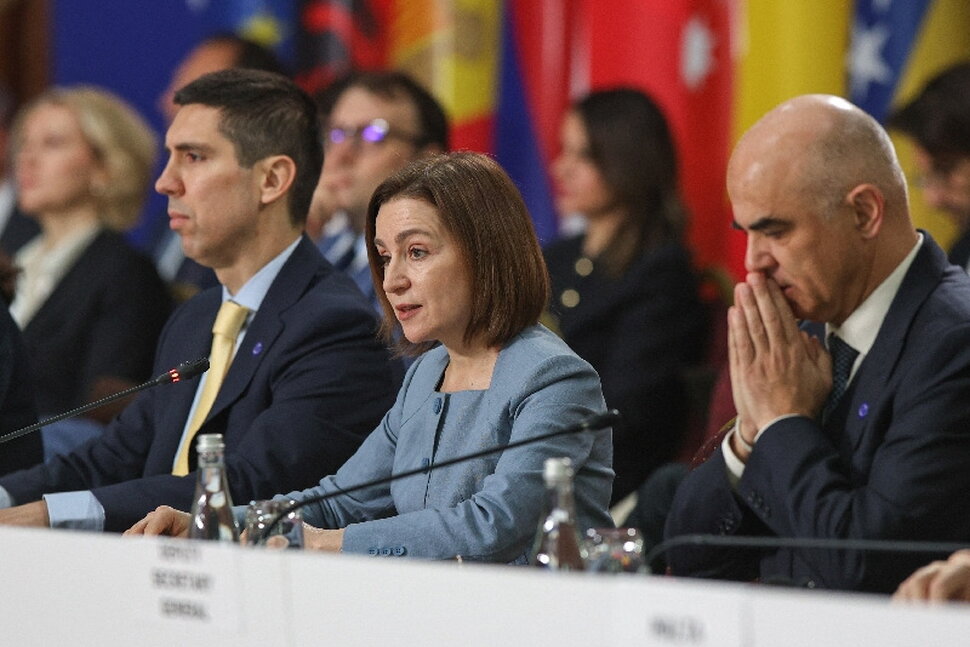
CHISINAU, May 17 (Reuters) – Moldovan leaders denounced as a threat Russian President Vladimir Putin’s offer of simplified Russian citizenship for the country’s pro-Russian Transdniestria separatist enclave and contemplated measures to counteract it.
Transdniestria broke from Moldova in 1990 when it was still a Soviet republic and, despite a brief conflict two years later, has since existed largely in peace alongside the country.
A Russian military contingent of some 1,500 troops, which Russia sometimes describes as peacekeepers, separates the two sides and the enclave receives substantial Russian assistance.
Moldova’s government, which seeks to join the European Union by 2030, sees the enclave and the military presence as a means of Moscow exerting influence over its affairs. Last month, the contingent’s commanders were barred from entering Moldova.
Putin issued a decree on Friday, enabling Transdniestria’s 350,000 residents to secure Russian passports without meeting residence and other requirements. About half already hold Russian citizenship.
“Probably, they want more people to send to the war in Ukraine,” President Maia Sandu, a frequent critic of Russia’s invasion of its neighbour, told a conference in Estonia on Saturday.
“It’s probably one way to threaten us again, because Russia does not like the actions we have been taking on reintegration on the economic and financial (sectors). The people in the Transdniestria region have to think twice.”
She said many of the region’s residents had already secured Moldovan passports to “feel safer” since the outbreak of war.
Moldovan Prime Minister Alexandru Munteanu, speaking late on Saturday, said his government was considering practical actions, as summoning the Russian ambassador to complain about Russian drones violating Moldovan airspace had had no effect on Moscow.
Ukrainian President Volodymyr Zelenskiy said Putin’s offer was tantamount to “Russia designating the territory of Transdniestria as supposedly its own”. He said Ukraine and Moldova would work out “a joint assessment and joint action”.
Russia’s ambassador to Moldova, Oleg Ozerov, told the state TASS news agency that the move was based on humanitarian grounds because of Moldova’s “increasing pressure on Transdniestria”.
Moldovan criticism of the decree, he said, amounted to “hypocrisy” as many Moldovans were obtaining passports from Romania, Moldova’s western neighbour.
(Reporting by Alexander Tanas, writing by Ron Popeski; Editing by Chizu Nomiyama)
Copyright 2026 Thomson Reuters.
Photos You Should See – April 2026

