


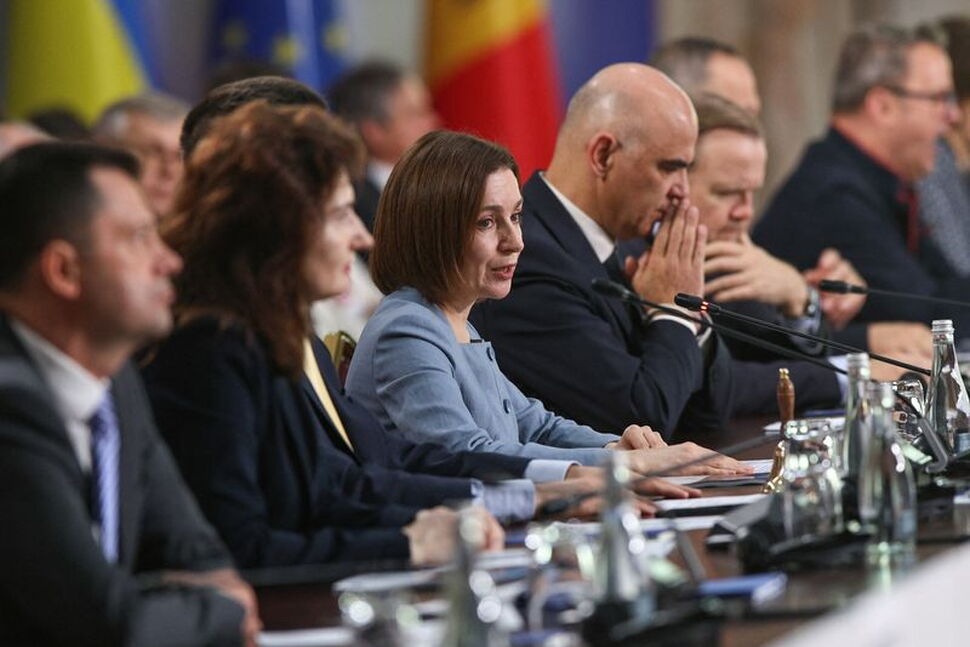
CHISINAU, June 7 (Reuters) – Moldova’s President Maia Sandu said the war in neighbouring Ukraine showed that her country badly needed high-technology interceptor drones and new legislation was required to facilitate their manufacture.
Moldova, which is seeking European Union membership by 2030, has dealt with numerous incidents of Russian drones flying over its territory or debris landing in areas near the border.
Sandu, a fierce critic of Russia’s invasion of Ukraine, expressed particular concern over a drone last month that struck a residence in Galati, a Romanian city near the border with Moldova and Ukraine, injuring two people.
Legislation is needed to allow Moldova, which is defined as a neutral state by its constitution, to develop its arms industry, she said in a podcast with a local blogger that was broadcast on Sunday.
“Those who want our country to be completely defenceless must understand that there is a risk that drones will fall on us and we won’t be able to do anything about it,” she said.
“I have asked the government, particularly in the context of recent events, to begin introducing or preparing legislative amendments.”
The legislation, she said, would allow for the creation of public and private partnerships for weapons development as well as include provisions for attracting foreign investors.
Sandu said Moldova had already launched consultations on developing drones with Ukraine, which has acquired expertise from more than four years of countering Russian drones and placed great emphasis on the production of interceptors.
“Ukrainians are the best in terms of interceptor drones,” she said. “We will try to secure technology from there to the extent that we can with our capabilities. In order to use these technologies, we must first build up a team of experts.”
Moldova’s military has taken no action in more than 20 instances in which Russian drones entered its airspace or drone debris landed near Moldovan settlements.
(Reporting by Alexander Tanas; Writing by Ron Popeski; Editing by Paul Simao)
Copyright 2026 Thomson Reuters.
Photos You Should See – April 2026

