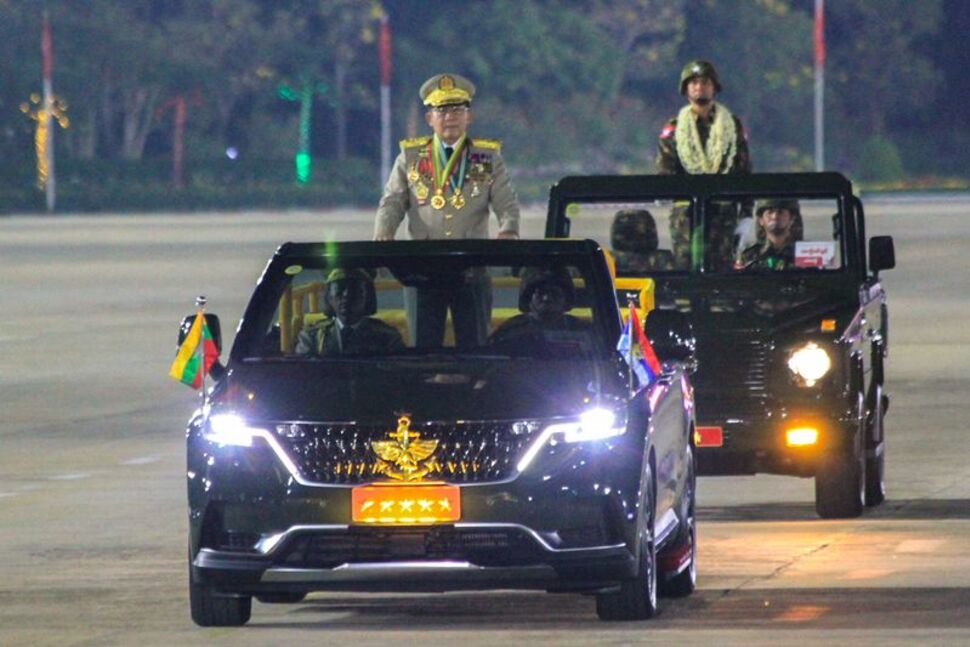
March 30 (Reuters) – Myanmar junta chief Min Aung Hlaing was nominated by a lawmaker on Monday for a parliamentary vote that will select the new president of the war-torn Southeast Asian nation, as the powerful general seeks a political role.
Min Aung Hlaing, who has led Myanmar’s military since 2011, was one of two people named as vice-presidential candidates by lawmakers from the country’s newly convened lower house of parliament.
The country’s upper house will also nominate a vice-presidential candidate, with both houses to select a president from the three in a later vote. A date for that vote has not been announced.
“Senior General Min Aung Hlaing is proposed as a vice presidential candidate,” Kyaw Kway Htay, a lawmaker from a military-aligned party, said on the floor of the lower house of parliament, according to a live broadcast of proceedings on state media.
The move follows a controversial election held amid raging conflict in December and January, won by the military-backed Union Solidarity and Development Party but widely derided as a sham by the United Nations and many Western countries.
Myanmar has been gripped by violence since a 2021 coup, in which the military, also known as the Tatmadaw, unseated the democratically elected government of Nobel Peace Prize winner Aung San Suu Kyi.
Under the country’s military-drafted 2008 Constitution, analysts say that presidential candidates cannot be active-duty military personnel or civil servants at the time of their nomination.
In a rare public signalling of transition by the military that has dominated Myanmar for decades, Min Aung Hlaing’s deputy said last week that the secretive institution’s leadership was set for a reshuffle.
“This has been Min Aung Hlaing’s goal all along,” said independent analyst Htin Kyaw Aye, pointing to the general’s potential presidential role.
“It’s just a shift from ruling as a military leader to ruling as president.”
Born to a family from Myanmar’s south, Min Aung Hlaing studied law before entering the military and rising steadily through the ranks, culminating in his promotion to military chief in 2011.
A rigid military leader and considered a ruthless operator, Min Aung Hlaing has also relied on a finely tuned ability to manage the country’s elites, using tactics that include handing important positions to loyalists and punishing political rivals, Reuters has reported.
(Reporting by Reuters staff; Writing by Devjyot Ghoshal; Editing by John Mair, David Stanway and Kate Mayberry)
Copyright 2026 Thomson Reuters.