


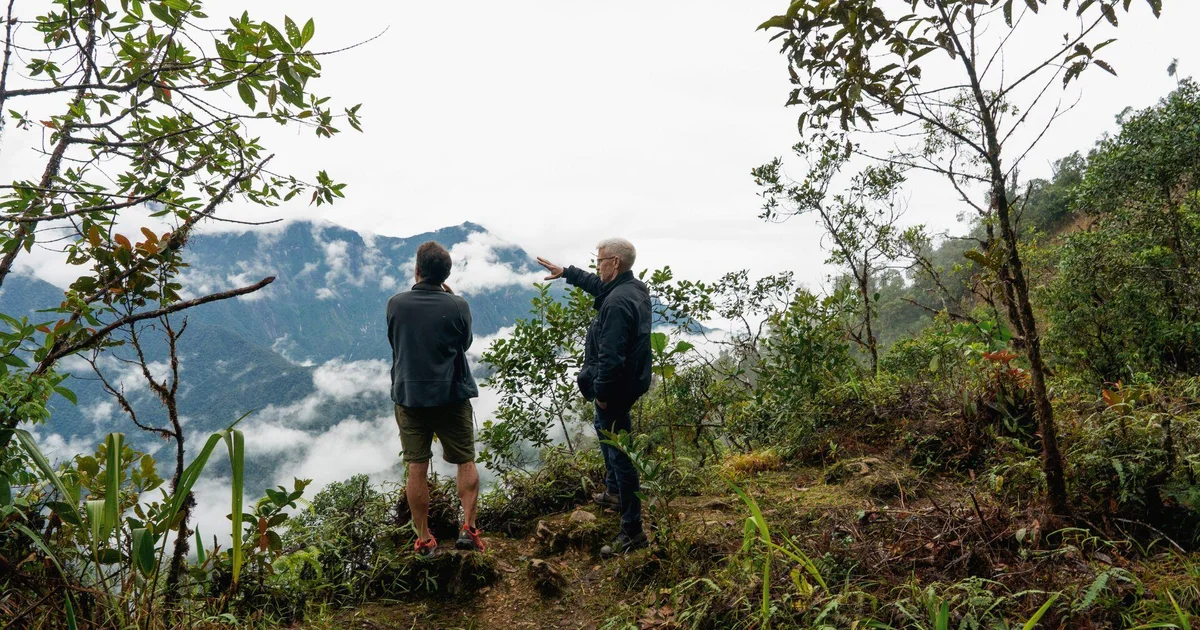
Diego Calderón Franco, a researcher and birding guide, was once kidnapped and held hostage by Marxist rebels in Colombia. Years later, he decided to introduce his former captors to bird-watching, thinking it might provide some of them with new careers as guides.
The Revolutionary Armed Forces of Colombia, a far-left group known by its Spanish acronym FARC, captured Calderón Franco in 2004 and held him hostage for 88 days. The group was embroiled in a decades-long conflict with the Colombian government. After reaching a peace agreement in 2016, nearly 10,000 fighters gave up their guns and started a search for work. Calderón Franco thought the former fighters might make good forest guides. So he introduced some of them to birding.
“We totally forgot who we were. They weren’t thinking, ‘Oh, this is the guy we kidnapped, you know, 15 years ago,'” Calderón Franco said of the changed relationship. “Birds connect you so much and I think that’s why they have this healing power.”
Why birding
There are roughly 11,000 bird species around the world and some 2,000 of them can be found in Colombia, according to Calderón Franco. More species of birds live in the South American country than anywhere else in the world.
Colombia’s diverse geography, which includes the Andes mountains, Amazonian jungles, deserts and grasslands, contributes to the country’s large bird population. Decades of fighting also play a role. The conflict between the government, left-wing guerrillas, right-wing paramilitaries and narco-traffickers made many parts of Colombia too dangerous for development. Many bird habitats were preserved as a result.
60 Minutes 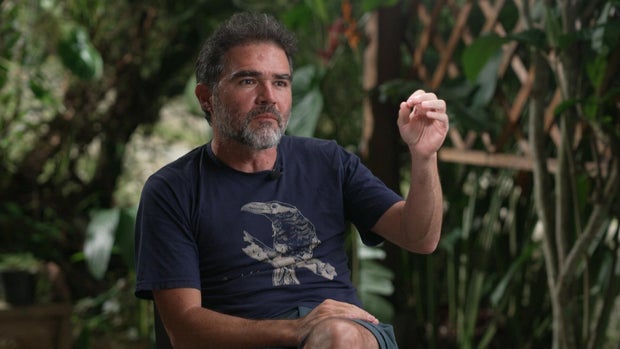

“The fact that there were illegal armed groups in this area, you know, like, for so long prevented just people [from] coming and slashing and burning the habitats,” Calderón Franco said at the Montezuma Rainforest Ecolodge near Tatama National Park.
Calderón Franco compares being a birding guide in Colombia today to being an explorer during the Victorian era.
“It is because all these explorers from the Victorian age, they were circumnavigating the globe and exploring and finding new species everywhere,” he said. “And because [of] our…troubled past you can still be in Colombia, look at that isolated mountain range and you might find a new species for bird for science.”
History of violence in Colombia
In the 1960s, leftist groups in Colombia formed guerrilla organizations, including the FARC and the National Liberation Army, or ELN, according to a congressional report. The Colombian government responded by backing the creation of paramilitary groups, but those later evolved into illegal armies serving private interests. The organizations — both left and right wing — used revenue from drug trafficking.
More than 450,000 people were killed over decades of conflict, most of them unarmed civilians, according to Josefina Echavarría Alvarez of the Kroc Institute for International Peace Studies. Around 50,000 people were also kidnapped throughout the conflict.
Calderón Franco and two colleagues were on an expedition in the mountains of northern Colombia in 2004 when they were seized by the FARC.
“They didn’t believe that we were bird watchers, you know? Like, that we were biologists,” he said.
FARC asked for a ransom, and Calderón Franco’s father scraped together around $30,000 so his son could be freed.
Healing old wounds in a divided country
Peace remains fragile in Colombia. Last year, Colombian conservative senator and presidential hopeful Miguel Uribe Turbay died more than two months after being shot during a campaign rally in western Bogota. And violence erupted in late April, leaving 20 dead in an explosion officials blamed on a faction of the FARC that refused to disarm.
But travel today is still much safer than it was a decade ago. The lure of the birds has become an important part of a growing ecotourism industry that brings in millions of dollars to Colombia’s economy.
Three years after he was released by the FARC, Calderón Franco launched a business leading birding tours in Colombia. He regularly stayed at a farm, owned by Michelle Tapasco and her family, located at the entrance to Tatamá National Park.
60 Minutes 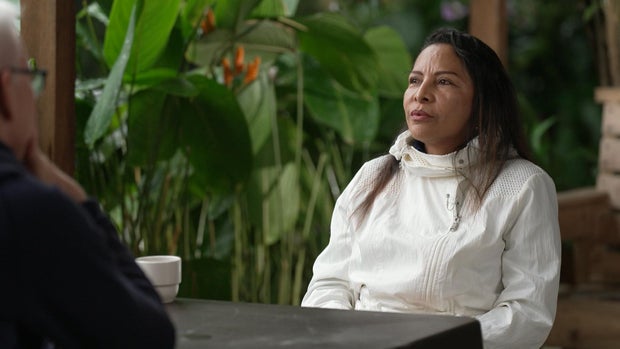
Tapaso moved to the farm in the 1990s to escape violence by right-wing militias in eastern Colombia, not realizing the left-wing FARC was active around her new home. She says members of the guerrilla group kidnapped and killed her partner in 2008, leaving her with five daughters to support on her own.
She thought about leaving the area, but decided to stay and build a business providing lodging for the occasional visitors. As more birders came after the peace deal, Tapasco’s been able to fix the place up and rebrand it as the Montezuma Rain Forest Ecolodge.
Marcos Guevara stayed at the lodge recently. He was once a FARC guerrilla. Now, he’s a photographer. He met birding guide Diego Calderón Franco at a resettlement camp for ex-FARC combatants in 2019, and he says Calderon Franco gave him his first job as a photographer. Guevara said he knew nothing about birding before meeting Calderon Franco.
“Diego gave us the chance to attend workshops and training sessions,” Guevara said, speaking about himself and other former FARC fighters at the resettlement camp. “Birdwatching became a doorway for us – not just into conservation and preservation, but also as a way to generate income for ourselves.”