


The war with Iran and the U.S. military operation to capture Venezuelan President Nicolás Maduro have carried the usual hallmarks of conflict: soldiers, strategy, casualties, cost. But they’ve also been accompanied by a new feature: betting on war. This year alone, more than a billion dollars has been staked online on military decisions and outcomes. As if they were wagering on football games or Oscar winners, bettors all over the globe have taken positions — some suspiciously-timed and with information seemingly too specific for a civilian outsider — on when and how an attack might happen; even the fate of world leaders. It’s created a whole new category of insider trading. As long as there have been wars, there have been war profiteers. But never quite like this.
Cloaked in night, shrouded in secrecy, U.S. Special Operations forces captured Venezuelan President Nicolás Maduro on Jan. 3. He was taken to the U.S. to face drug trafficking and narco-terrorism charges.
As it turned out, the president of Venezuela wasn’t the only figure in the operation who would find himself confronting federal charges. U.S. Army soldier Gannon Ken Van Dyke, who was “involved in the planning and execution” of the Venezuela mission, was charged last month with using classified intelligence to place bets, based on when the surprise raid would unfold.
Rob Schwartz: If the allegations are true, this is one of the worst betrayals of trust in this area that I can remember and possibly ever.
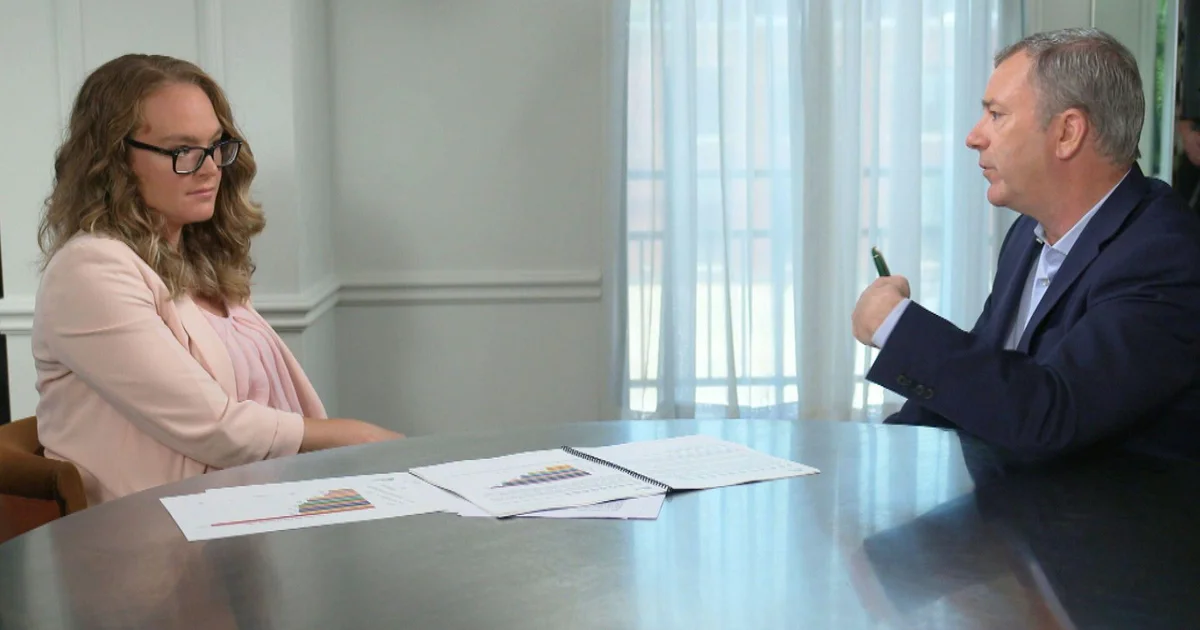
Now a private lawyer in Washington, Rob Schwartz, until last year, worked for the Commodity Futures Trading Commission, a federal agency policing fraud and insider trading.
Jon Wertheim: A soldier using classified intelligence to trade. Unprecedented.
Rob Schwartz: Classified intelligence that he knew about because he helped plan and to execute the mission. There is nothing to compare that to.
60 Minutes 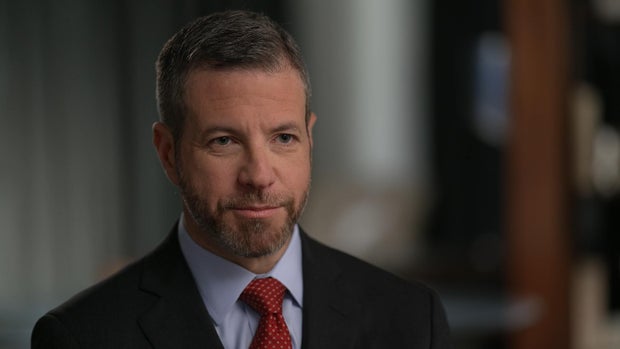

The Justice Department alleges Van Dyke made a series of wagers totalling roughly $34,000, including a half dozen the day before the raid. He ended up netting more than $400,000. According to the indictment, Van Dyke immediately withdrew his profit; then tried to delete his betting account on Polymarket, the world’s biggest online prediction market. The 38-year-old Army master sergeant has pleaded not guilty. Polymarket says it cooperated with law enforcement.
Rob Schwartz: If you are a corporate executive, and you’re privy to non public– business information, you go trade on that, that’s insider trading. Everybody knows that. But the same thing exists in prediction markets, where this soldier is alleged to have traded.
Jon Wertheim: You’re saying: different context from what we usually think. Two guys at the golf course are winking, and whispering, and tipping each other off. But this is still meeting the definition of insider trading?
Rob Schwartz: Exactly right. This is a new kind of insider trading.
Spiking in popularity, prediction markets, including Polymarket, offer wagers on the likelihood of future events. Will the Dodgers win the world series? Will Jesus return in 2026? For that matter, in a 60 Minutes interview, would President Trump say the word “trillion” more than 10 times? Turned out, that one didn’t pay off.
But lately another kind of wager has found popularity: what will happen in military conflicts? Dates of attack, will an airspace close, will enriched uranium change hands. You can bet on it. You can also bet on this: insiders, people holding non-public information, will be laying down their money, too.
In the U.S., it’s prohibited to make military bets on platforms like Polymarket, though it’s easy to find digital workarounds, as Gannon Ken Van Dyke allegedly did. Here’s what’s more astounding than the existence of military bets: how often they pay off.
Michelle Kendler-Kretsch: It’s alarming to see a culture around betting on war.
Michelle Kendler-Kretsch and her team at the Anti-Corruption Data Collective examined Polymarket bets on military outcomes. She looked specifically at long-shot wagers, bets with less than 35% odds. Despite being underdogs, they won more than they lost, a telltale sign, she says, of, quote, “systemic insider-trading.”
60 Minutes 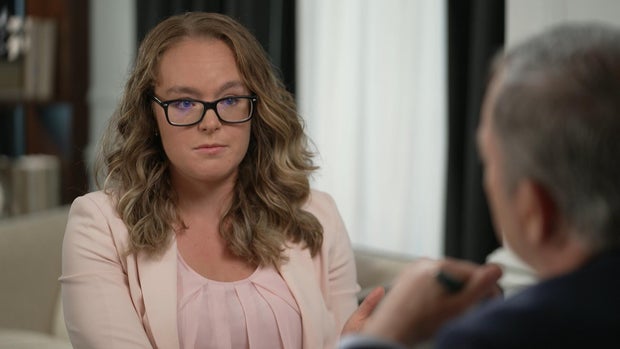
Jon Wertheim: Give me the apples-to-apples comparison. These military bets versus say sports wagering.
Michelle Kendler-Kretsch: So military bets are 52% success rate. Sports, 7%.
Jon Wertheim: Wildly disproportionate to what conventional probability should be telling us.
Michelle Kendler-Kretsch: Absolutely.
An ocean away, another team of digital detectives say they, too, have identified crooked bettors wagering on war.
Nicolas Vaiman: This might be the most insane pattern we have found on Polymarket so far.
Based in Paris, Nicolas Vaiman’s small data analytics firm, Bubblemaps, creates visualizations of bets on Polymarket to spot bubbles, or clusters, of suspect traders. One paradox of Polymarket: everything about the trades is totally transparent and public, except the traders themselves remain anonymous.
Deebs: This big cluster in the middle. No one talked about it.
The firm’s head of investigations goes by his online handle “Deebs.” He asked us to obscure his identity, over fears of retaliation for his detective work. They shared for the first time what they believe is a more egregious insider trading case than Gannon Ken Van Dyke’s.
Nicolas Vaiman: We spotted nine Polymarket accounts all connected who made collectively $2.4 million betting almost exclusively on U.S. military operations. Van Dyke made $400,000. Here, $2.4 million. And now here’s the crazy part. 98% win rate.
Jon Wertheim: Wait, wait, wait, wait, wait, wait. 98?
Deebs: 98%.
Deebs: This is like winning the lottery multiple times, you know?
The linked accounts made dozens of winning bets on the specific dates of pivotal moments in the war with Iran, even when the odds were low: the first U.S. strikes; the removal of Iran’s supreme leader; the announcement of a ceasefire.
Jon Wertheim: How do we know this isn’t just someone who has really good instincts–
Nicolas Vaiman: Luck alone cannot explain those numbers.
60 Minutes 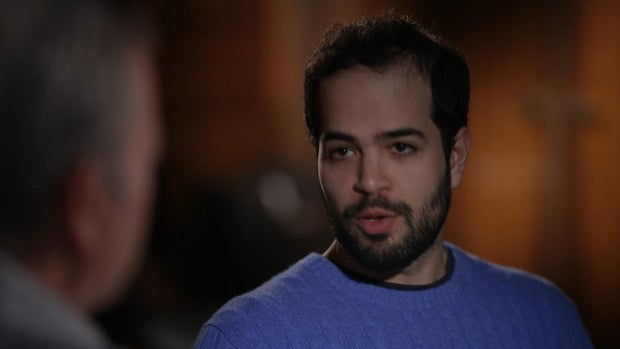
Jon Wertheim: If you know this, why don’t federal prosecutors?
Nicolas Vaiman: Well, hopefully with your interview, they’re gonna know this.
Jon Wertheim: We talked to one source in the Defense Department with relation to Sergeant Van Dyke, and he said, “Listen, there– there are dozens more of these. Van Dyke was just a small fish.”
Nicolas Vaiman: For sure.
Deebs: There’s so many people involved in the planning and the execution of a military operation.
A former U.S. military officer, Deebs speaks from first-hand experience when he says military bets are ripe for corruption.
Deebs: You have obviously the government officials. But you also have the military planners, right? You have the military intelligence analysts. And even spouses, they hear things. And that means that there are consequently are a lot of potential insiders.
And it’s not just the voguish high-tech, online prediction markets where trades based on war have raised intense suspicions. It’s happening on the old school, and heavily-regulated, commodities markets, too.
David Kovel: I’m highly suspicious at this point. And I’m not the only one. Any trader right now is highly suspicious.
A former commodities trader, David Kovel is now a New York lawyer representing victims of fraud on the same markets he once traded. In 2021, he secured the largest whistleblower award for commodities market manipulation in U.S. history.
David Kovel: Well, this is a classic graph that any commodities trader will understand.
Kovel walked us through the morning of March 23rd.
Fighting had been raging for three-plus weeks, and it was a slow trading day in oil futures.
David Kovel: If you see the chart, you’ll see that no one is trading during that time period. Why would you trade at that time? That doesn’t make a lot of sense unless you have a real reason.
60 Minutes 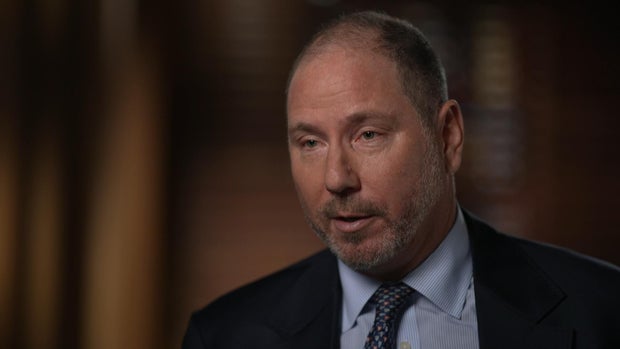
Then, according to data the financial firm LSEG provided us, suddenly at 6:50 a.m, more than $800 million was staked on the chance of oil prices dropping. Fifteen minutes later, President Trump posted on Truth Social that the White House and Iran had, quote, “very good and productive conversations” about ending hostilities. The news sent the price of oil plummeting more than 10%.
Jon Wertheim: What kind of profit is that resulting in?
David Kovel: We’re talking tens of millions, could be $80 million.
Jon Wertheim: You see this graph and you think insider trading?
David Kovel: That’s a natural conclusion to draw. I can’t know it without knowing what happened, but it’s a natural conclusion to draw.
Kovel is not alone in finding this highly dubious. 60 Minutes has learned federal investigators are probing these oil market trades as well.
Jon Wertheim: What are the odds the government knows the identity of whoever executed that?
David Kovel: If they go to the exchanges, they can know them.
Jon Wertheim: This could have been someone inside the US, this could have been someone from a foreign country, this could have been an enemy?
David Kovel: Identifying who it was would be the– the secret to figuring out whether it was insider trading or not.
It’s not just markets that risk manipulation by war bets. It’s truth as well. Emanuel Fabian, a military correspondent for the Times of Israel, thought little of a piece he wrote in March about an Iranian missile strike in an empty forest near Jerusalem. But soon after he published the account, Fabian received a barrage of messages asking him to change his story. He ignored most, but they turned darker.
Emanuel Fabian: One of them was, “You’re gonna make us lose $900,000. And we’ll invest even more than that to finish you” is what he wrote.He also wrote details about my siblings as well. He said, “I know how often you visit your family.”
Jon Wertheim: What’s your fear factor at this point?
Emanuel Fabian: I was quite worried.
60 Minutes 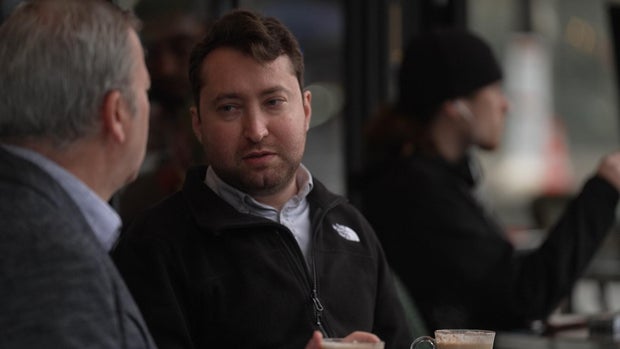
He investigated and found war bets on Polymarket, hinging on whether an Iranian missile would enter Israel, specifically on March 10th. And Fabian’s small news story voided the side of the bets predicting no missile, angering the losers.
Emanuel Fabian: It was at $14 million that were being wagered there.
Jon Wertheim: $14 million?
Emanuel Fabian: Yeah, but by the time it closed, it actually went up to $22 million, if I’m not mistaken. Also, the person who wrote them, they wrote that, you know, “If you, you know, abide by my instructions and change it, then, you know, you can end with money in your pocket and this will all be over.”
Jon Wertheim: Despite this pressure campaign against you that– that escalated to death threats, you did not go in and change your copy. Do you worry that other people might not have your principled stance?
Emanuel Fabian: I do worry. We know when there’s a lot of money involved, in this case, $22 million, I think that can cause people to, you know, to lie.
Fabian reported the threats to the police, and to Polymarket, which said that threatening a journalist was unacceptable and banned the accounts involved. Polymarket has said they “work proactively… on any suspicious activity… constantly behind the scenes.”
Overseeing all this, playing sheriff in this new Wild West? In the U.S., it’s that niche government agency, the Commodity Futures Trading Commission, the CFTC, set up in the ’70s to regulate food prices. Historically led by a commission of five, today, it’s run by one person: Michael Selig, a 36-year-old, whom President Trump nominated chairman last fall.
Michael Selig: We will hold whoever’s engaging in fraudulent, manipulative or insider trading activity accountable to the American people.
But, enforcement actions have dropped by more than two-thirds since 2024. Staffing has dropped sharply, too. Selig declined our interview request, though the CFTC told us it is hiring more staff and using AI to go after bad actors. And government officials are aware of the new potential for corruption. In March, the White House issued a memo to staffers noting it is a “…criminal offense for anyone to use nonpublic information…” on prediction markets.
Nicolas Vaiman: Where do you draw the line? I guess reasonable people can debate where the line is.
Source after source told us they fear today’s insider trading scandal is tomorrow’s national security scandal. If market watchers can spot irregular trades, surely enemies can, too. And they’ll make their war plans accordingly.
Deebs: Just to put it plainly, this could be putting people’s lives at risk. Other adversaries may be using this information in order to plan their own strategy.
Jon Wertheim: If you’re taking a futures position a year from now, Sergeant Van Dyke is the only person charged with insider trading?
Nicolas Vaiman: No. I think it’s just gonna multiply from here.
Produced by Andrew Bast and Jessica Kegu. Associate producers: Erin DuCharme and Mimi Lamarre. Edited by Thomas Xenakis.