


By Amindeh Blaise Atabong
DAKAR, April 14 (Reuters) – Armed with pistols and an AK-47 assault rifle, the rebels ambushed Rev. Killian Ndonui Nshamikara in January as he was driving through a village in western Cameroon, kidnapping him and demanding a ransom of more than $25,000.
For the 40-year-old Catholic priest, the scene was stressful but familiar: It marked his third time being abducted during the conflict in Cameroon’s two English-speaking regions, which has killed thousands since erupting nearly a decade ago.
He has managed to negotiate his release each time.
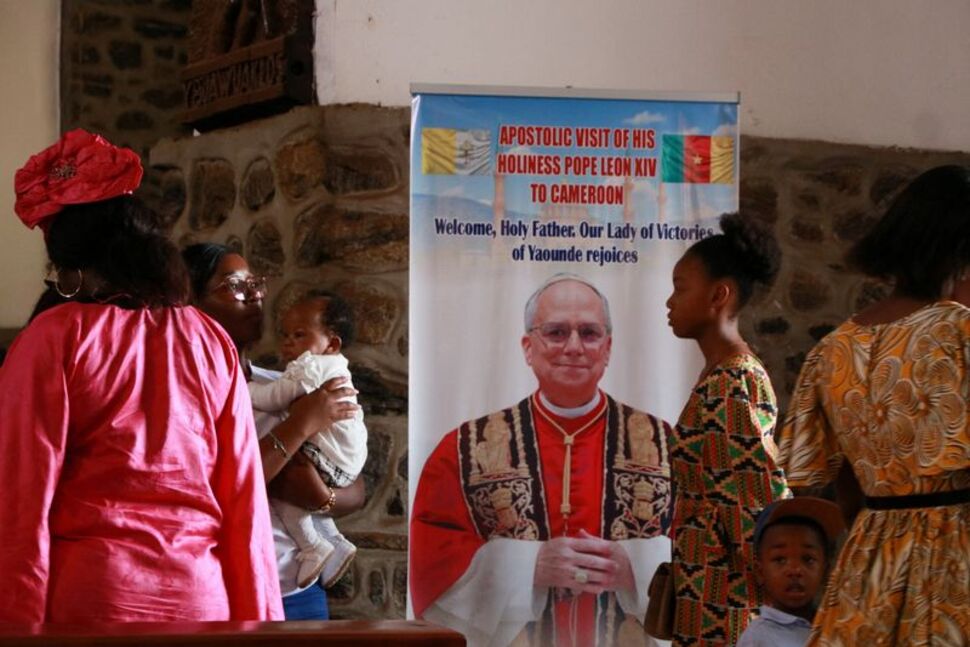
Pope Leo’s trip to anglophone Cameroon – part of a whirlwind 10-day Africa tour – is expected to shine a rare spotlight on the violence there, which is typically overshadowed by unrest elsewhere in the region, from jihadist attacks in the Sahel to rebel advances in mineral-rich eastern Congo.
The pontiff arrives in the Central African nation on Wednesday and is scheduled to spend much of Thursday in Bamenda, Cameroon’s biggest English-speaking city, holding Mass and a “meeting for peace” in a cathedral.
‘NATION IN NEED OF HEALING,’ PRIEST SAYS
The Catholic Church is the leading Christian denomination in the English-speaking regions. A separatist alliance said it would observe a three-day ceasefire to allow civilians and visitors to move freely during the pope’s visit.
Ndonui is among those hoping that Leo’s arrival will revive flagging peace efforts, even if the odds are stacked against a speedy resolution to a conflict rooted in the country’s complex colonial history.
“Cameroon is a nation in need of healing,” he said.
Cameroon, a former German colony, was partitioned by Britain and France after World War One. The French part won independence in 1960 and was joined a year later by the smaller English-speaking British area to the west.
At the time, many in the British territory wanted to form their own state, but they were not given the option under a U.N.-officiated referendum. Secessionist sentiments have simmered ever since.
The current conflict erupted in 2016 following protests by English-speaking lawyers and teachers who complained of marginalisation. Calls to form a new state called Ambazonia gained momentum, and an armed group called the Ambazonia Defence Forces began attacking government soldiers. Dozens of other groups formed to attack troops and civilians.
THOUSANDS KILLED IN CONFLICT
Nearly a decade later, the fighting has morphed into a brutal standoff. More than 6,500 people have been killed and more than half a million displaced, according to the International Crisis Group.
The Catholic Church has not been spared. Ndonui said hundreds of priests had been kidnapped and at least five killed, including a Kenyan missionary.
In August 2018, gunmen killed Akiata Gerald, a 22-year-old seminarian who lived with Ndonui, storming the parish and shooting him at close range.
“His life, full of promise and dedication to God, was cut short in a senseless act of violence,” Ndonui said.
He blames the rebels for the killing, though he said he did not know which specific group was responsible.
REBELS PLAY DOWN VISIT’S SIGNIFICANCE
Efforts to broker a peace deal have so far amounted to little.
The main separatist leaders were not represented at a national dialogue convened by the government in 2019. Mediation attempts involving Switzerland and Canada have also stalled.
The consequences can be seen on the streets of Bamenda, a once-bustling regional capital that has been reshaped by a decade of clashes, with checkpoints and general strikes paralysing daily life.
Leo will have a tough time inspiring a new, meaningful push for peace on his own, said Enowbachem Agbortanyi, a Yaounde-based political analyst.
“The pope can propose, but he cannot enforce,” he said.
“That responsibility lies primarily with the government, which holds legitimate authority.”
The government has described the fighting in anglophone Cameroon as a “socio-political crisis” that is largely under control. A government spokesperson did not respond to a request for comment on the possible impact of the pope’s visit.
Lucas Asu, spokesperson for the Ambazonia Governing Council, one of the main separatist groups, told Reuters he suspected President Paul Biya’s government would “try to spin the pope’s visit as an indication of the end of the conflict and a return to normalcy”.
But while he stressed the visit would have no bearing on how the fighting unfolds, he added that it would be a moment for Catholics in anglophone Cameroon to celebrate.
“The Ambazonia Governing Council calls on the Ambazonian Christians, and especially the Catholics, to turn up in the millions and joyfully welcome their pope,” he said.
(Reporting and writing by Amindeh Blaise Atabong; Editing by Robbie Corey-Boulet and Alison Williams)
Copyright 2026 Thomson Reuters.
Photos You Should See – April 2026

