


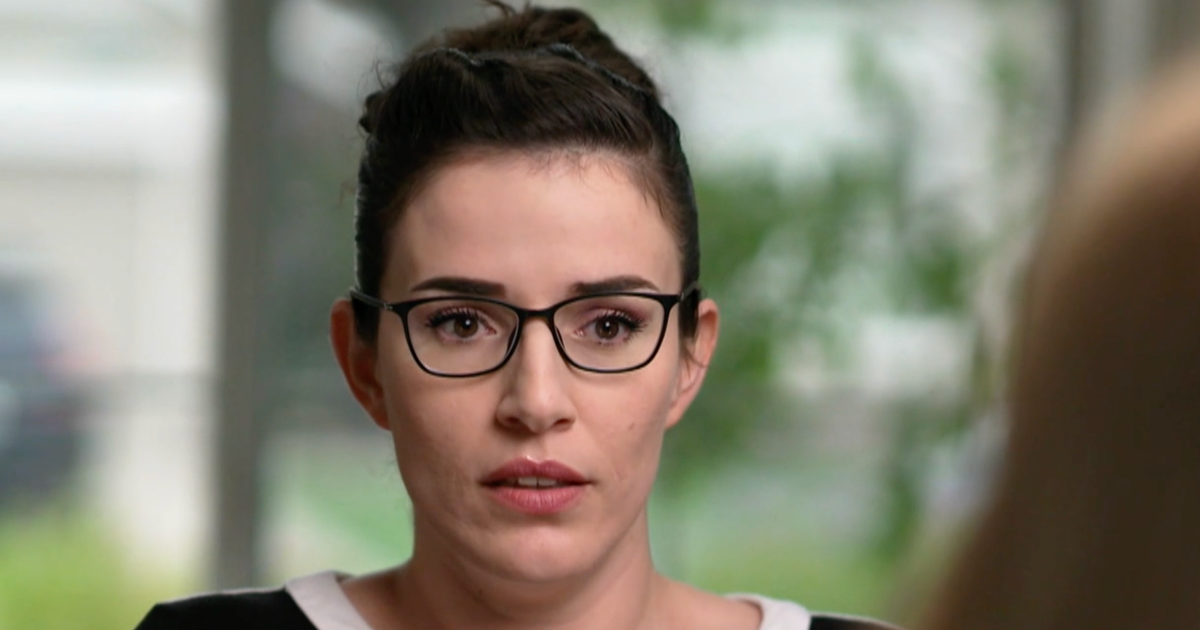
When 36-year-old Princeton University graduate student Elizabeth Tsurkov was kidnapped in Iraq, it set off a grueling 903-day fight her sister never expected.
“I honestly was so naive when she was kidnapped. I had no idea what it would take,” Elizabeth’s sister, Emma, told “CBS Sunday Morning.”
In March 2023, Elizabeth — an Israeli Russian dual citizen — was abducted off the street and held for ransom by members of Kata’ib Hezbollah, a terrorist organization based in Iraq and funded by Iran. She was conducting fieldwork for her PhD in political science at the time, something she had done safely many times before.
Emma, who earned her PhD at Stanford and is married to an American, said Elizabeth “doesn’t just sit in some ivy tower reading books about Iraq. She believes in going to talk to Iraqis.”
Fighting to rescue Elizabeth Tsurkov
When Emma learned her sister had been abducted, she first reached out to Russian authorities for help. But Emma said the Russian government showed little interest in rescuing her sister, pointing to Elizabeth’s public opinions online as a human rights activist.
Then the Israeli government stepped up to help, but the assistance stalled after the deadly Oct. 7 Hamas-led terrorist attack. Suddenly, nearly eight months after her sister’s capture, headlines were overtaken by news of the 250 hostages.
As Israel intensified its strikes on GazaEmma feared her sister’s captors might retaliate, putting her life at greater risk.
“I would go to sleep every night. I would — not sleep — I would attempt to sleep every night and just check my phone. Let there not be a picture of her dead body. Let there not be a video of a beheading,” Emma said.
Emma continued to ramp up her campaign to save her sister.
“I realized I have to be that responsible adult. There’s no one else. If I’m not willing to see her die in captivity, and I’m not, then I have no choice but to put my big girl pants on and just go into the world and fight for her,” she said.
Shortly after, a video released online showed Elizabeth was alive, though Emma says she appeared to be under duress and in pain. To Emma, it was clear her sister was being tortured.
“More importantly, she looked terrified. Terrified. I’ve never seen her so scared in my life,” Emma recalled.
“Don’t hope. Help.”
In late 2023 and into the following year, Emma continued to lobby State Department officials in the Biden administration, urging them to pressure the Iraqi government — heavily dependent on U.S. aid — to help locate Elizabeth and negotiate her release. But she says few in the State Department would meet with her or even take her calls.
“I would often hear, ‘Oh. We feel — we feel for you. This is terrible. We know your sister. She is so brilliant. We really hope that she comes out of captivity.’ But what do you mean we hope? Don’t hope. Help,” Emma said.
Fighting for her sister, Emma says, brought out a fearlessness she didn’t know she had.
In April 2024, when the Iraqi prime minister visited Washington, Emma was there too. This time, she said she decided it was “time for some guerilla tactics.”
Emma and others projected laser messages onto the Willard Hotel, where the Iraqi delegation was staying. At a later event, Emma stood in the back of the room and addressed the prime minister directly.
“My sister’s been held hostage for 13 months, and you don’t care. You should be ashamed of yourself. You’re not doing anything to help her. She’s innocent — and you know it,” she shouted. Yet, her sister remained in captivity.
The bold move that helped bring Elizabeth Tsurkov home
In November 2024, after President Trump’s re-election, Emma got the phone number of special envoy for hostage response Adam Boehler, who lives in Nashville where he runs a healthcare investment firm.
“I think she was surprised that I picked up and then I think she didn’t know what to do,” Boehler told “CBS Sunday Morning.” After hearing her sister’s harrowing story, Boehler promised to help.
After months passed, Emma made a bold move: she flew to Nashville and showed up at Boehler’s doorstep, crashing a Mother’s Day brunch he was hosting.
“I apologized for the rudeness, but I mean it got my sister home,” Emma said.
On September 9, 2025, Boehler called to say that Elizabeth was finally in the custody of U.S. officials. Elizabeth was then able to speak with Emma by phone, where the two tearfully exchanged their shared nickname for each other, “Fefa.”
“We’re just crying hysterically and just full of joy. It was just like so — such an amazing, amazing, amazing joyful moment,” Emma said.
Boehler declined to say what ultimately convinced the militia to release her, only noting that he and others made clear to the Iraqi government that Elizabeth was a priority.
“Whether people are critical of the president or not, everyone can agree, I think, the president’s not afraid to take action,” Boehler said.
But Elizabeth paid a steep price with her health. As her sister feared, once her captors learned she was Israeli, she was subjected to torture and falsely accused of being a spy.
Elizabeth recalled one method of abuse in particular: “It’s called the scorpion in Iraq. They would handcuff me behind my back and basically put a hook in the handcuffs and raise me.” She’s still in such pain that when she was ready to share her story publicly she was unable to sit in a chair for an interview.
Yet somehow, Elizabeth survived. She says she endured by continuing the work that brought her to Iraq in the first place — her research.
Five months after her release, Elizabeth finally got to meet the man who helped make it happen.
“It’s hard to explain how you look at a person who gave you life, but he’s not your parent, you know?” Elizabeth said of meeting Boehler, adding that she cried for more than two hours during their meeting.
Boehler keeps a permanent record of the number of hostages in tattoos on his arm, including the Israelis held by Hamas, that he says have been released in the past year.
“It matters a lot to me. I think of each one,” he said.
Today, Elizabeth is doing rehab for her injuries and plans to return to her studies at Princeton.
“So many of the policies of the United States and Israel and other countries are based on the faulty understanding of reality on the ground. I don’t expect you know to change the world for my research, but if I can even alter policy in a small way, that would benefit millions of people,” Elizabeth said. “I was deprived of my voice for 903 days. Now free, you know, I can speak up.”