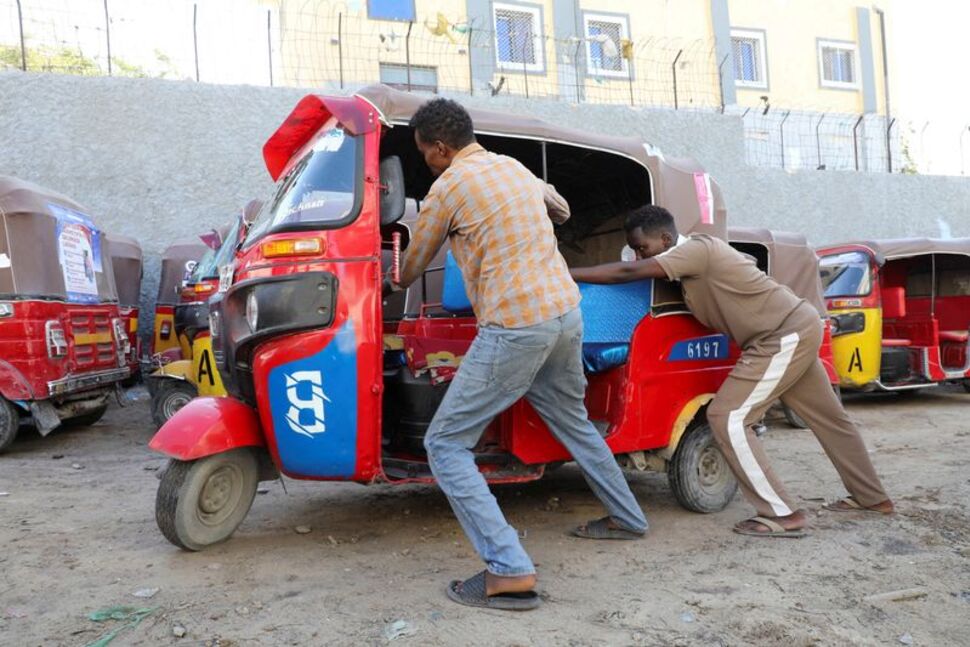
MOGADISHU, March 26 (Reuters) – Drivers of tuk‑tuk taxis in Somalia’s capital are abandoning their livelihoods as fuel prices surge, pushed up by disruptions to oil shipments linked to the Iran conflict.
With fares rising, passengers have dropped away and many drivers in Mogadishu say they can no longer keep their three-wheelers on the road.
The conflict has nearly halted shipments of around one-fifth of the world’s oil and liquefied natural gas via the Strait of Hormuz, leaving African nations among the most exposed by supply disruptions and rising prices for fuel and food.
“There are no passengers. People stay home or walk on foot. We raised fares because fuel prices went up,” Hasan Suleiman, a 21-year-old tuk-tuk driver, told Reuters in Mogadishu.
“The city has few passengers and they won’t pay the higher fares. We have inevitably parked the tuk-tuks,” he said.
Fuel prices in some parts of Somalia have more than doubled, raising transportation costs for passengers and businesses.
Already 6.5 million people, roughly a third of the Horn of Africa country’s total population, face severe hunger amid drought.
“The tuk-tuk needs fuel, and I need to provide for my family from what it earns. We are in a very bad condition,” said Jamal Omar, a 55-year-old tuk-tuk driver.
(Reporting by Abdi Sheikh; Writing by Elias Biryabarema; Editing by William Maclean)
Copyright 2026 Thomson Reuters.
Photos You Should See – March 2026
