


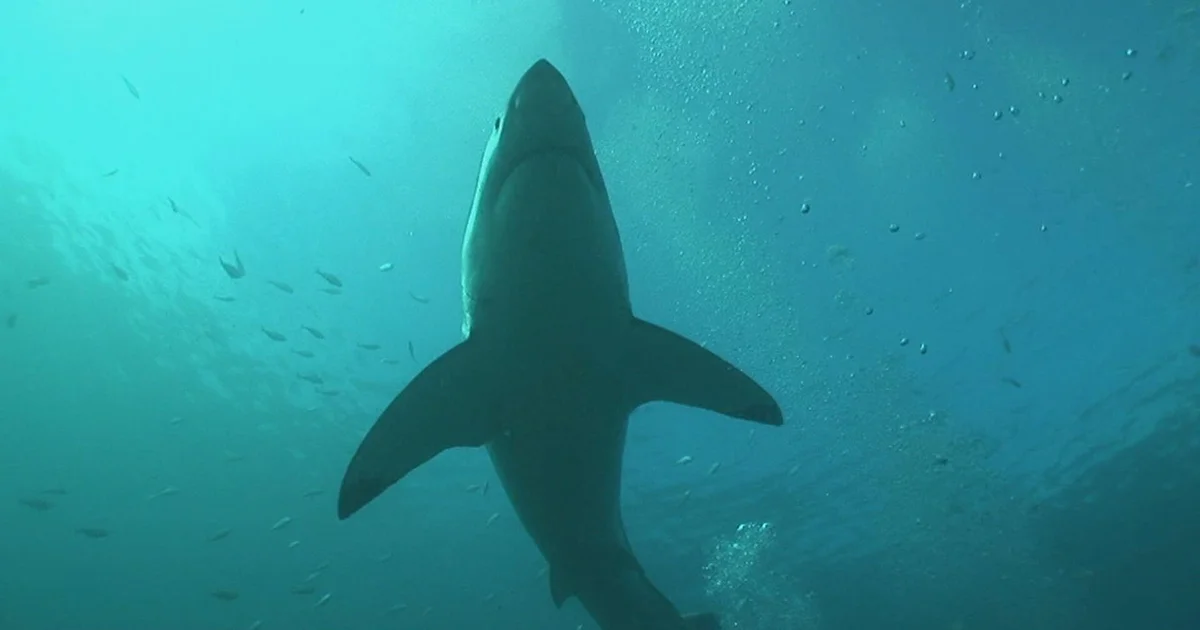
When great white sharks started vanishing from the coastal waters around Cape Town, South Africa, some scientists and conservationists were mystified.
Those waters teemed with great white sharks when 60 Minutes correspondent Anderson Cooper went diving with the predators in 2010. The area was home to smaller sharks and seals that the great whites hunted, turning it into a hotspot.
But just a few years later, the sharks started disappearing, confounding scientists and conservationists. South Africa was the first country in the world to protect great white sharks in 1991, but today, some are worried it will be the first to lose that population to local extinction.
Photographer Chris Fallows, who shot some of the most iconic photographs of great white sharks, said he used to see 250 to 300 great whites a year there, but now there are none. The mystery of why they disappeared has fueled a bitter feud among scientists and conservationists who can’t agree on who, or what, is the real culprit.
“Let’s stop bickering about something we can’t control, and let’s start focusing on the things that we can control,” he said. “If we don’t start addressing those factors that we can control, I don’t believe there’s any hope.”
When the sharks went missing
Alison Kock, a marine biologist with South African National Parks, received her first clue in 2015. Divers sent her photographs of smaller shark carcasses on the sea floor with mysterious incisions in them.
“It looked so surgical from the photographs that I first assumed it must have been done by somebody with a knife,” said Kock.
60 Minutes 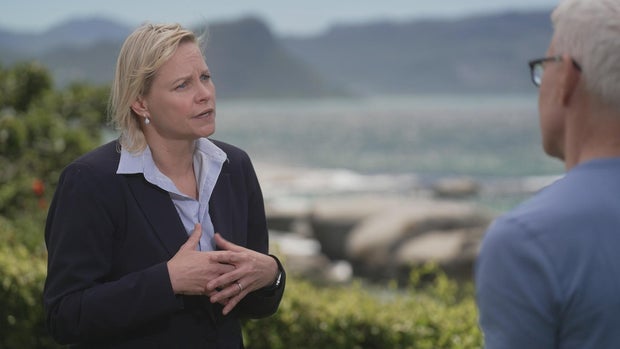

Kock and her colleagues went diving for more evidence and encountered an unlikely suspect in the waters: orcas, also known as killer whales. She describes it as a “light bulb” moment. Two orcas went under their boat in the same area they had just found a shark carcass.
“Now what we have is that orcas are a real possibility for being the culprit for these carcasses,” said Kock. “I feel like a detective. But for a long time, we didn’t have all of the pieces of the puzzle.”
Two years later, the carcasses of great white sharks started washing ashore with the same incision marks. Kock and her colleagues performed necropsies and confirmed orcas have been feeding on great whiteseating their livers.
“It’s the most calorie-dense organ out of the whole body. And it takes up almost a third of the shark’s body,” she said.
Orcas have lived in the waters off of South Africa for years, though no one had ever seen one kill a great white in the area. Still, the whales had been known to hunt sharks off the coast of California and around Australia.
Great white sharks were seen as apex predators, so many people struggled to see them as prey for orcas. But orcas are smart hunters and “learning all the time,” Kock said.
Port and Starboard
Whale-watching tour operator David Hurwitz was the first person to see two distinctive male orcas hunting and killing sharks. He named them Port and Starboard.
“They’ve become world famous, or infamous,” Hurwitz said. Infamous because unlike most orcas which hunt in groups called pods, Port and Starboard were hunting sharks for their livers as a pair.
60 Minutes 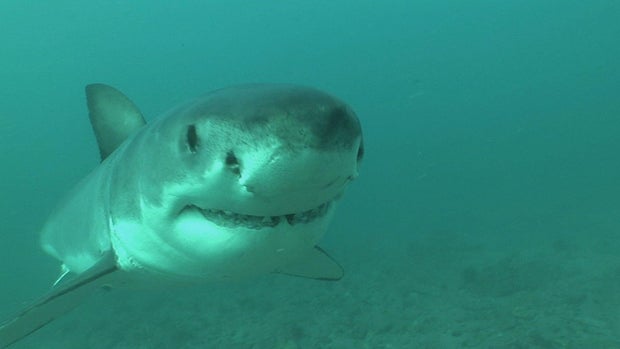
Scientists now believe Port and Starboard might even be teaching other orcas how to hunt down sharks. In 2022, drone footage captured five orcas working together, stunning and then killing a great white. More recently, single orcas have been seen hunting sharks in South Africa and elsewhere.
Great whites, not used to being prey, fled further up the coast, Kock said. She believes the overall population of great whites in South African waters is stable.
Humans, not whales, at fault, others say
Not everyone believes the case has been solved. Marine biologist Enrico Gennari, who’s been researching great whites in South Africa for 20 years, says the population of great white sharks is in decline. He pins the blame on another culprit: humans.
Gennari and Fallows, the photographer, say the numbers of great whites plummeted a few years before Port and Starboard began their killing spree.
Together, they’ve been documenting the impact of commercial fishing boats on smaller shark species that great whites prey on. The boats lay miles of long lines with thousands of hooks attached on the ocean floor. The sharks they catch are exported to Australia, used for cheap fish n’ chips.
60 Minutes 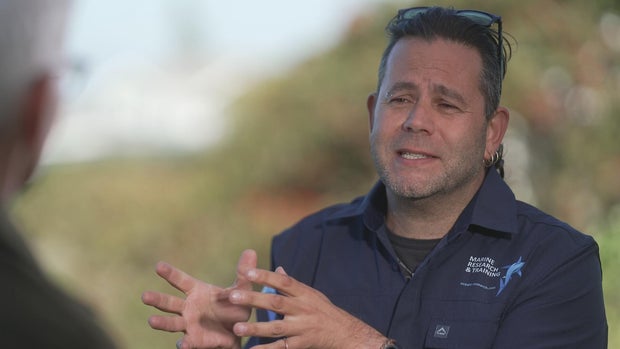
“Shark longlining is undoubtedly robbing the great white sharks of food,” Fallows said. “It’s the primary prey source for the great whites when they’re not feeding on seals.”
Shark nets and baited hooks attached to buoys, which the South African authorities have used to protect swimmers along the coast since the 1950s, are also to blame, the pair say. Nets and hooks kill more than 20 great whites a year.
“The device[s] are designed to kill and lower the population number,” Gennari said. “The concept is one less shark, one less chance of an encounter with a human.”
Conserving great whites
Instead of nets and hooks, Gennari would like to see South Africa embrace a variety of alternatives to protect swimmers, like underwater magnetic fields which interfere with a sense sharks use for hunting. He also suggested increasing the use of smaller meshed nets, which create a barrier without entangling marine life. The methods used right now, which are all lethal for sharks, are “outdated and unsustainable,” he said.
“If we lose the white shark in South Africa, we lose a battle for all nature,” Gennari said. “If we can’t protect even the most charismatic, most protected species — on paper — in South Africa, what chance [do] the little guys, the other sharks or the other animals, have against unsustainable use? Nothing.”
Fallows pointed to the comeback of humpback whales in South Africa’s waters as a conservation success story that can be emulated. The population rebounded after a moratorium on commercial whaling was enacted in the 1980s.
“What it’s got, I believe, a hundred percent to do with is enlightened governments, passionate individuals, showcasing the whales for what they were: incredibly sentient creatures having an important role to play in our ocean,” he said. “It’s called balance. A balanced ocean is a healthy ocean. A healthy ocean is a healthy environment for us.”