



Oil prices jumped above $100 a barrel on Monday and U.S. stocks opened lower amid concerns about the impact of President Trump’s plan to blockade Iran’s ports and a partial blockade of the Strait of Hormuza key chokepoint for oil, fertilizer and other commodities.
The price of Brent crude, the international benchmark, jumped $7.15, or 7.5%, to $102.30 a barrel, while West Texas Intermediate, the U.S. benchmark, rose more than 7% to $104.20, according to Oilprice.com.
Investors didn’t seem as ruffled by the blockade news, with the three major indices down less than 1% after the opening bell. The Dow Jones Industrial Average slid 392 points, or 0.8%, while the S&P 500 fell 24 points, or 0.4%. The tech-heavy Nasdaq Composite was down 0.4%.

Mr. Trump said the U.S. blockade of Iran’s ports will begin at 10 a.m. ET Monday, an announcement that came after the failure of negotiations in Islamabad over the weekend to reach a peace agreement in the U.S.-Iran war.
Because Iran exports much of its oil to China, the move to block its ships from leaving the strait could be designed to put increased pressure on Tehran as well as convince Beijing to play “a more active role in mediating a ceasefire,” Capital Economics group chief economist Neil Shearing said in a research note.
“In practice, however, [the blockade] risks creating new potential flashpoints,” Shearing said. “Would the U.S. Navy seize allied ships that have paid tolls to Tehran? Would it target Chinese vessels in the Strait? Either outcome would represent a significant escalation.”
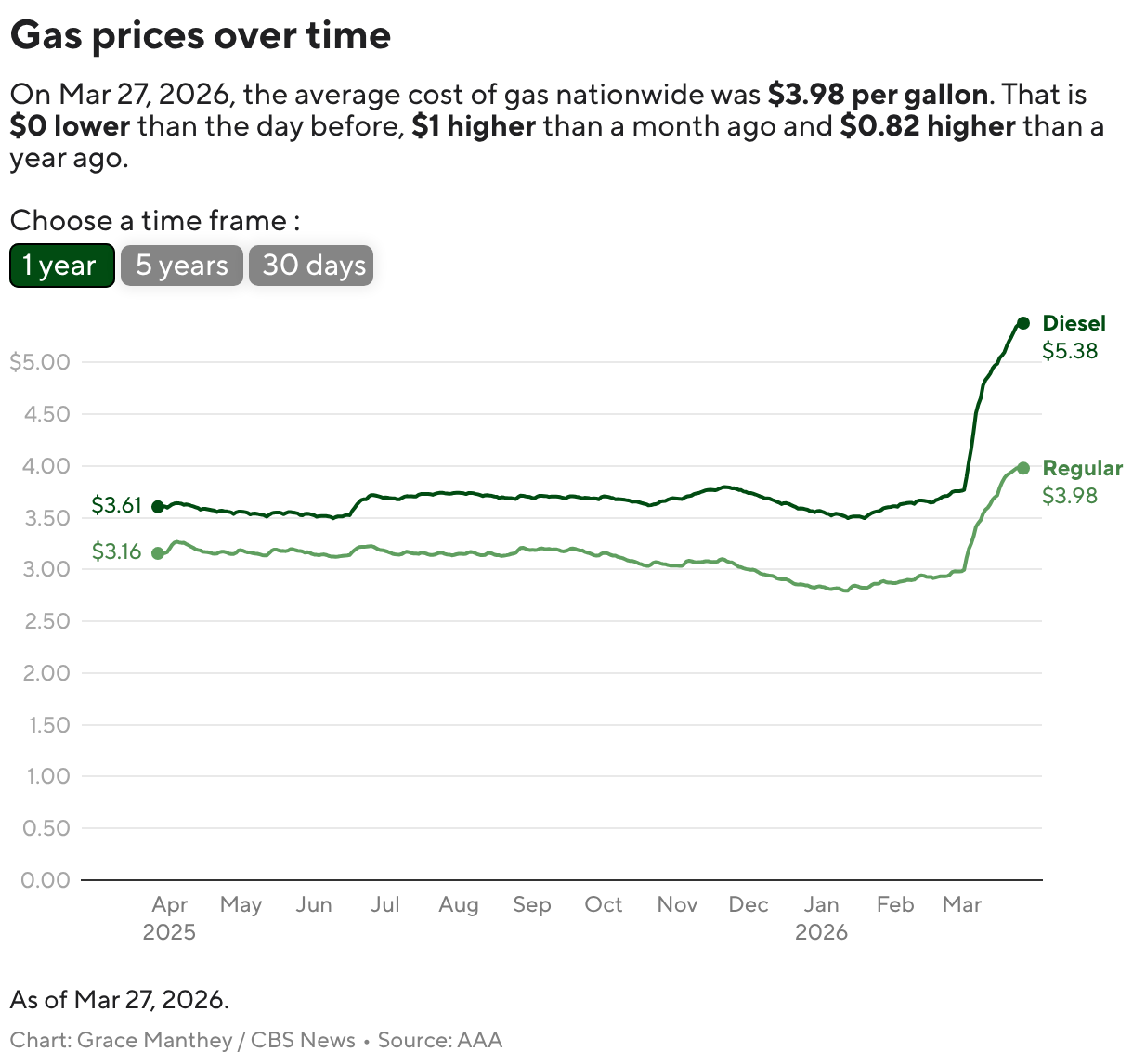
Oil prices have been rising as shipping through the strait has essentially stalled since late February. Brent crude has climbed from roughly $70 per barrel before the war in late February to more than $119 at times. That, in turn, has pushed U.S. gas prices above $4 a gallonpinching household budgets.
While stock futures are pointing to a decline on Monday, the losses aren’t as steep as some had projected following the failed negotiations over the weekend, said Adam Crisafulli, an analyst with Vital Knowledge, in a Monday research note.
“The Hormuz blockade in reality isn’t as draconian as it initially appeared — the U.S. Navy is focused on interdicting ships traveling to/from Iranian ports, not all vessels moving through the waterway,” Crisafulli said.

U.S. Central Command said the U.S. Navy won’t stop vessels heading through the strait to and from non-Iranian ports.
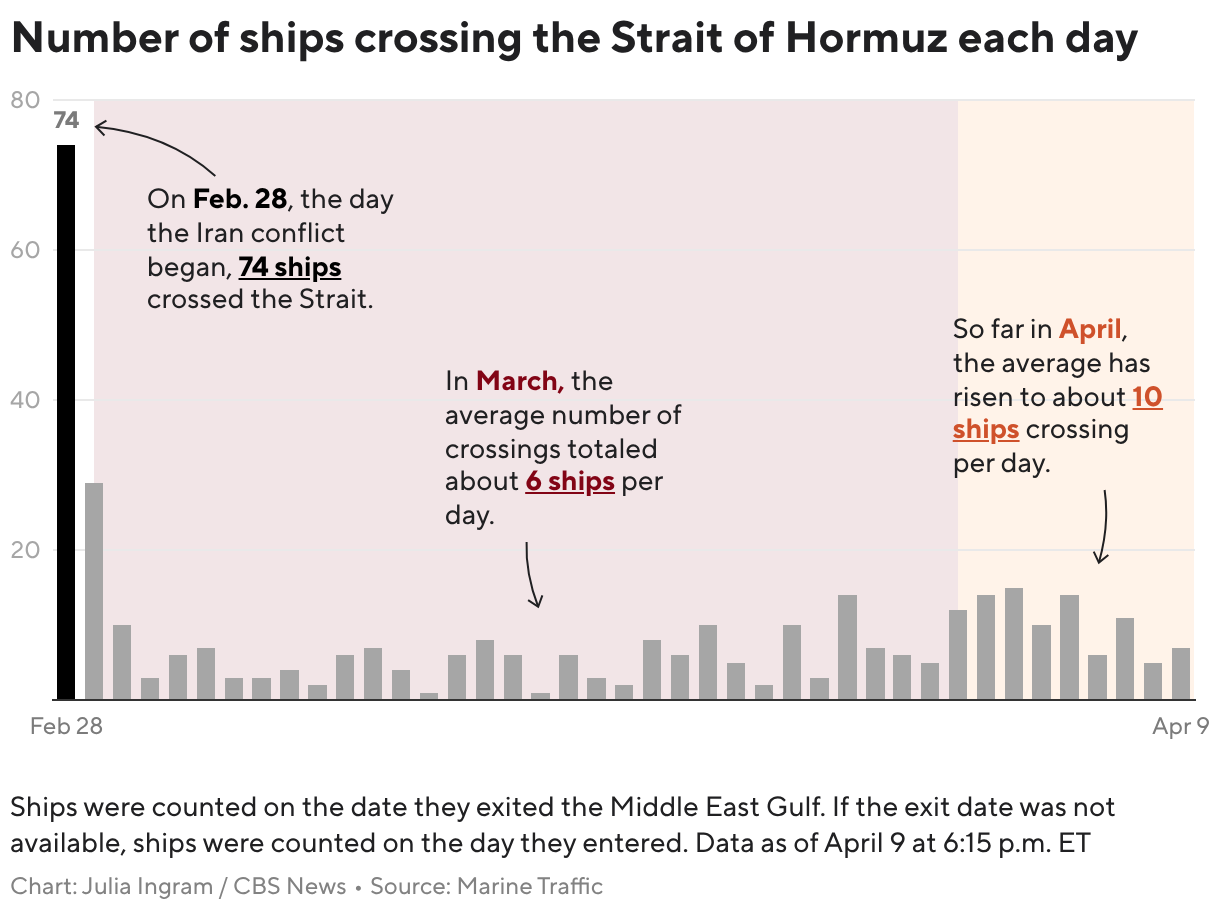
Traffic in the Strait of Hormuz, through which about 20% of the world’s energy supplies are shipped, has been significantly curtailed since the war began in late February. In April, an average of about 10 ships passed through the Strait each day, far below the roughly 129 ships that traveled through the waterway in the month before the war, marine transit data shows.