


Stocks are set to fall sharply on Thursday, while oil prices are surging after President Trump vowed to continue strikes on Iran and offered no new plan to reopen the Strait of Hormuz.
S&P 500 futures sank 1.6% before the start of trading at 9:30 a.m. EST, while Dow Jones Industrial Average futures pointed to a 0.9% decline. The slump comes after the stock market had rallied 3.5% over the previous two trading days on investor hopes that a clear end point to the war would stabilize the global energy markets.
Oil prices jumped following Mr. Trump’s remarks. Brent crude, the international standard, rose 7.4% to $108.69 per barrel, while benchmark U.S. crude climbed 7.1% to $107.24.
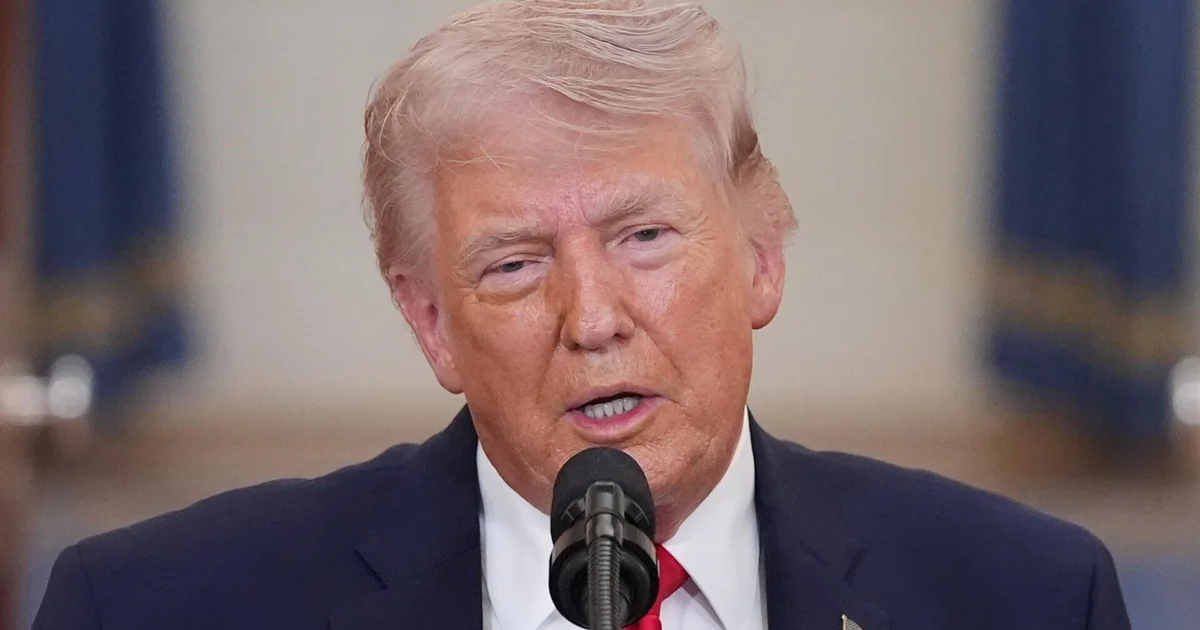
During his address, Mr. Trump repeated his previous assertions that U.S. objectives are nearly met and Iran’s offensive capabilities are “essentially decimated” after more than a month of fighting. He offered no new information about those objectives or any plan to reopen the Strait of Hormuz to oil tankers, vowing only to continue U.S. strikes on Iran for two to three more weeks.
“Markets were beginning to price in more certainty, but this speech reintroduces more ambiguity,” said Nigel Green of the investment firm deVere Group. “Markets had been pricing a shorter, contained conflict. What they’ve heard now is far less definitive, and that uncertainty is likely to drive volatility across asset classes.”
The Strait of Hormuz, which normally accommodates roughly 20% of the world’s oil and natural gas supply, remains effectively closed and could remain shut to oil tanker traffic through the end of April, Oxford Economics global chief economist Ryan Sweet said in an April 2 research note.
The longer the passageway remains shut, the greater the economic toll, he added.
While the Trump administration has released oil from the nation’s Strategic Petroleum Reserves to offset the reduction in oil supplies, that will become less effective the longer the Strait of Hormuz remains shut, putting upward pressure on oil prices, Sweet said.
“The scary scenarios are, unfortunately, extremely plausible. It’s not at all hard to tell a $150 [per barrel] story, and it’s not crazy to go to $200,” Nobel Prize-winning economist Paul Krugman told CBS News this week.
U.S. gasoline prices, which are tied to the global price of oil, would likely keep climbing above $4 if the strait remains closed, according to Bernard Yaros, lead U.S. economist at Oxford Economics.
The average price of a gallon of gasoline across the U.S. rose to $4.08 on Thursday, up from $4.06 the previous day, according to AAA data. American drivers have spent an additional $8.4 billion in gas costs since the Iran war started on Feb. 28, according to a new calculation from Democrats on the Joint Economic Committee.