


TAIPEI, May 14 (Reuters) – Taiwan’s government said on Thursday it was considering resubmitting to parliament a request for items cut by lawmakers from a special defence budget given how crucial they are to the island’s security.
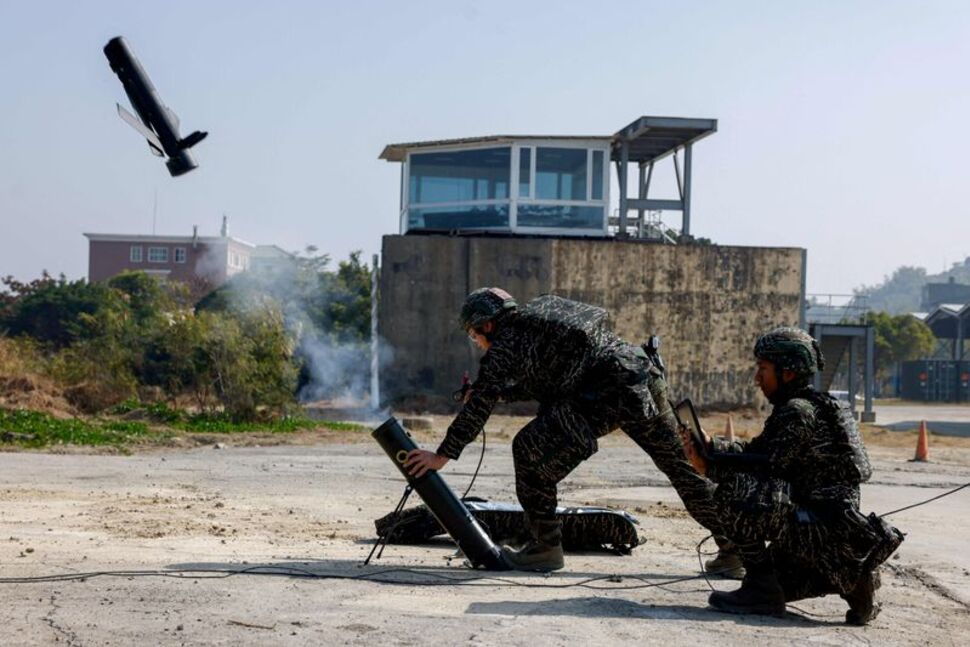
Taiwan’s opposition-controlled parliament last week approved only two-thirds of a $40 billion special defence budget that President Lai Ching-te had requested, funding U.S. arms purchases but cutting domestic programmes like drones.
A senior U.S. official said on Sunday that the U.S. was disappointed by the approval of defence spending short of what Washington believes is needed.
Lai has made increased defence spending a priority, something Washington has strongly backed, to better deter China, which views democratically governed Taiwan as its own territory.
Taiwan cabinet spokesperson Michelle Lee told reporters in Taipei that Premier Cho Jung-tai was concerned about the impact on the military’s overall modernisation programme, including the removal of money for anti-ballistic missile systems.
The premier has therefore asked the defence ministry to explore whether to submit the request for the rejected items in the form of a supplementary budget or expanding the scale of the existing annual budget, Lee said.
Not being able to fully fund the government’s plans “seriously undermines the integrity of defence force building,” she added, citing Cho’s comments to the cabinet.
The timing of renewed discussion around defence spending is especially awkward given U.S. President Donald Trump, whose administration has strongly supported Taiwan’s focus on ramping up its military, is in Beijing this week to meet Chinese President Xi Jinping.
Xi told Trump on Thursday that disagreement over Taiwan could send relations down a dangerous path and that “Taiwan independence” and cross-Taiwan Strait peace are as “irreconcilable as fire and water”.
In response, Lee said she believed China’s military threat was “the sole source of insecurity in the Taiwan Strait and the broader Indo-Pacific region.” “Continuously strengthening national defence and effective collective deterrence is the single most critical factor in ensuring regional peace and stability,” she added.
In December, Washington announced an $11 billion arms sales package for Taiwan, the largest ever.
A second package worth around $14 billion could be announced once Trump returns to the U.S. after this week’s trip to China, Reuters has previously reported.
China has demanded a halt to U.S. arms sales to Taiwan.
(Reporting by Ben Blanchard; Editing by Jamie Freed)
Copyright 2026 Thomson Reuters.
Photos You Should See – April 2026

