


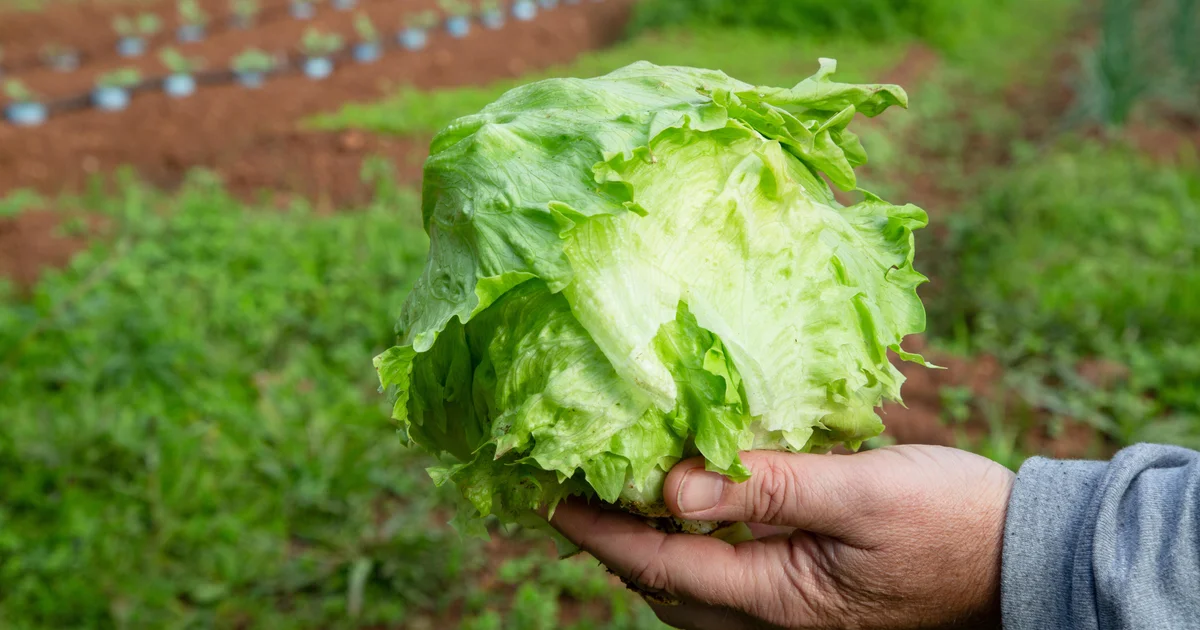
Taylor Farms on Friday said it is “voluntarily removing” iceberg lettuce sourced from central Mexico after it was linked to one of the largest outbreaks of cyclosporiasis in the U.S. in recent years.
“While the FDA traceback is indicating a specific independent farm, which represents less than 1% of the U.S.’s iceberg lettuce supply, as the potential source of the outbreak, we have removed all iceberg lettuce from the region indefinitely,” the company said in a statement.
Taylor Farms said none of its branded salads or kits contain iceberg lettuce or are associated with this outbreak.
On Thursday, the Centers for Disease Control and Prevention identified lettuce supplied to select Taco Bell restaurants as a source of the multistate outbreak, more than a month after cases first began to appear.
A source familiar with the investigation told CBS News on Thursday that the supplier was Salinas, California-based Taylor Farms. The iceberg lettuce was distributed to Taco Bell restaurants in Indiana, Kentucky, Michigan, Ohio and West Virginia, according to the CDC.
The Department of Health and Human Services said the investigation is continuing.
“The investigation remains active, and additional states, restaurants, retailers, or products may be identified as more information becomes available,” said Emily Hilliard, a spokesperson for HHS.
Taco bell removes lettuce
Taco Bell told CBS News in a statement Friday afternoon that it had already removed the potentially contaminated lettuce it received from Taylor Farms from restaurants in select states “out of an abundance of caution.”
“While no official advisory has been issued, we believe public health is a shared responsibility among restaurants, their suppliers, and authorities, and we are proud to have consistently acted quickly and proactively to protect our guests,” a spokesperson for Taco Bell Corp. said. “Taco Bell has taken precautionary action, and we encourage all relevant restaurants, retailers, and foodservice operators to do the same.”
Data shows that sales at the fast food chain have taken a hit amid the outbreak. According to Consumer Edge, which compiles spending data based on credit and debit transactions, year-over-year sales growth at Taco Bell was 4.2% in the week ending July 11, the slowest rate since April.
“Our data still shows positive year-over-year sales growth for Taco Bell, but that growth has slowed very recently,” Michael Gunther, senior vice president of research and market intelligence at Consumer Edge, told CBS News in an email.
Concerns about the outbreak could be the cause of the slower growth, he added.
Scope of the outbreak
The outbreak, first reported in May, has spread to 34 states, sickening at least 1,644 people, according to the CDC. However, the CDC’s tally lags behind state health departments, which have reported much larger numbers of cases. For instance, the Michigan Department of Health and Human Services reported more than 5,000 confirmed cases as of Friday.
No deaths have been reported.
“As a family-owned company, we are deeply concerned for those who became ill, their families, and the Americans whose trust in the safety of fresh produce has been shaken,” Taylor Farms said in its statement Friday.
“We are committed to doing everything in our power to address this issue, support the ongoing investigation, and help restore trust,” the company added.
What is cyclosporiasis?
The food- and water-borne illness cyclosporiasis is caused by the cyclospora parasite, which causes long-lasting, watery and sometimes explosive diarrhea, according to public health experts.
Outbreaks typically occur in the late spring and summer, and have historically been linked to bagged salads, cilantro, basil, raspberries, snow peas and green onions.
Editor’s note: This story has been updated to clarify that the investigation is continuing and other sources could still be identified.