


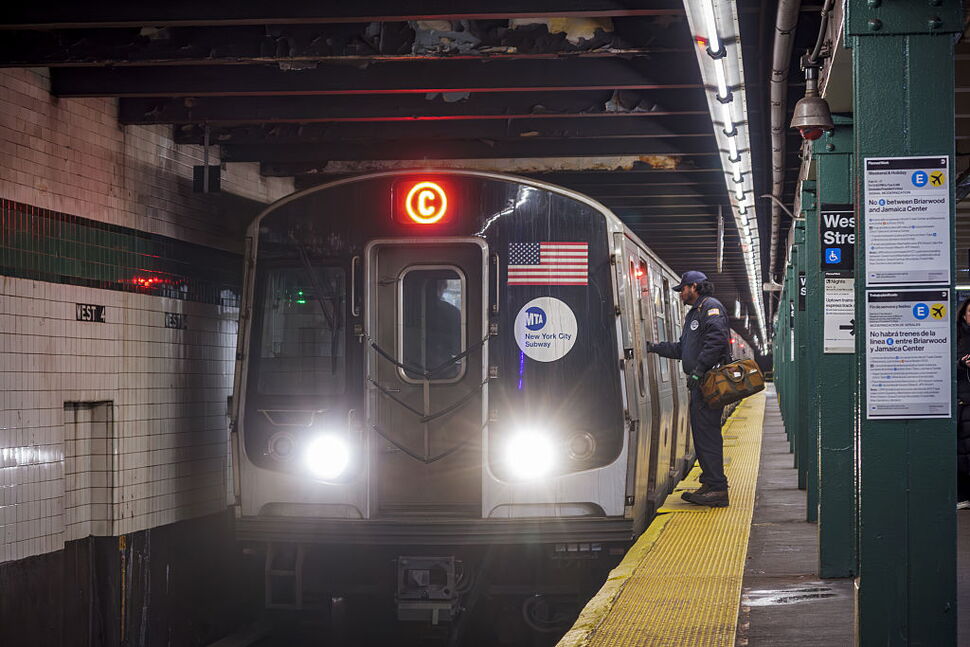
The yearslong push in many cities to create more accessible public transportation is seeing a renewed sense of urgency as living and transportation costs continue to rise for Americans.
In some places, that means emphasizing “transit-oriented development” – a term that refers to the construction of walkable, high-capacity neighborhoods near public transportation.
Some cities have found greater success than others. A new project published by the Urban Institute identifies the best and worst areas in the U.S. for accessible and reliable public transportation systems.
Access to consistent alternatives like bus or rail can have a powerful impact on car-reliant communities, effectively ruling out the gas, insurance and maintenance costs that burden residents with no alternative travel options.
“Transit gives people the ability to save a huge amount of money on transportation. And now more than ever, I think the advantage of transit access is just so clear,” says Yonah Freemark, the project’s head researcher. “For the average household, you could save $10,000 a year by switching to transit if you’re able to.”
Higher capacity for public transit also means less rush-hour traffic and highway congestion. The switch has environmental impacts as well, creating greener ways to travel by reducing greenhouse gas emissions and pollution while still managing population growth.
But while 45% of all U.S. households are within a half-mile of public transit, many of those systems are not frequent enough to be reliable. When considering bus or rail systems that run at least every 15 minutes, only 10% of households have nearby access.
Here are some of the highest achieving for frequent public transit among the nation’s 20 most populous cities.
The 10 Best Cities for Frequent, Nearby Public Transportation
Cities with robust commuter railway networks and densely populated areas tend to offer the best proximity to reliable transit, researchers say.
“Those are the places where folks have the easiest ability to find a home that’s located in a place where they can actually jump on the train or bus without waiting too long,” Freemark says. “Frequency allows people to not have to look at a schedule, to sort of just walk over to the bus or rail stop and jump on without having to think about it.”
The 10 Worst Cities for Frequent, Nearby Public Transportation
In the sprawling metropolitan areas of Detroit, Indianapolis and Memphis, residents have access to four times less public transit than in New York City, San Francisco and Washington, D.C.
“Detroit especially has struggled so much to get suburban support for their transit system,” Freemark says, noting that one advantage Detroit and Memphis have is existing streetcar lines. “I think one key initiative that they should be taking is making sure that the zoning in the areas around those lines is allowing for those sorts of high densities of new housing developments, so people can actually choose to live there if they have the chance.”
Freemark says transit development is largely a money problem for many cities.
“It’s not a great time to be a local government in the United States, because the economy is sort of a little tenuous, and tax revenues are not amazing,” Freemark says. “I think local governments have struggled to find the amount, the revenues they need to actually support their transit systems.”
But when properly funded, research found that public transit systems have largely become supported and successful all across the country. Their popularity also poses a challenge – creating transit-oriented development that’s also available at all income levels.
“We need to make sure that the local governments and the county governments concentrate their affordable housing resources in those areas so that the people who are low- and moderate-income … are also able to benefit from the low-cost transportation made possible by public transit,” Freemark says.