


WASHINGTON (AP) — The United States began ratcheting up pressure on communist-controlled Cuba after the military action in Venezuela early this year resulted in the capture of President Nicolás Maduro.
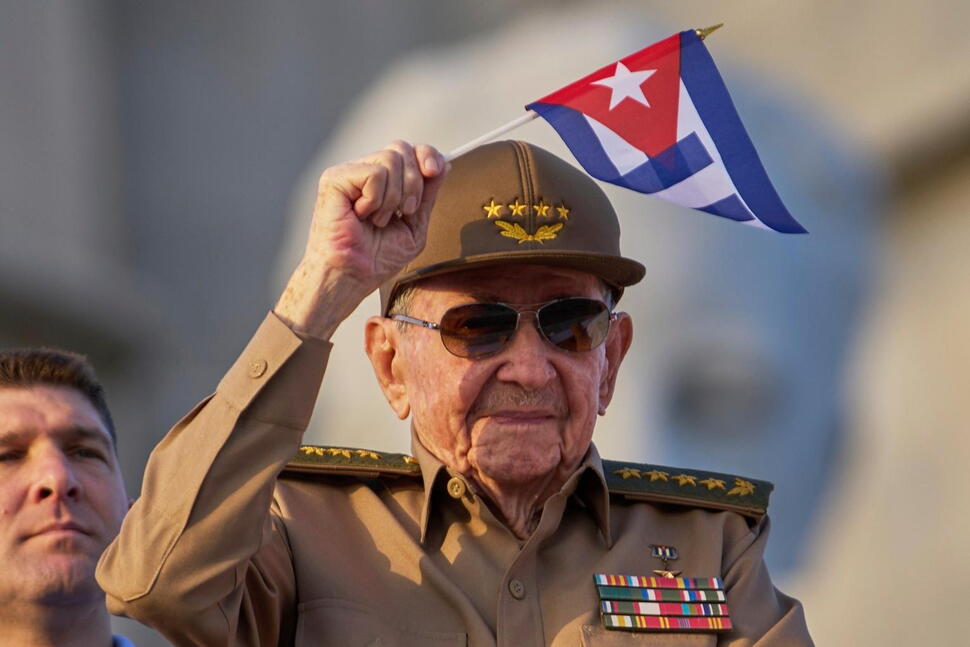
The Justice Department is preparing to seek an indictment of former Cuban leader Raúl Castro. A criminal charge against Castro would have to be approved by a grand jury and could escalate tensions with Havana.
It would come amid rising tensions this year between President Donald Trump’s administration and Cuba’s government. Meanwhile, the U.S. is in the midst of an uneasy ceasefire in the U.S. war against Iran.
Here’s a closer look at developments over the year between Cuba and the U.S.
A day after the operation in Venezuela that captured Maduro, Secretary of State Marco Rubio declared Cuba’s government was “in a lot of trouble,” as the president renewed calls for an American takeover of the Danish territory of Greenland.
Cuba’s president, Miguel Díaz-Canel, responded, “Those who turn everything into a business, even human lives, have no moral authority to point the finger at Cuba in any way, absolutely in any way.”
A day before the war in Iran began, Trumpsaid the U.S. was in talks with Havana and raised the possibility of a “friendly takeover of Cuba,” though he didn’t offer any details.
Trump said Rubio was in discussions with Cuban leaders “at a very high level.”
Trump didn’t clarify his comments but seemed to indicate that the situation with Cuba, among Washington’s bitterest adversaries for decades, was coming to a critical point.
Raúl Guillermo Rodríguez Castro, the grandson of Castro known as “Raúlito,” secretly met with Rubio on the sidelines of a Caribbean Community summit in St. Kitts in February.
Díaz-Canelsaid Cuba and the U.S. held talks, marking the first time the Caribbean country confirmed widespread speculation about discussions with the Trump administration amid an energy crisis.
He said the talks “were aimed at finding solutions through dialogue to the bilateral differences between our two nations. International factors facilitated these exchanges.”
Diaz-Canel said he would not resign.
Díaz-Canel said in an interview he would not step down and that the U.S. has no valid reason to carry out a military attack against the island or to attempt to depose him.
Speaking in the interview on NBC’s “Meet the Press,” the president said an invasion of Cuba would be costly and affect regional security.
Díaz-Canel spoke during a rally that drew hundreds of people to commemorate the 65th anniversary of the declaration of the Cuban Revolution’s socialist essence.
“The moment is extremely challenging and calls upon us once again, as on April 16, 1961, to be ready to confront serious threats, including military aggression. We do not want it, but it is our duty to prepare to avoid it and, if it becomes inevitable, to defeat it,” Díaz-Canel said.
A senior State Department official met with Rodríguez Castro earlier in the month, according to a department official, who was not authorized to comment publicly and spoke on condition of anonymity to discuss the sensitive matter.
The official did not say who from the U.S. met with Rodríguez Castro, whose grandfather is believed to play an influential role in the Cuban government despite not holding an official post. A second U.S. official said Rubio was not part of the delegation that visited Havana.
A Cuban diplomat speaking at the United Nations said Havana will not abide by any American “ultimatums” to release political prisoners as part of new talks.
In an interview with The Associated Press, Cuban Ambassador to the U.N. Ernesto Soberón Guzmán said internal issues regarding detainees “are not on the negotiating table.” The release of political prisoners was a key U.S. demand as the longtime adversaries held discussions in Cuba for the first time in a decade.
Senate Republicans rejected legislation from Democrats that would have required Trump to end the U.S. energy blockade on Cuba unless he receives approval from Congress.
The vote on the war powers resolution showed how Republicans continue to stand behind Trump as he acts unilaterally to exert American force in a range of global conflicts, including Venezuela, Iran and Cuba — one of the U.S.’s closest neighbors.
U.S. officials say the United States was not looking at imminent military action against Havana despite Trump’s repeated threats that “Cuba is next” and that American warships deployed in the Middle East for the Iran conflict could return by way of the island.
Ratcliffe met with Rodríguez Castro, Interior Minister Lázaro Álvarez Casas and the head of Cuban intelligence services, and discussed intelligence cooperation, economic stability and security issues. A CIA official confirmed the meetings to the AP.
One of the people said the potential indictment is connected to Castro’s alleged role in the 1996 shootdown of four planes operated by the Miami-based exile group Brothers to the Rescue. Castro was defense minister at the time.
All three people spoke on the condition of anonymity because they weren’t authorized to discuss an ongoing investigation. The Cuban government did not respond to a request for comment on the potential indictment, which was reported earlier by CBS.
Copyright 2026 The Associated Press. All rights reserved. This material may not be published, broadcast, rewritten or redistributed.
Photos You Should See – April 2026

