


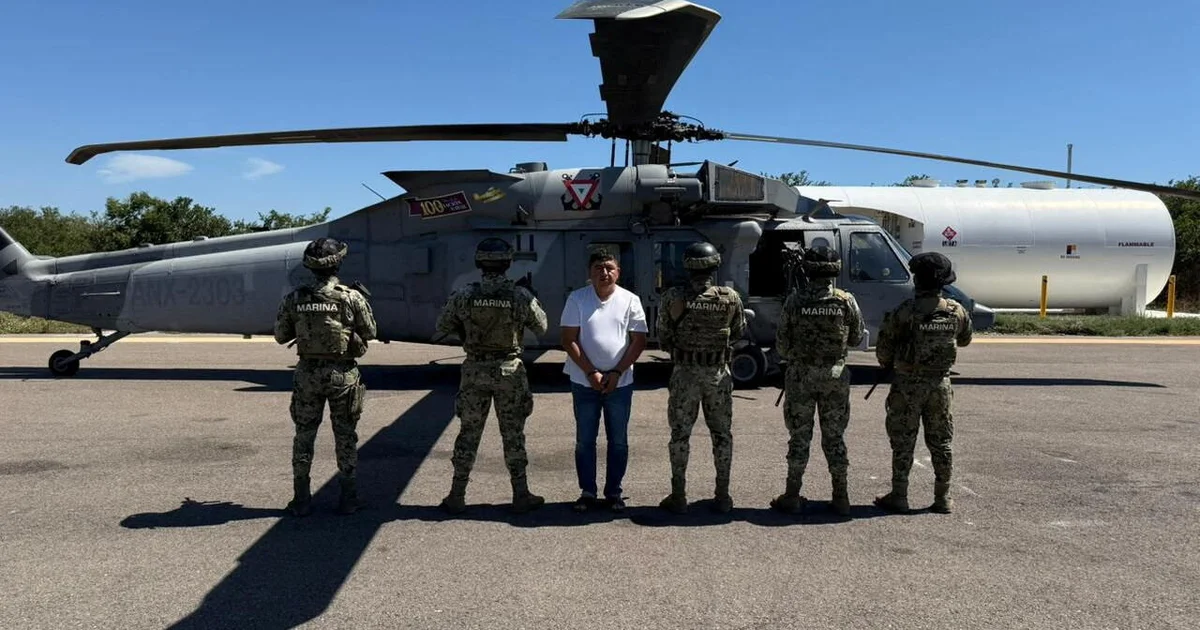
The Jalisco New Generation CartelMexico’s most powerful criminal enterprise, suffered another blow Monday when the Mexican military captured one of its top leaders in the northwest of the country, two months after the cartel’s leader was killed.
Audias Flores Silva, also known as “El Jardinero,” or The Gardener, was seen as a possible successor to the killed leader and the United States had a $5 million reward out for information leading to his arrest.
The CJNG regional commander was captured while he was hiding in a roadside ditch near the community of El Mirador in the state of Nayarit, Mexican officials said Monday. No one was killed or injured during his arrest, according to Mexico’s government.
Security Secretary Omar Garcia Harfuch posted video on social media appearing to show a man emerging from a hole in the ground as he is being taken into custody.
Harfuch said that the captured man is “sought by U.S. authorities with the goal of extradition.”
The Mexican military said reconnaissance aircraft, six helicopters, four planes and more than 100 troops on the ground were involved in the operation.
Marina Secretariat (SEMAR) via Reuters 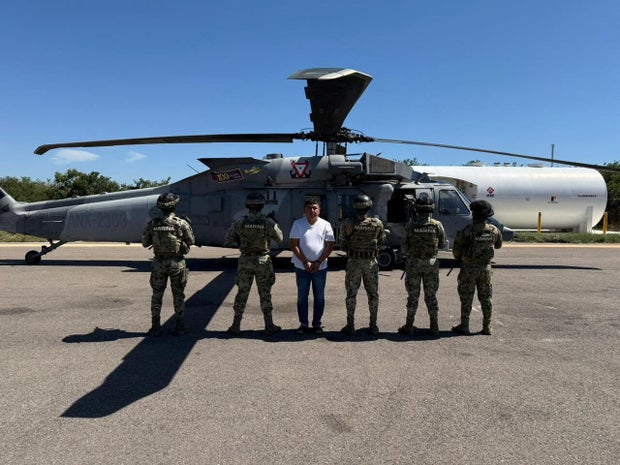

Flores Silva was seen as a possible successor to Nemesio Oseguera Cervantes, or “El Mencho,” who was killed in a dramatic military operation in February. The killing of “El Mencho” led to a surge of cartel violence with a wave of attacks on businesses by cartel gunmen, vehicle burnings and road blockades that killed more than 70 people, including 25 National Guard members.
Despite the violence, Oseguera Cervantes’ killing was seen as a victory for Mexico’s government at a time when Mexican President Claudia Sheinbaum is cracking down on cartels with a heavier hand than her predecessors in an effort to offset threats of intervention by U.S. President Donald Trump.
Last year, Mr. Trump designated the Jalisco New Generation Cartel and five other Mexican cartels as foreign terrorist organizations.
Flores Silva’s capture marked another blow to a criminal enterprise that has quickly become one of the most powerful in the hemisphere. According to Mexican security officials, he was the head of security for Oseguera Cervantes, and helped lead the cartel’s drug production and trafficking operations in the states of Nayarit, Jalisco, Mexico State, and Zacatecas.
Local news organizations in Nayarit reported a number of cars and businesses were burned following his arrest.
The capture was praised by U.S. Ambassador to Mexico Ronald Johnson, who said in a post on X that Flores Silva’s arrest marks an “important step” in combating those who profit from fentanyl trafficking.
“Actions like this strengthen security and help dismantle criminal networks that threaten our communities. Together, we achieve results that make our nations safer,” he added.
At a young age, Flores Silva was arrested in the U.S., where he served a five-year sentence for drug trafficking before returning to Mexico after his release. In 2016, he was arrested by Mexican authorities for his alleged participation in an ambush against police in Jalisco and was released three years later.
Since 2021, the U.S. has requested Flores Silva’s extradition to face charges of drug conspiracy and firearms possession.
For Mexican security analyst David Saucedo, the arrest of Flores Silva represents a “significant blow” to the CJNG leadership, which was still in the process of reorganizing after the death of its leader and founder on Feb. 22.
U.S. Department of State/Handout via REUTERS 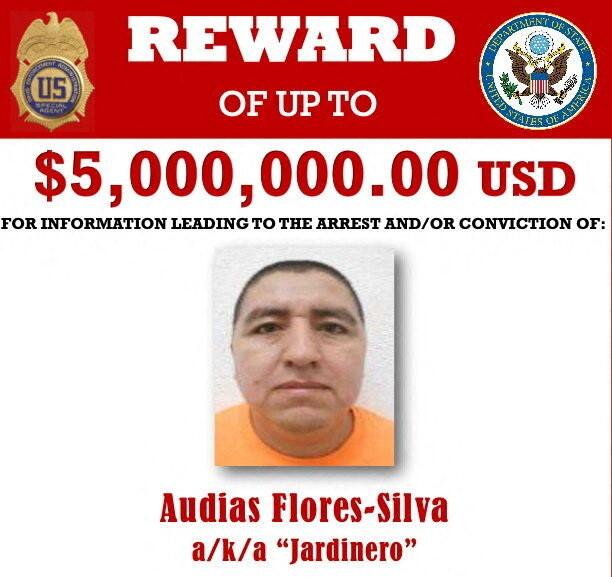

Saucedo told The Associated Press, however, that criminal groups “can quickly reinvent themselves despite the arrest of their leaders,” and that even when they suffer major blows, “they can continue” their criminal activities.
The U.S. Drug Enforcement Agency has acknowledged CJNG’s presence in 21 of Mexico’s 32 states, surpassing the Sinaloa Cartel, which is estimated to operate in 19 states.
Some analysts believe the CJNG’s presence extends to 25 states, with a stronghold in Jalisco. The cartel’s operations have also spread to around 100 countries, including the United States.
Capture of crime boss prompts blockades near U.S. border
Earlier, the government of northeastern Tamaulipas state reported the arrest of Alexander “N,” member of a criminal gang that acts near the U.S.-Mexico border.
His capture provoked at least eight highway blockades by criminal groups on the highways surrounding the border city of Reynosa.
The spokesperson of Tamaulipas security forces said the authorities reestablished control, and that no one was wounded during the attacks.
Mexican news outlets identified the criminal as Alexander Benavides Flores, or “R9,” the head of Los Metros.
The Metros are one of the factions of the Gulf Cartel, weakened over the course of the last decade following the capture of their leaders.
The city of Reynosa has 690,000 inhabitants and sits across the river from McAllen, Texas.