


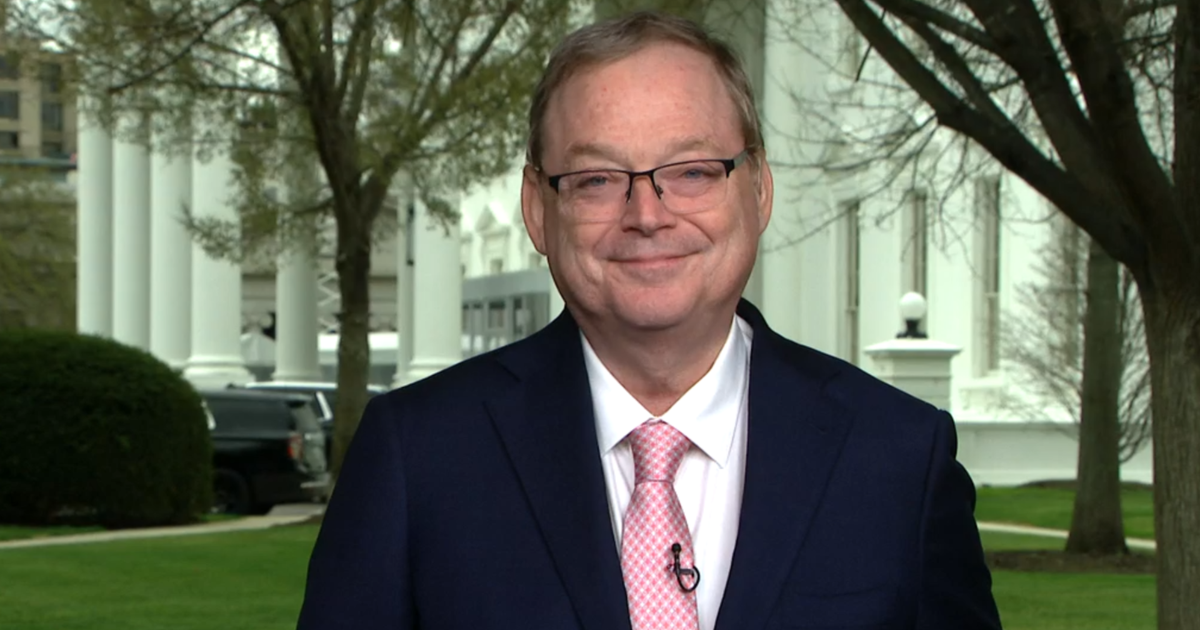
The following is the transcript of the interview with National Economic Council Director Kevin Hassett that aired on “Face the Nation with Margaret Brennan” on March 15, 2026.
MARGARET BRENNAN: We go now to President Trump’s top economic adviser, Kevin Hassett. Good morning to you.
KEVIN HASSETT, DIRECTOR NATIONAL ECONOMIC COUNCIL: Good morning.
MARGARET BRENNAN: The IDF spokesperson said this morning that Israel’s combat operations will go through the beginning of April. Is that also the U.S. timeline? And if so, how much will this conflict cost the economy if it goes on another three and a half weeks?
HASSETT: Right. Well, one of the things that we’ve been briefed on almost every day is what’s going on and what the president is being briefed on with regard to the Iran war. And as of yesterday this story was- the message was that people, the defense- Department of War believed that it would take four to six weeks to complete this mission and that we’re ahead of schedule. So we are a couple of weeks in and I think that should give you some clarity about when we expect that the president will decide that we’ve achieved his objectives. The other thing I can say is that you can also look at futures markets, which are interesting because you’ve cited over and over the spot price of gasoline, which, of course, is affected right now by the disruption of the strait, but if you look at the futures prices, they are expecting a rapid, rapid end to the situation and much, much lower prices. In fact, I don’t think I’ve seen a sort of future price path with such a steep decline in all my years watching futures.
MARGARET BRENNAN: We will talk about the oil trade later on in the program, as those markets prepare to open later today, but the International Energy Agency called this the largest supply disruption in the history of the global oil market. So I’m not sure how much past charts are a future indicator here, but the president is calling on other countries now to send ships to help protect the Strait of Hormuz. You just heard Iran’s foreign minister saying Tehran has been approached by other countries about negotiating their way through strait. If that kind of negotiation happens, are Americans just going to get cut out here?
HASSETT: Well, first of all, you have to understand that America is not going to have its economy harmed by what the Iranians are doing. The bottom line is that in the ’70s we didn’t produce much oil, but now we do. So America is in a very strong position. They think that they’re going to harm the U.S. economy and get President Trump to back down. There couldn’t be anything that was a stupider thing to say because the bottom line is that our economy has got all this momentum in the world and we’ve got lots and lots of oil. We have lots of trading partners that are more on the hook from imported oil from these guys. And as we can see, it’s completely unacceptable that a government that would, you know, murder 40,000 of their people just a few months ago would be blackmailing countries to let stuff through. President Trump thinks that is unacceptable and for the global economy we need to fix it and we are going to fix it fast.
MARGARET BRENNAN: Okay. It is a global market, but I take your point there is supply of course, there’s refining, there’s other interruptions to the ability to access oil and gas. But gas prices themselves are up more than 20% since this conflict has begun. Jet fuel prices are leading airlines to raise ticket prices quickly. That’s not my opinion, that’s the United Airlines CEO who just said that. The American Farm Bureau warned of supply chain shocks when we already have record high input prices. So can you give us some kind of projection here on how this will impact consumer prices and for how long?
HASSETT: For sure. And I want you to know that this is something that the government has been studying for decades. And even myself, when I first came in as Chairman of the Council of Economic Advisers one of the first assignments I got from General Mattis was to study what happens if there are oil disruptions. And so we know how to minimize- minimalize the impact of this disruption. Now, you can’t make it completely go away but you can minimal-ize it. And so we are increasing the amount of permits that we’re giving to Venezuela, we’re getting new sources of fertilizer from Morocco and from Venezuela and other places to make sure that our farmers have the fertilizer they need. And we’re even thinking ahead about the jet fuel problem which is really mostly a problem for jet fuel coming from Asia. And we have been in discussions to make it easier for foreign ships to go from the Gulf of America over to the west coast to make sure that we don’t have a disruption from jet fuel as well. And so we are looking at every scenario and we’ve got a plan for each scenario.
MARGARET BRENNAN: Okay. Are you going to trigger those things and make them operational or are you just looking at them? And how do you prevent food prices from also going up?
HASSETT: Right. Well, the big problem right now would be energy prices and we’re watching and monitoring closely. We’re looking at things every day and seeing how quickly we progress. The bottom line is again, that the reason why futures markets for oil are dropping down towards 60 and even below 50 in the long run is that we expect that if Iran stops being this disruptive terrorist force in the Middle East that there will be a boom in oil production and industrial production. But think about the harm- the harm that this evil government has done to their own people. Back in the ’70s before the revolution, Iran was the 17th largest economy in the world, now it’s something like the 50th.
MARGARET BRENNAN: No one’s going to defend the regime’s human rights record on this program.
HASSETT: They’ve run- they’ve run their country into the ground- but the point is that- I wanted to just say that the countries around them, they also suffer from the risk of having them go nuts and attack them. And so we expect that the global economy is going to have a big positive shock as soon as this is over and we’re still being briefed that it would be four to six weeks from the beginning and that we are ahead of schedule.
MARGARET BRENNAN: A big positive shock, four to six weeks. So this a April 9th scenario you’re talking about? You are going to see some kind of boost–
HASSETT: The president will decide.
MARGARET BRENNAN: –even–
HASSETT: The president will decide if they no longer have the capability of blackmailing us and harming our neighbors. And once he decides that, then he will call an end to the war.
MARGARET BRENNAN: That’s a pretty broad definition.
HASSETT: Well, we’ve destroyed their navy, we’ve destroyed their air force and so on and so I think we are well on the way.
MARGARET BRENNAN: Well tell me how much is this war going to cost? Because I know the Pentagon briefed it’s going to be about $11.3 billion. Do you need to ask congress for more money to pay for what you’re doing?
HASSETT: I think right now we’ve got what we need, whether we have to go back to congress for more is something that I think that Russ Vought and OMB will look into, but the latest number, you said 11.3, the latest number I was briefed on was 12, and so it’s consistent. So this is something that we’ve got the weapons that we’ve already got in place to do this and so we are not necessarily going to need any kind of supplemental.
MARGARET BRENNAN: More than that was spent in just the first week of the war, you know that. It was over five billion just in munitions. You’re solid on the 12?
HASSETT: I said $12 billion–
MARGARET BRENNAN: –For six weeks of war?
HASSETT: No, I’m sorry. The 12 billion was what I was briefed has been spent so far.
MARGARET BRENNAN: Gotcha. Kevin Hassett. Thank you very much. We we will be right back with a lot more ‘Face the Nation’