


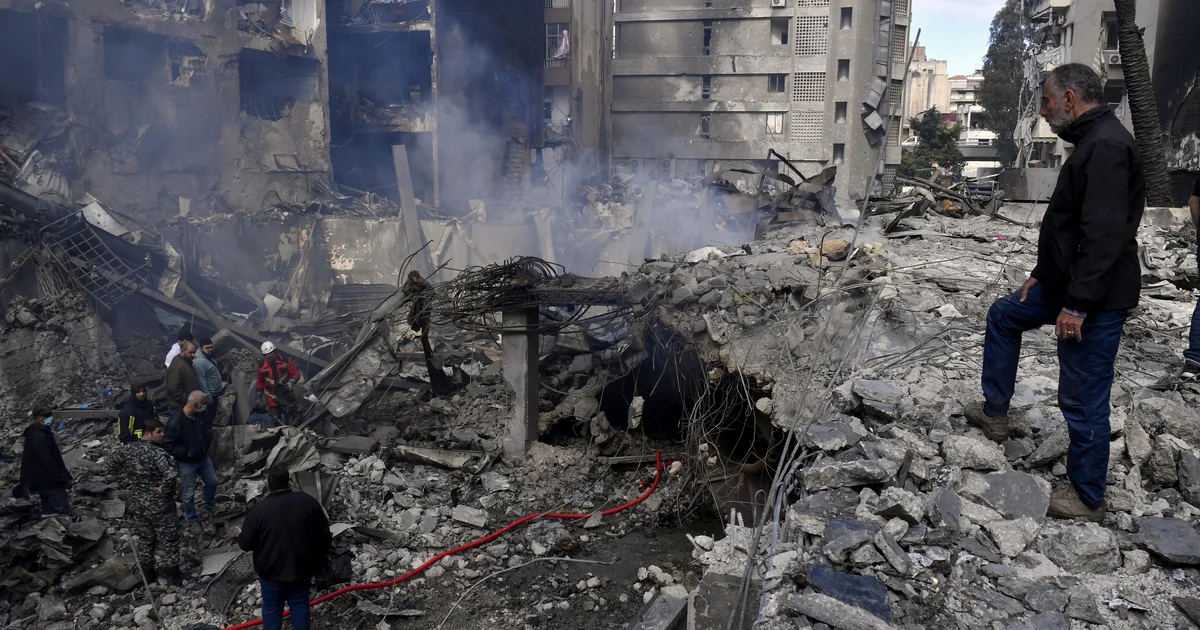
Iran’s deputy foreign minister Saeed Khatibzadeh told CBS News partner network BBC that Israel’s attacks on Lebanon Wednesday were “a grave violation” of the ceasefire agreement, adding that the U.S. must choose “between war and ceasefire – you cannot have it both at the same time.”
“You cannot ask for a ceasefire and then accept terms and conditions, accept areas the ceasefire is applied to, and name Lebanon, exactly Lebanon in that, and then your ally just start a massacre,” Khatibzadeh said.
When asked if Iran would tell Hezbollah, its proxy group in Lebanon, to stop firing rockets into Israel, Khatibzadeh said “it is quite clear that Hezbollah is [a] pure Lebanese freedom movement.”
He did not deny that Iranian Revolutionary Guard officers help train and arm Hezbollah fighters, but said “it is not true that they are acting on behalf of us.” He said the agreement between the U.S. and Iran applied to each country and its allies.
Despite Israel’s attacks in Lebanon, Khatibzadeh said Iran remained “very much focused on getting [an agreement] done.”
On the Strait of Hormuz, Khatibzadeh said: “Definitely, we are going to provide security for safe passage and it is going to happen after the United States actually withdraws this aggression.”
He said Iran would determine a “protocol which is going to run from now on on safe passage in the Strait of Hormuz” with Oman “and, of course, with [the] international community.”
“I think that we have shown to everybody that energy security is important for Iran, it’s important for this body of water in the Persian Gulf, and we are going to abide by the international norms and international law … If safe passage mean[s] that a new protocol that ensure[s] forever that this body of water will be peaceful, then that’s okay” but that safety should be two-sided, Khatibzadeh said.
The diplomat said Iran had “many doubts” about the prospects for a final peace agreement with the U.S., suggesting Tehran believed Washington could just be exhausting diplomatic channels but planning to revert to military force, or “dictating and not compromising.”