


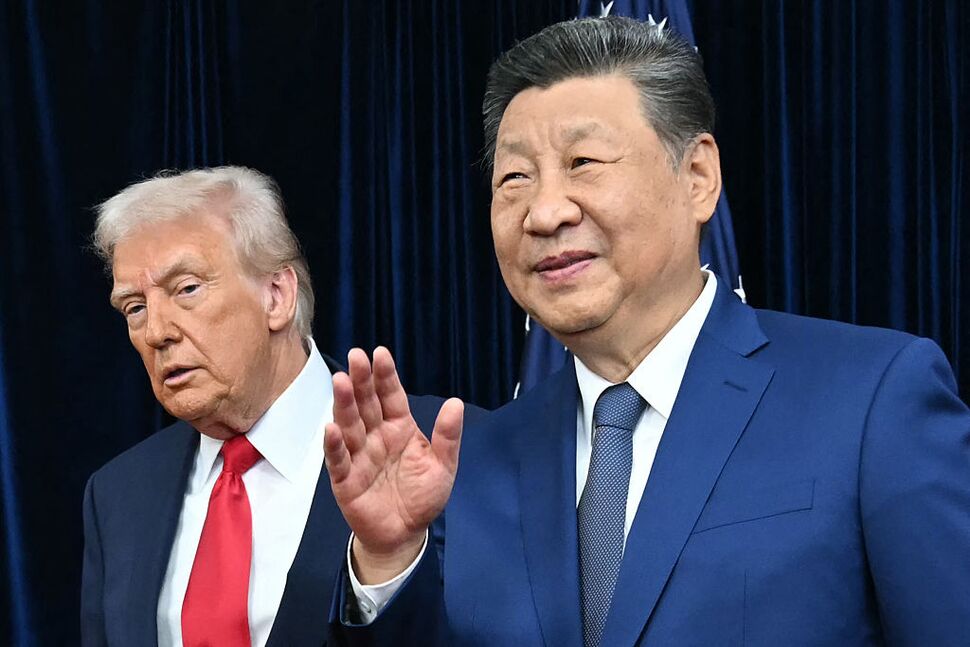
President Donald Trump will sit down this week in Beijing with Chinese leader Xi Jinping for a summit overshadowed by the Iran war. Geopolitics aside, the meeting could have major ramifications for everyone from American farmers to shoppers for cars and phones.
Trump, who postponed his trip from late March to reckon with the new Middle East conflict, predicted in mid-April that Xi would give him “a big, fat hug when I get there in a few weeks,” adding: “We are working together smartly, and very well!”
There almost certainly will not be a literal hug. But Xi is expected to roll out all of the pomp and pageantry he can muster for what will be the first state visit by a U.S. president since Trump went to Beijing in November 2017 amid tensions over the two superpowers’ economic ties. Those tensions still define what is often called the most important bilateral relationship in the world.
With U.S. midterm elections barely six months away, Trump will be under pressure to deliver cost-of-living wins. And Xi will be under pressure to give him headline-generating deals.


Sign Up for U.S. News Decision Points
Your trusted source for breaking down the latest news from Washington and beyond, delivered weekdays.
By clicking “Sign Up”, you will receive the latest updates, including emails, from U.S. News & World Report and our trusted partners and sponsors, and you agree to our Terms and Conditions & Privacy Policy.
Here are five things to watch for when the two leaders meet.
Iran
Tehran is Beijing’s closest friend in the Middle East. China has been a big customer of Iranian oil exports and, like the rest of the world, is feeling the impact of the Strait of Hormuz shutdown – given it usually provides passage for 20% of global oil.
Iran, of course, is hitting home for American consumers as well, in the form of higher prices on gas … and pretty much everything that gets driven to a point of sale. Many food prices are up. And the longer Hormuz is stopped up, the greater the risk of a global recession.
The war has also choked off supplies of helium, “threatening to hamper production of everything from semiconductors to military-drone components and space rockets,” as The Wall Street Journal put it.
Could Trump and Xi come to some sort of understanding about Iran that uncorks Hormuz?
Trade, Generally
At a summit in South Korea in October, Trump and Xi agreed to a truce of sorts in their trade war. “Of sorts” because the average U.S. tariff on Chinese goods hovered around 31.6% in early 2026, according to the Penn Wharton Budget Model.
Tariffs are taxes on imports that are paid by the importer and regularly passed along to consumers. So Americans are paying more for goods from China. And some U.S. businesses dependent on inputs from China are also facing higher costs.
Former President Joe Biden did not retreat from the tariffs Trump imposed in his first term, highlighting the bipartisan nature of skepticism about free trade.
Will Trump and Xi codify the truce? Expand it?
Cellphones or Sell Phones?
Trump first imposed, then relaxed, limits on exports of advanced microchips to China. He granted Apple exemptions from tariffs on high-tech consumer goods produced in China. He has also worked to make the U.S. less reliant on Beijing for rare earth materials – building blocks for high-tech products.
Beijing has looked to use its rare earth metals as leverage in the global economy – including over the United States.
Will the two leaders unveil any new agreements that make it easier to buy and sell these critical products?
Investing in the U.S.
One of the most closely watched facets of the summit will be whether China offers to make massive investments in the U.S. economy – notably in building auto plants – and how Trump responds.
In January, Trump celebrated the idea in a speech to the Detroit Economic Club. “If they want to come in and build the plant and hire you and hire your friends and your neighbors, that’s great,” he said. “I love that. Let China come in.”
AI-can’t you?
The Trump administration’s AI action plan declares that “denying our foreign adversaries access to this resource” is “a matter of both geostrategic competition and national security.”
U.S. officials accuse Chinese entities of waging “industrial-scale” campaigns to steal American artificial intelligence.
Sufficeth to say: The potential for conflict on this issue is high.
The talks on Thursday and Friday will provide a high-profile opportunity for the leaders of the world’s two most important powers to discuss AI as a formal agenda item. There are potentially vast ramifications for the use – or abuse – of that groundbreaking and world-reshaping technology.
Watch carefully. There are ways this summit could affect everything from your grocery bill to your job prospects to your smartphone options.
Photos You Should See – May 2026
