


Proposed state legislation and class action lawsuits have taken shape recently in light of Uber driver fraud and concerns of rider safety.
CBS News California Investigates has uncovered a growing number of cases of Uber drivers who have used stolen identities to get hired with the company, suggesting there are hundreds, maybe more, drivers who aren’t who they say they are.
“Apparently, you never know who’s picking you up,” the wife of a victim of employment fraud said, after her husband’s identity was stolen by someone who then used it to get a job at Uber.
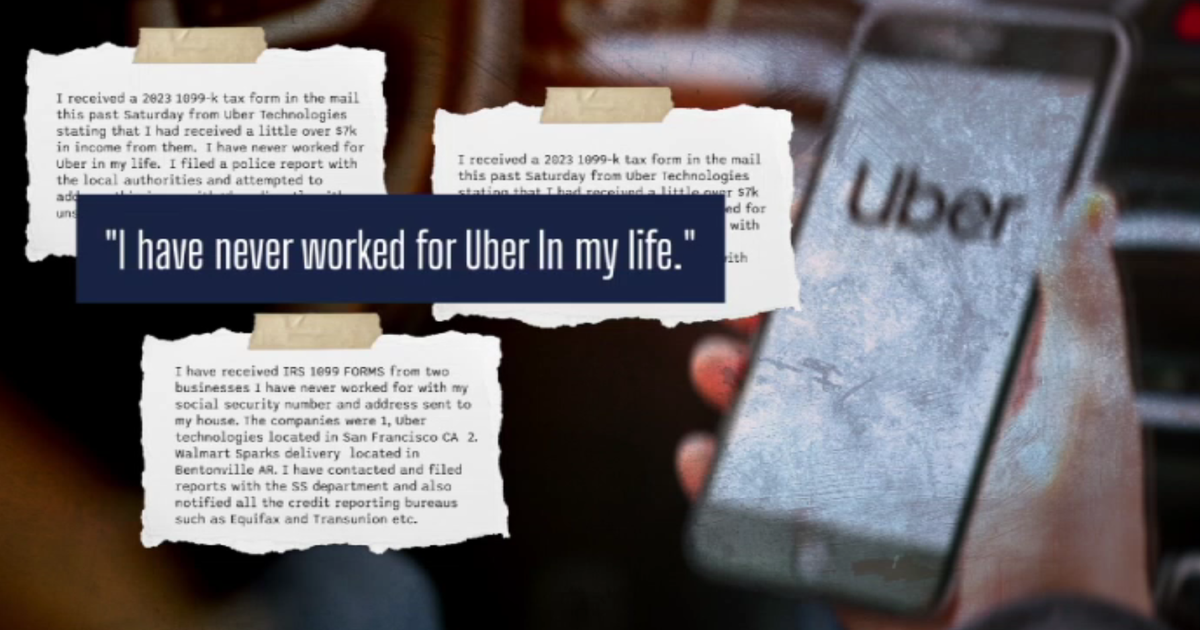
He’s not alone. In an earlier investigation, CBS News California Investigates discovered a number of people who got a 10-99 tax form in the mail from Uber, even though they had never driven for the ride-share company.
Federal Trade Commission data shows the agency has received nearly 400 complaints about Uber identity theft fraud, dating back to 2021, from victims all over the country. Many of them are saying things like, “I have never worked for Uber in my life.” They reported impostors, who could be driving for Uber right now, used their full name, social security number and address.
“I was unaware of this issue until we learned about your reporting, so we are reaching out to the company because we believe this needs to be addressed,” State Senator Josh Becker said.
The senator has authored two recent laws that seek to protect Californians from identity theft. The senator said businesses like Uber need to do more to protect consumers.
“Especially if they know this kind of fraud is happening, we have to hold them responsible to address it,” Becker said.
There is now a second class-action lawsuit that’s been filed, claiming that Uber is aware of this type of fraud, but hasn’t done enough to prevent and address it. So is the lawsuit sending a message to Uber?
“I mean, that is the hope. You know, part of what we’re trying to do is not just get money, but we’re trying to get Uber to correct its policies,” Consumer Fraud Attorney Kenny Murena said.
Murena is based in Florida and filed the suit late last month. Another class action lawsuit was filed against Uber in California in 2023. Both allege that Uber doesn’t properly screen its drivers.
“Uber doesn’t necessarily know who many of its drivers are,” Murena said. He added that many passengers are “potentially in the car with someone who would not otherwise be able to become an Uber driver without having used the personal information of a non-driver.”
Daniel Yanisse, CEO of Checkr, a San Francisco-based company that conducts background screening for a variety of companies, including Uber and other rideshare and delivery apps, said in general, about half of resumes and job applications have some type of fake information on them.
“It’s a spectrum, right? You can go from people lying just a little bit on their job experience, their dates, their titles, to inflate it, to look better,” Yanisse said. “That’s been happening for some time, but now we’re seeing more and more, all the way to a completely synthetic candidate that’s a fake person, nothing on it is real.”
Checkr recently launched identity verification, a new tool that allows employers to confirm their potential employees are who they say they are, looking at things like names that don’t match IDs or selfies made with AI. Yanisse said his company also works with marketplaces and gig platforms where people are either trying to hide sexual criminal records or assault records to get back on the platform, or sharing the same account.
“We see people using the same social security number that’s been sold online, and maybe 20, 30, 40 different people are using the same identity to get access to the platform in an illegitimate way,” Yanisse said. “So that is a new innovation that we launched because unfortunately, the Social Security Administration does not offer that type of product. We are now able to flag social security numbers who have been stolen and shared across multiple identities, which should significantly reduce the risk for platforms.”
Senator Becker has now called on Uber to do something to address the widespread and growing fraud on its platform.
“If you’re sitting in the back of a car, I take a lot of ride share, you don’t want to be wondering if this person is an imposter. We have to give people confidence,” he said.
When asked how many taxpayers have received Uber tax earnings forms that indicate fraud, the IRS said it doesn’t collect public data on 10-99 complaints.
Uber released the following statement:
“Identity theft and tax fraud are sophisticated, ever-evolving issues that have long impacted a wide range of industries. Uber maintains robust safeguards designed to detect and prevent fraudulent activity, and we continually enhance these systems to address emerging tactics. We disagree with the claims in this complaint.”
If anyone believes they are a victim of this type of fraud, email Kristine Lazar at KLazar@cbs.com.