


By Pete Schroeder, Tatiana Bautzer and Michelle Price
WASHINGTON, April 30 (Reuters) – U.S. banks say they are largely in the dark about an expected White House order requiring them to collect data on their customers’ citizenship or immigration status, a directive senior industry executives warn would be costly and disruptive.
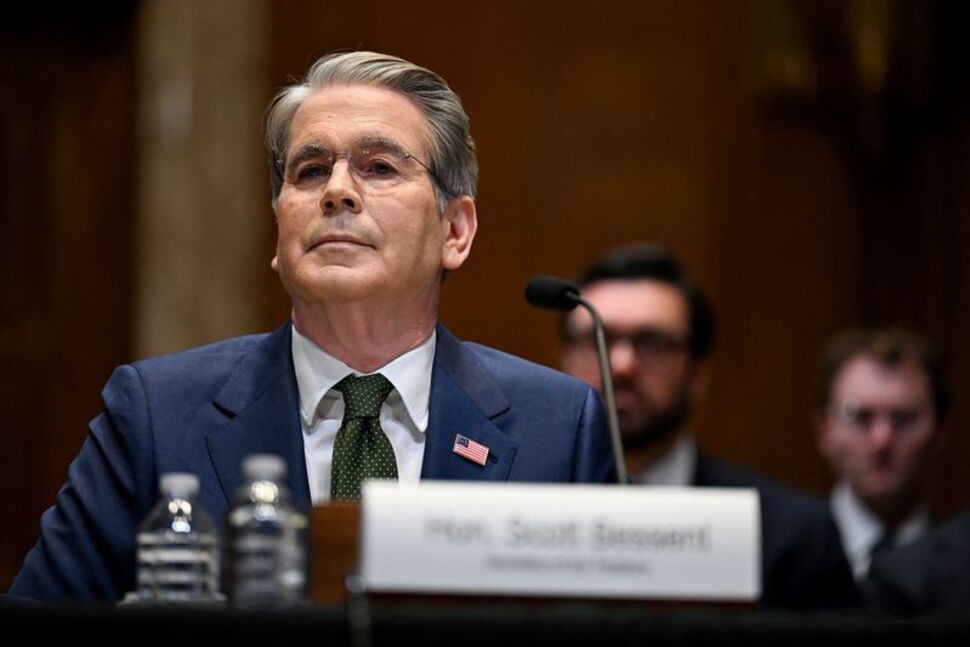
Treasury Secretary Scott Bessent told media outlet Semafor this month that the administration is working on the executive order, but did not provide details. It was first reported in February by the Wall Street Journal, which characterized the effort as an extension of the administration’s crackdown on immigrants living in the United States illegally.
Bank lobby groups initially pushed back on the effort in meetings with administration officials, warning it would be operationally and legally complex, expensive, and could potentially lead to millions of people becoming unbanked, according to three of the people.
But in recent weeks, banks have had little communication from the administration and say they are largely in the dark, despite the magnitude of the potential requirement, the people said.
Center-right think tank American Action Forum estimated last month that just for new accounts, collecting citizenship data could cost the industry between $2.6 billion and $5.6 billion annually.
“The logistical challenges for banks are significant,” said Kathryn Judge, a professor at Columbia Law School.
“Overall, the initiative is bad news for banks but worse news for ordinary Americans. Even for citizens, the process could create significant headaches.”
The effort is another example of the Trump administration causing potential headaches for the banking industry in the pursuit of broader policy goals, even as it relaxes other rules it says are stifling lending. In January, Trump blindsided the industry by calling for credit card providers to cap interest rates in a bid to address cost-of-living concerns, and he has targeted Wall Street banks for discriminating against conservatives, a claim they deny.
A White House official said in an email that the administration continues to explore ways to protect the banking system from “unacceptable credit risks and to ensure that banking services remain available and affordable for all Americans.”
A spokesperson for the Treasury Department did not respond to a request for comment. Bessent told Semafor it was not unreasonable to have more information about who is using the banking system.
The bank executives requested anonymity to discuss sensitive regulatory issues.
MASSIVE OVERHAUL OF IT SYSTEMS
Existing know-your-customer regulations require banks to verify a customer’s identity and gather other basic personal data, including Social Security or tax identification numbers. But they do not require lenders to gather and verify citizenship or immigration status information.
Banks say that doing so would entail a massive overhaul of their document processing and IT systems, as well as extensive training for frontline staff so they could identify and assess the validity of more than 180 different types of visas listed by the State Department.
Verifying such documents for new customers would be extremely burdensome, say bankers, but doing so for existing customers would be almost “impossible,” said a fourth source who runs a retail bank, a sentiment echoed by other executives.
The requirement would also create massive new enforcement risks for banks if the authorities decide to pursue lenders for failing to adequately check customer paperwork, said one of the sources and a fifth person who is a top banker.
Bank regulatory data suggests there are hundreds of millions of existing personal U.S. bank accounts. Roughly half of Americans, however, do not have passports, according to State Department data, and more than 9% of American citizens of voting age, or 21.3 million people, do not have readily available proof of citizenship, according to 2024 research by the Brennan Center for Justice, a think tank at NYU School of Law.
And many account-holders, most notably women who have been married, may have different names on their birth certificates.
GREATER IMPACT ON LOWER-INCOME AMERICANS
Even if the order targets only new accounts, those documentation gaps would still create challenges, say bankers and lawyers, especially for lower-income Americans who may struggle to afford birth certificates or passport fees.
Most banks would likely restrict online account opening, two of the people said. That would also make it harder for Americans in rural banking “deserts” — where average household incomes are lower, according to research from the Consumer Financial Protection Bureau — to open bank accounts.
“The initial implementation would be a lot of extra work because nobody would be accustomed to following the process,” said Ross Delston, an attorney specializing in anti-money laundering compliance. “And then you run the risk that banks would just start turning customers away,” with a potential discriminatory impact on some groups, he said.
For an executive order to become legally effective, the Treasury or bank regulators would typically have to write new rules and allow public feedback, giving the industry another chance to water down the requirements.
Dan Goldbeck, director of regulatory policy at the American Action Forum, who authored the research on the potential costs, said it was unclear what statutory authority regulators could potentially invoke to implement such an order.
That could open the door to “significant legal challenges,” he added.
(Writing and reporting by Michelle Price; Reporting by Pete Schroeder in Washington and Tatiana Bautzer in New York; additional reporting by Megan Davies and Paritosh Bansal in New York; Editing by Alistair Bell)
Copyright 2026 Thomson Reuters.