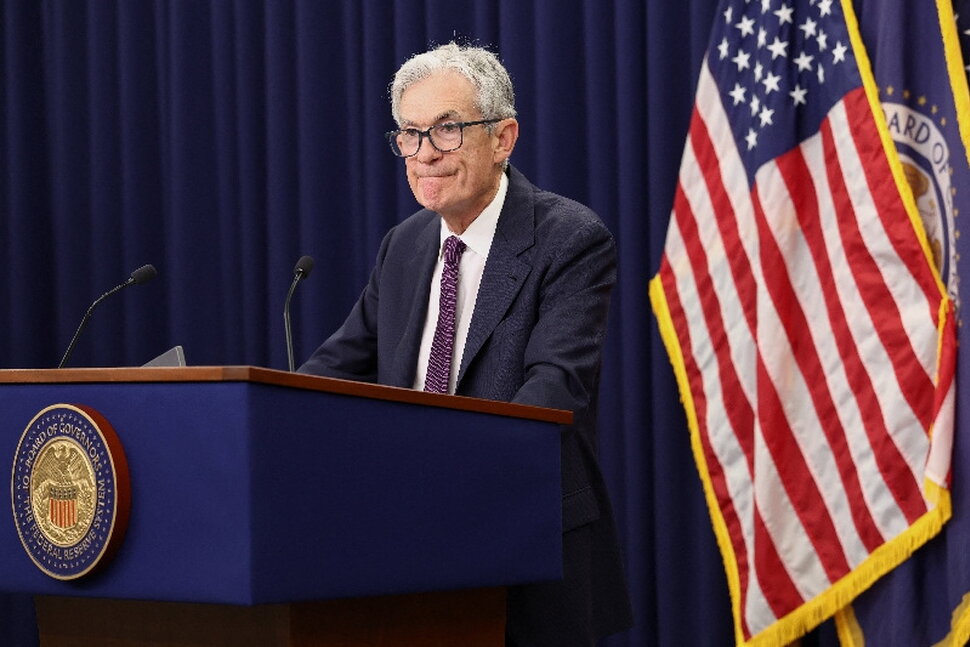
WASHINGTON, May 15 (Reuters) – Federal Reserve Chair Jerome Powell’s immediate predecessors knew how to “go big” in a crisis, steer a committee towards an interest rate decision, and oversee changes in central bank strategy, all parts of the job that the lawyer and former private equity investor also had to learn.
Over a tumultuous eight-year term as leader, he slashed rates to effectively zero and bought bonds at a never-before-seen clip to combat the COVID-19 pandemic’s strain on the economy and markets and then jacked rates up at the fastest pace in four decades to fight off the inflation that came on the heels of the health crisis. He changed the Fed’s policy playbook twice significantly and communicated to the public about Fed actions and intentions more often than any previous U.S. central bank chief.
But as his leadership run draws to a close on Friday, what may have set Powell apart and indeed proved perhaps his most important skill as a central banker was his behind-the-scenes effort to rebuild the Fed’s relationships with elected officials on Capitol Hill.
As a Washington-area native, dealmaker, Treasury Department official, and think tank analyst before joining the Fed, relationship-building may have been a more natural inclination for Powell than his predecessors, even as former chairs like Janet Yellen and Ben Bernanke brought PhD and even Nobel Prize-level economic research and insights to the process.
But it wasn’t just about gladhanding. Powell viewed Congress as the central bank’s chief source of oversight and accountability, and, after falling afoul of President Donald Trump early in his tenure as chair, also saw it as the chief bulwark against efforts to undermine the Fed’s authority to call the shots on the economy and interest rates regardless of outside pressure – from the Oval Office or otherwise.
Recent research by University of Maryland assistant economics professor Thomas Drechsel, categorizing meetings held by Fed chairs using publicly available calendars, showed that compared to Yellen and Bernanke, Powell worked the Hill in relentless fashion, and that the pace of meetings with members of the House and Senate from both major political parties was most intense when Trump was in office.
Incoming Fed Chair Kevin Warsh, also a lawyer by training, is well-regarded also for his diplomatic skills and may follow a similar playbook, particularly as a hedge in the event Democrats win control of Congress and shift leadership of the Fed’s main oversight committees.
It didn’t make everyone Powell’s friend.
Ohio Republican Bernie Moreno had been sharply critical of the Fed chair in appearances before the Senate Banking Committee in 2025, and said his two meetings with Powell last year did nothing to temper his view that he “is hyperpolitical … and it hurt the Fed in a gigantic way,” a common opinion among Trump supporters.
But Drechsel said the numbers speak for themselves, and may have proved of particular importance in recent weeks when key members of the Senate backed Powell in a dispute with the Trump administration over a now-dropped criminal investigation.
In particular, Powell over his years as chair met 11 times with North Carolina Republican Senator Thom Tillis, Drechsel’s numbers show, and it was Tillis who as the pressure mounted on Powell put a hold on the nomination of Warsh until the administration backed down on the probe.
“It was systematic,” Drechsel said of Powell’s engagement with lawmakers. “Maybe it was just natural given Powell’s background. Bernanke and Yellen were academics…But given the political environment it was noteworthy that he interacted so much…One interpretation is that Powell actively worked with Congress perhaps to protect the Fed.”
(Reporting by Howard Schneider; Additional reporting by Ann Saphir; Editing by Andrea Ricci )
Copyright 2026 Thomson Reuters.