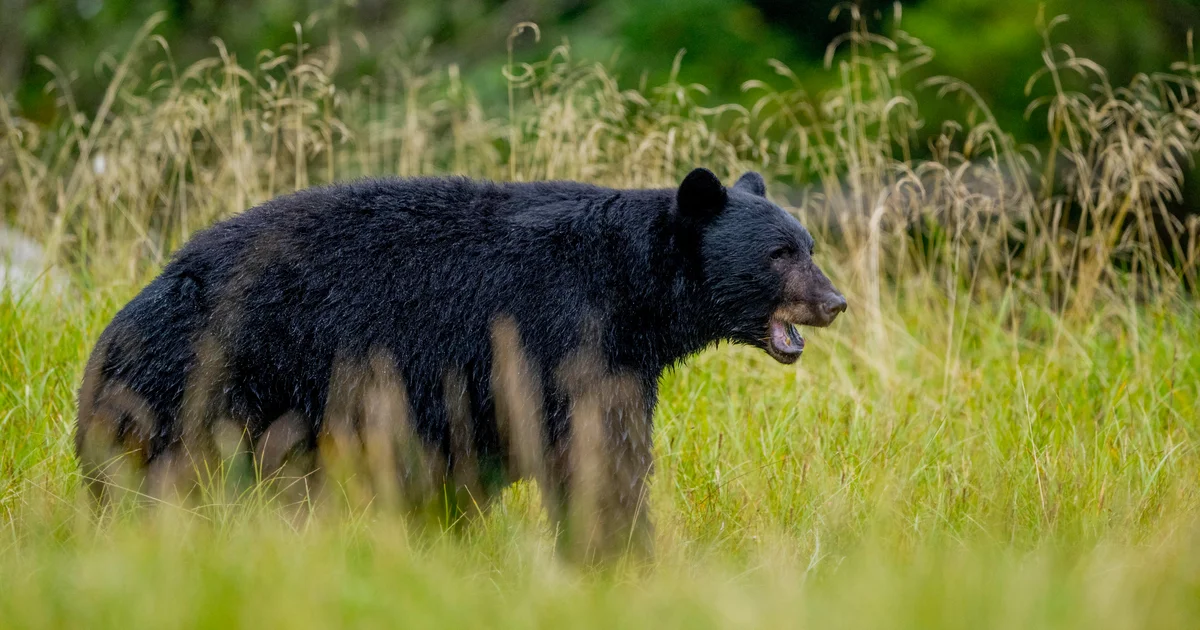
Toronto — A 27-year-old man was killed in a black bear attack over the weekend in northern Saskatchewan, according to local authorities and his employer.
The attack happened about 53 miles northeast of Points North Landing in central Saskatchewan, the province’s Ministry of Community Safety confirmed in a statement to CBS News.
The ministry said the regional conservation service’s Wildlife Human Attack Response Team was investigating the incident, adding: “Our thoughts are with his family, friends, and loved ones during this difficult time.”
The victim was an independent contractor working at a facility belonging to the Vancouver-based UraniumX Discovery Corp. H encountered the bear over the weekend at a remote uranium exploration site, the company said in a statement on its website.
“We are deeply saddened by this tragic loss. Our thoughts and deepest condolences go out to the family, friends, and colleagues of the deceased. The safety and well-being of our employees, contractors, and all personnel working on our projects is, and will always remain, our highest priority,” said UraniumX CEO Esen Boldkhuu in the statement.
As a precaution, all field operations at the company’s Zoo Bay property have been paused since the incident, while the investigation is underway.
Wolfgang Kaehler/LightRocket/Getty 
CBS News’ Canadian partner CBC News, citing the victim’s brother, reported that he had come to Canada from India three years ago.
“The black bear involved in the incident was euthanized by a civilian on scene prior to officers arriving,” the provincial Ministry of Community Safety said in its statement to CBS News. The animal was then transported to a regional veterinary college for a necropsy.
On the same day as the bear attack, the government of Saskatchewan had issued a reminder to residents to be wary of hungry bears seeking easy food near homes and campsites.
“Black bears are intelligent and ruled by their stomachs. Limiting attractants is the most effective way to reduce these interactions,” the authorities warned.
Fatal bear attacks in Saskatchewan are rare, Douglas Clark, a professor at the University of Saskatchewan’s School of Environment and Sustainability, who specializes in human-bear interactions, told Canada’s public broadcaster CBC.
“The last one was six years ago,” Clark told CBC, “and you have to go quite a few years earlier before you find the next ones in the record.”
Last week, authorities said a missing hiker’s death in Montana’s Glacier National Park was likely caused by a bear attack.
As humans spread deeper into bears’ natural habitats around the world, encounters are becoming more common in some places. A Japanese company that makes ferocious-looking robotic wolves has been swamped by orders after a record number of fatal bear attacks last year.