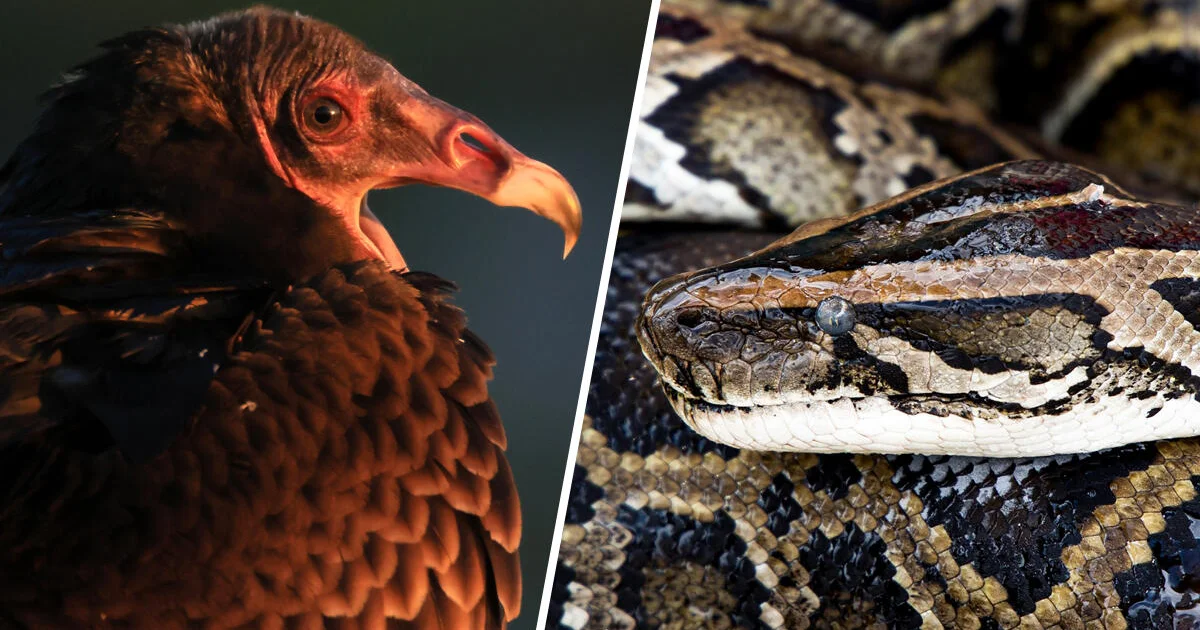
Vultures raiding a Burmese python nest in Broward County might sound like classic Florida weirdness, but University of Florida researchers said the discovery marks the first documented case of native birds preying on python eggs — a finding that could offer new clues in the fight against the invasive species.
According to a study published in February in the journal Reptiles & Amphibians and first reported by The Miami Herald, researchers found vultures feeding on a Burmese python nest in the Florida Everglades.
The nest was first discovered on May 5, 2023, in the Francis S. Taylor Wildlife Management Area, a vast protected wetland within the greater Everglades ecosystem. Researchers said the nest belonged to a tagged female python and was concealed beneath a thick layer of grass.
When researchers returned to the site about a month later, on June 6, they found at least four vultures actively feeding on the eggs. The birds flew away before they could be positively identified, but both Black Vultures and Turkey Vultures are common in South Florida and had previously been observed in the area, according to the study.
Bruce Bennett / Getty Images 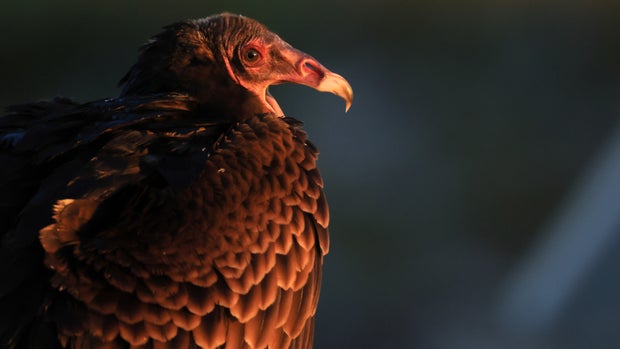
The nest had been heavily disturbed, researchers noticed. The layer of grass covering it had been pulled back, exposing the interior cavity and the eggs inside.
Researchers documented at least 17 eggs. Three had been dragged out of the nest, leaving behind only shell fragments. The remaining 14 were still inside the cavity, but all had been punctured, with their contents either exposed or completely missing. According to the study, the damage suggests the vultures consumed the eggs either partially or entirely.
The female python was later found submerged in shallow water about 40 feet from the nest. Researchers found no evidence that any other predators had been present, noting the absence of fur, scales, tracks or scat. They also said the puncture marks on the eggs were consistent with a vulture’s beak.
Because the eggs were concealed beneath vegetation, researchers believe the vultures likely located the nest by scent rather than sight.
What remains unclear is why the female python was away from the nest when the birds moved in. Researchers said there are two likely explanations: the snake was either driven away by the vultures or another unknown disturbance, or she temporarily left the nest on her own and the birds took advantage of the opportunity.
Female Burmese pythons rarely leave their nests while brooding eggs, and their presence typically helps protect them from predators.
While a previous study documented a bobcat preying on a Burmese python nest after the female temporarily left the eggs unattended, researchers said this is the first recorded instance of a native bird species preying on python eggs in Florida.
What natural predators do Burmese pythons have in South Florida?
According to the U.S. Fish and Wildlife Service, more than 180,000 Burmese pythons were brought to the United States through the live pet trade between 1975 and 2018. The large constricting snakes, which are native to Southeast Asia, became established in South Florida by the 1980s after escapes and intentional releases.
State and federal wildlife officials say Burmese pythons have very few natural predators in South Florida, especially once they reach adulthood. American alligators are considered one of the only native animals capable of preying on the invasive snakes, though encounters between the two predators have gone both ways in the Everglades.
Orlando Sentinel via Getty Images 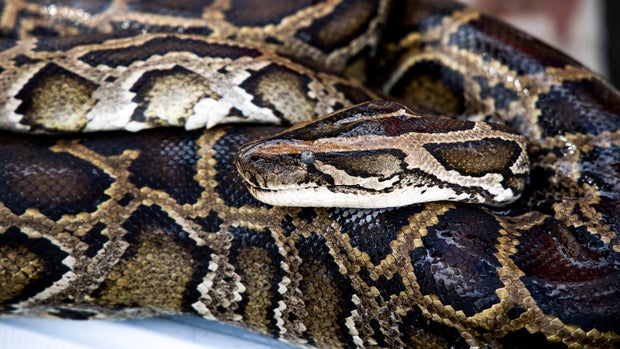
Wildlife officials say birds of prey, bobcats and other animals may occasionally prey on hatchlings or juvenile pythons, but adult Burmese pythons sit near the top of the food chain in the region.
Their lack of natural predators is one of the reasons the invasive species has spread so successfully across South Florida.