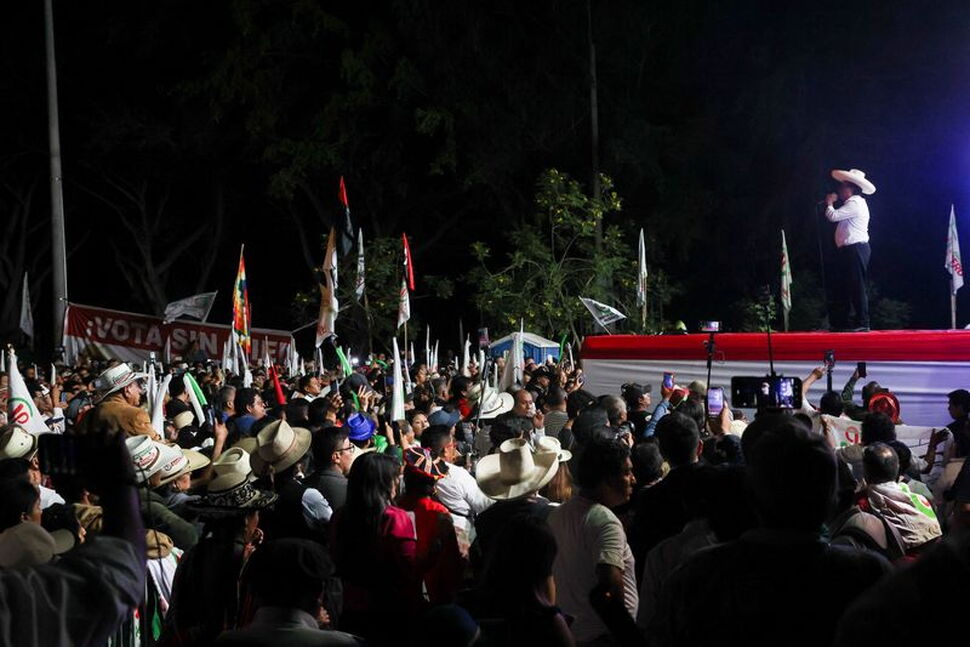
June 5 (Reuters) – Peruvians head to the polls on June 7 for a presidential runoff between leftist Roberto Sanchez and conservative Keiko Fujimori, after a fractured first round in April whose results took nearly a month to confirm.
Peru, one of the world’s top copper producers and a major exporter of other critical minerals, has cycled through eight presidents in a decade. The next president is due to take office on July 28.
Here are key facts about the election:
WHAT HAPPENED IN THE FIRST ROUND?
The April 12 vote was marred by disruptions, including delays in delivering ballots and the late setup of polling stations, which left thousands unable to vote. Authorities extended voting into a second day in some areas, including parts of the capital, Lima. The drawn-out count fueled fraud allegations from some candidates, though European Union observers reported no evidence of wrongdoing.
WHAT MEASURES HAVE BEEN TAKEN?
Electoral authorities say steps have been taken to avoid a repeat, including hiring a new logistics company to distribute ballot papers and establishing a new committee to identify risks.
Peru’s National Jury of Elections head, Roberto Burneo, acknowledged that trust in the electoral system had declined after the delays, which led to the resignation and investigation of the chief of a separate electoral body in charge of organizing elections. Results could take “about a month,” Burneo said, due to a potentially close race and demands for recounts.
WHAT HAVE THE CANDIDATES SAID ABOUT KEY TRADE PARTNERS CHINA AND THE U.S.?
Peru is a major supplier of critical minerals to both China and the United States. Sanchez, a former foreign trade minister who secured 12.03% of the first-round vote, has said Peru should remain open to international partners but on more “just” terms. He has called for environmental protections and better redistribution of mining wealth.
Fujimori, the front-runner with 17.19%, has pledged to attract U.S. investment and strengthen ties with Washington, echoing the approach of other conservative governments in the region. The daughter of late former President Alberto Fujimori, she is running for the presidency for a fourth time. Her party has not detailed a major shift in foreign policy, though analysts view her as aligned with traditional Western partnerships.
Sanchez has proposed reviewing mining contracts, raising the minimum wage and rewriting the constitution – moves that have unsettled financial markets. He has sought to reassure investors by bringing in former economy minister Pedro Francke, who says a Sanchez government would respect existing contracts.
Fujimori has emphasized economic stability and respect for private property. She has named Luis Carranza, a former finance minister and former director of Latin American Development Bank CAF, to lead her economic team, reinforcing a market-friendly stance.
WHAT DOES CONGRESS LOOK LIKE?
Peru’s April election also reinstated a bicameral legislature for the first time in decades, with a 130-seat lower house and a 60-seat Senate.
No party secured a majority in either chamber, continuing a pattern that has complicated governance and led to frequent presidential impeachments. Right-wing parties aligned with Fujimori could command a narrow majority in both chambers.
Under the new system, removing a president will require approval in both chambers, with the Senate acting as the final filter in determining a president’s future.
(Reporting by Lucinda Elliott. Additional reporting by Marco Aquino; Editing by Sanjeev Miglani)
Copyright 2026 Thomson Reuters.