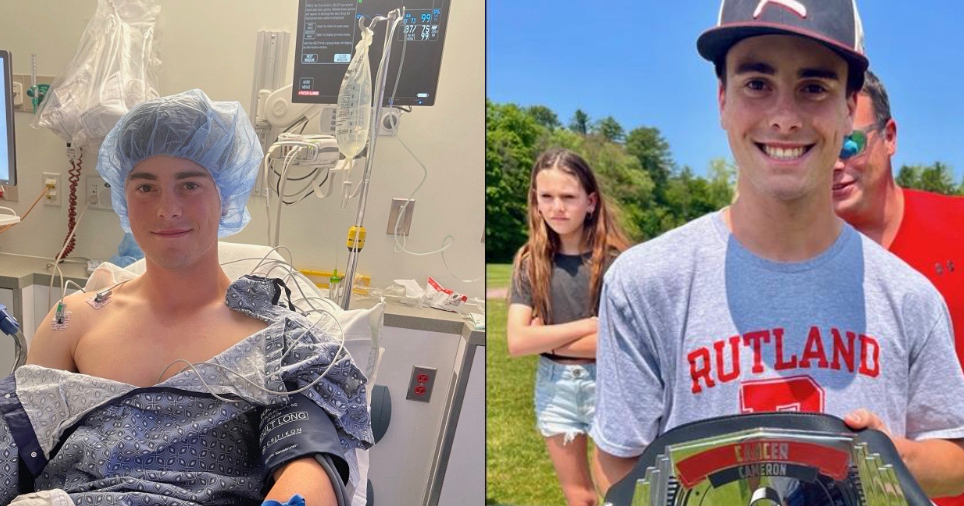
Cameron Rider had always been an athlete and loved hockey and baseball. The summer before his junior year of high school, he decided to join the football team. Pre-season practices in August left him fatigued and out of breath, but Rider, 16 at the time, just thought he was getting used to the new sport.
As the weeks passed, his symptoms escalated. When his tiredness turned into a 105 degree fever and body aches, his parents took him to a local emergency room. He was diagnosed with pneumonia. Antibiotics helped, but soon his symptoms returned. He spent the next few months repeating the same cycle. In November, he was hospitalized with pneumonia. Steroids and antibiotics couldn’t keep the illness at bay.
Finally, doctors recommended he see a specialist. Rider was hopeful he might get some answers.
“What they were doing beforehand wasn’t cutting it … but I wasn’t too worried,” Rider said. “I was being told that it was pneumonia, that it was just reoccurring constantly, and there might be a little bit of a blockage or something else that might be going on.”
Rider underwent a bronchoscopy, an exploratory procedure where a camera is inserted down the throat to study a person’s lungs and airways. It was meant to be a routine, 15-minute process. Then doctors spotted a mass. The bronchoscopy turned into a two-hour procedure so his care team could remove part of the mass and send it out for testing.
A few weeks later, his doctors had a diagnosis: a rare form of cancer called mucoepidermoid carcinoma on his lung.
“My first thought was obviously if I was going to die or not,” Rider said. “It was the first thing that popped in my head.”
Cameron Rider 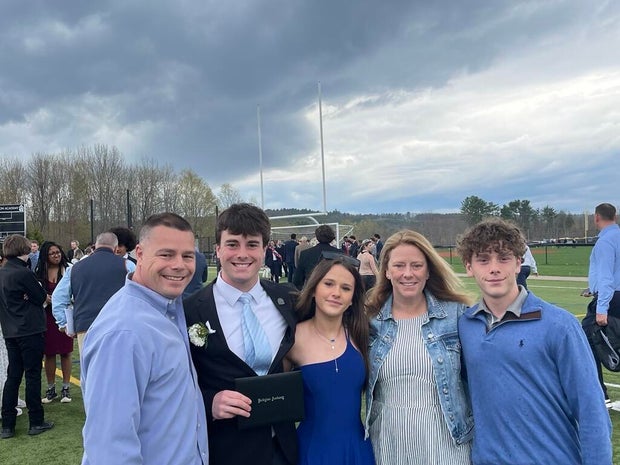
An eight-hour surgery and rough recovery
Mucoepidermoid carcinoma is a kind of cancer that usually affects the salivary glands. The tumors caused by the cancer grow slowly. Surgery is usually the first line of treatment.
Rider was referred to a number of facilities, including the Mass General Brigham Cancer Institute. Rider was won over by the surgical team, the relatively short drive from his Vermont home and the promised recovery time of just six to eight weeks, shorter than the 10-to-12-week period other facilities had suggested.
“That might not be much time for somebody else, but when it comes to sport seasons and stuff like that … that two, three, four-week period is pretty big,” Rider said.
Dr. Danielle Cameron, the surgical director for pediatric oncology at Mass General Brigham Cancer Institute, developed a plan to remove the entire tumor in a nearly eight-hour surgery. Rider would need a left upper lobectomy, where part of his left lung would be removed. Rider was nervous about how that might impact his athletics, but he said that Cameron and the rest of his surgical team were so confident in the plan that he “didn’t have too much to worry about.”
Cameron Rider 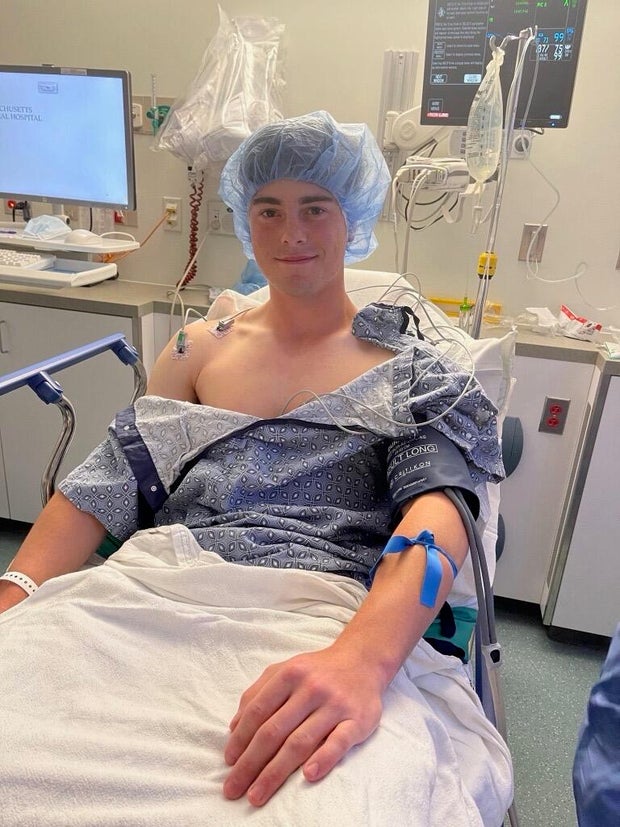
On May 19, Rider was taken into surgery. The procedure went smoothly. Cameron was able to remove the entire tumor, meaning Rider’s cancer could be considered cured. For Rider, the more difficult part was recovery.
“It was rough. A lot of pain. They were constantly getting me up and moving so I could try to re-expand my lungs and get used to not having that upper left lobe,” Rider said. “It started off very slow. It was painful. It was hard, but the more and more I did it, and the more help I got from staff there, the easier and easier it got.”
“A perfect outcome”
After a week, Rider could walk around the recovery floor easily. He was discharged from the hospital to continue recovering at home in Vermont. After a few months, he was cleared to resume athletic activities. Rider said he missed most of his baseball season after the surgery, but he was “just thankful” he would be able to return to sports for his senior year. He played soccer that fall, just months after the operation.
Now, Rider, 19, is applying to colleges and working as a referee. He still plays ice hockey. On an average day, he’ll practice for a few hours, then spend time in the gym. He will continue to undergo long-term surveillance and annual scans to ensure the cancer doesn’t return, Cameron said.
Cameron Rider 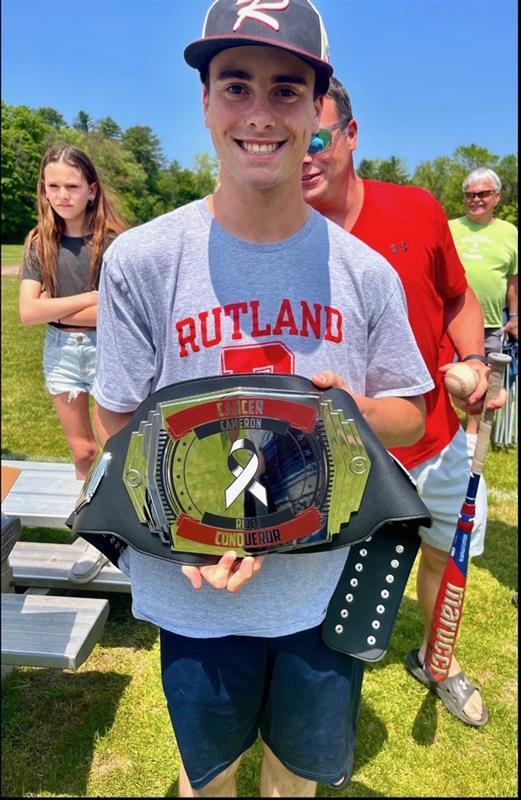
“He’s had a perfect outcome. You couldn’t ask for a more athletically accomplished patient after a lobectomy,” Cameron said.
Rider said he has adjusted to playing sports with part of his lung missing. It’s also made him more appreciative of the little things in life.
“Things aren’t too different from what they were before. I can feel the lack of capacity that I used to have, but I’ve made do with what I’ve got,” Rider said. “Those basic things that we take for granted every day — I started to understand the importance of them and how lucky we are.”