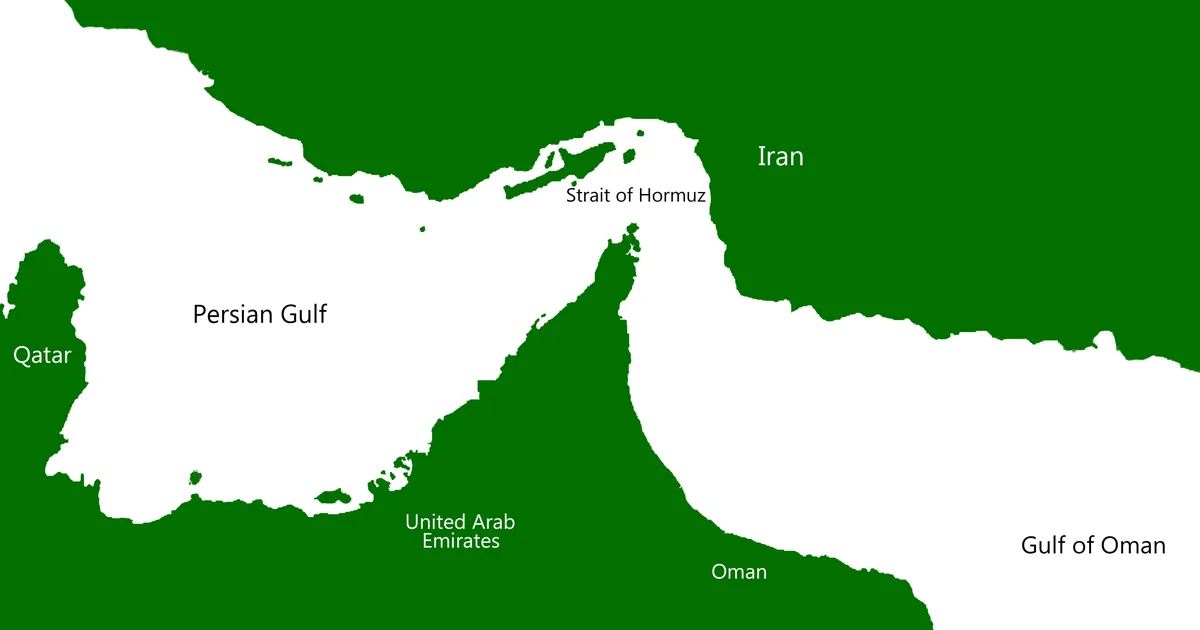
Washington — President Trump has been trying to force Iran to fully reopen the Strait of Hormuz for months, turning to everything from airstrikes and naval blockades to negotiations and threats to destroy a “whole civilization.”
But restoring oil tanker traffic in the vital Middle East shipping corridor to prewar flows likely will require a much bigger armada of U.S. warships if not tens of thousands of American troops on Iranian soil, experts say. Despite on-and-off fighting, Iran can still target vessels in the slim Persian Gulf waterway with drones and missiles that have been hidden in a country a third the size of the continental United States.
“Iran has been preparing for this type of asymmetric conflict for decades now,” said Jason H. Campbell, a senior fellow at the Middle East Institute and a former Pentagon official. “I think they’re starting to demonstrate why no other U.S. president since Reagan has elected to engage at this level of conflict with Iran, because they have that ability to completely disrupt the Strait of Hormuz.”
Mr. Trump said Monday that the U.S. is reimposing its blockade on Iran’s ports and will charge other ships for safe passage through the strait.
“We are reinstating the THE IRANIAN BLOCKADE, so named because it is only stopping Iran’s ships or customers from entering or leaving,” the president posted on Truth Social Monday morning. “All other countries will have fair and open use of the Strait.”
In the same post, the president said the U.S. would “probably run” the Strait of Hormuz and impose a 20% fee on cargo shipments.
Iran has insisted it controls the narrow waterway through which 20% of the world’s oil normally flows, while both sides have exchanged fire over the past week in a series of skirmishes that threaten a return to all-out war.
Vithun Khamsong / Getty Images 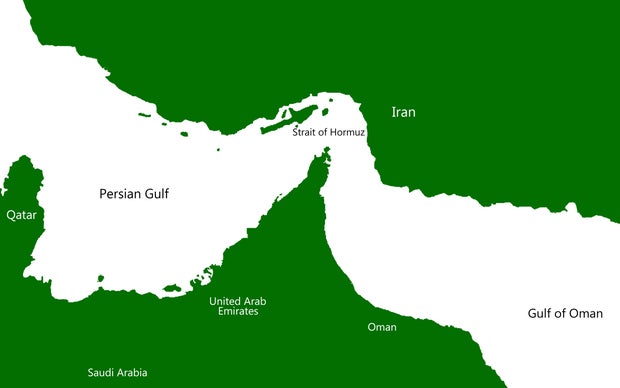
“Test of wills” playing out
It underscores the bind Mr. Trump is in as commercial shipping remains stifled in the strait, oil prices are rising again and Iran has shown no sign of capitulating. The war has been unpopular with many Americans and could factor into the upcoming midterm elections with gas prices high.
“They thought the situation was under control, and now they’re seeing renewed escalations, and the markets responding negatively to this,” said Eric Lob, a nonresident scholar at the Carnegie Endowment for International Peace’s Middle East program and a professor of politics and international relations at Florida International University.
“It’s really a kind of test of wills to see how much economic pain the Iranians are willing to absorb and then how much economic pain and even political liability this could be for Trump and the Republicans heading into November,” Lob said.
Before he was a scholar at the Middle East Institute in Washington, Campbell was a researcher at RAND, where he worked in coordination with the U.S. military to simulate war-game scenarios against Iran.
“The things they’re doing now are precisely the types of things that were discussed and came up in really all of these types of situational scenarios,” Campbell said.
Iran produces parts for its weapons across different facilities to reduce their risk of being attacked, Campbell said. Its military units are often allowed to operate without waiting for orders from Tehran. They don’t often mass in one place, making airstrikes less effective.
U.S. boots on the ground would almost surely be needed
“It’s very difficult to envision any scenario where you could satisfactorily secure the Strait of Hormuz absent ground forces,” Campbell said.
Doing so would require tens of thousand of troops, Campbell said, not only to take out Iran’s hidden munitions but to secure hundreds of miles of coastline and large swaths of inland territory. The U.S. troops would likely face insurgent attacks.
Standing up that kind of force would take a few months and include “very high costs,” Campbell said.
Mr. Trump insisted Monday evening that “the strait is open. It will be open,” and that the U.S. has made significant progress degrading Iran’s capabilities in just a few months. Iran vowed to fight back against any U.S. interference in the strait.
U.S. Navy could be stretched thin
Another way to facilitate commercial traffic safely through the strait would be the continuation – and escalation – of U.S. warships guiding civilian vessels, experts say. But it comes with its own challenges and costs.
The U.S. conducted an escort operation in the 1980s when Iran had targeted shipping as part of its war with neighboring Iraq. The U.S., which supported Iraqi dictator Saddam Hussein with intelligence, weaponry and other aid, escorted Kuwaiti oil tankers – which were reflagged as American.
Such an effort today would require a substantial number of U.S. warships at a time when the fleet is smaller than it was in the 1980s, said Michael Eisenstadt, a former U.S. military analyst.
“You’d still need a very large chunk of the U.S. fleet being dedicated to this on an open-ended basis,” said Eisenstadt, who now directs the Military and Security Studies Program at the Washington Institute for Near East Policy.
He said it is a much more complicated environment today as Iran has amassed advanced capabilities, including its ability to launch drone and missile strikes.
“If we were to do what we need to do in order to make this work, which might involve putting people ashore in order to clear anti-cruise missile and drone launch sites, the losses of U.S. service members can go up, and if you’re going to do an escort operation also, the losses can potentially go up,” Eisenstadt added.
Commercial vessels have been avoiding traditional routes through the strait out of fear of Iranian mines. Iran has demanded that ships use a route near its coastline and that it can potentially charge fees under an interim deal to end the war. Ships have been increasingly navigating a southern route along the coast of Oman under a U.S. overwatch operation that guided them using drones and aircraft.
Capt. Tim Hawkins, U.S. Central Command spokesman, said mine clearance operations are ongoing for some traditional routes through the strait but that “alternative pathways have been open.”
The southern route hasn’t stopped Iranian attacks on ships, leading the U.S. military to strike Iranian air defense systems, radar sites, missile and drone equipment, and small boats.
Mere threats could suffice for Tehran
But Iran’s threats alone can be enough to halt commerce in the strait, said Noam Raydan, a senior fellow at the Washington Institute for Near East Policy focused on energy and maritime risks in the Middle East.
“They don’t need to launch drones and missiles – they can just use the marine radio channel to make some threats,” Raydan said. “And this in itself is enough to scare off a lot of seafarers.”
Clayton Seigle, a nonresident scholar in energy security at the Center for Strategic and International Studies, said the Trump administration hasn’t followed through on promises it made early on in the war to militarily assist shipments that became a liability of the conflict.
“Those naval escorts, U.S. warships, larger commitments like boots on the ground never came because I think that the rhetoric got a little ahead of our risk tolerance,” Seigle said. “And when push came to shove, the United States was not ready to deploy its Navy, to deploy its other military forces in the capacity that would be needed to even have a shot at neutralizing those threats.”