By Jessie Pang and Joyce Zhou
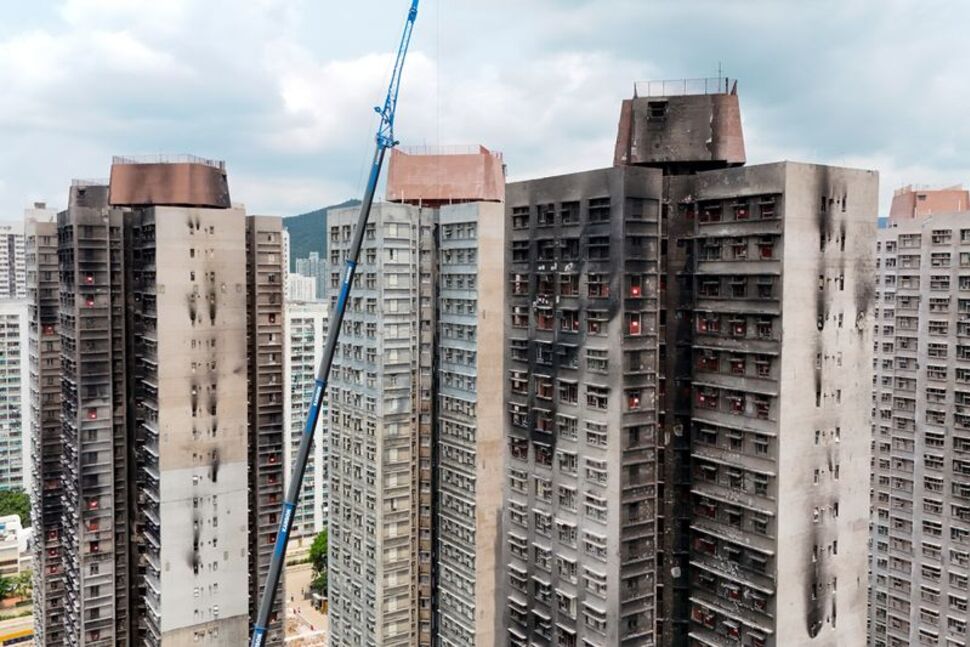
HONG KONG, April 20 (Reuters) – Victims of Hong Kong’s deadliest fire in decades began government-supervised visits to their ravaged former homes on Monday for the first time since the November blaze, looking to retrieve personal items that might have survived.
The flames that engulfed seven residential towers, each of 31 floors in the northern district of Tai Po, killing 168 people, took nearly two days to douse, and eclipsed London’s Grenfell Tower inferno of 2017.
“I want to get back my computer most, as some photographs of my son are stored inside,” said one former resident, a 50-year-old surnamed Chung, adding that he had readied some canvas bags and tools for the effort.
“(I am) not sure if I will have enough time, once I get upstairs.”
Until May 4, former residents of the complex, Wang Fuk Court can spend three hours in their flats on each visit, while wearing facemasks, helmets and gloves for protection.
Firemen are among the 1,000 staff tasked to assist the estimated 6,000 visitors, who will be escorted by officials to ensure items are kept safe.
“I hope everyone will abide by the three-hour rule,” Warner Cheuk, Hong Kong’s deputy chief secretary, told reporters outside the complex, patrolled by officers and cordoned off with orange tape and crowd-control barriers.
Up to four people can register to enter each home, but for severely damaged flats the number is limited to one.
Many affected residents are elderly, with more than a third older than 65, Midland Realty’s analysis of government data shows.
Months after the fire, people in the Asian financial hub are still grasping for answers to how it started and demanding accountability.
An independent committee began hearings in March to decide the causes and government accusations of bid-rigging by construction firms in building projects.
The panel’s lead lawyer blamed human factors for the failure of most of the fire safety systems.
Authorities have threatened severe punishment for anyone who tries to “politicise” the disaster.
In April, the Housing Bureau ruled out redevelopment of the site, on grounds of the long time required and surrounding uncertainties. In February the government said it aimed to spend about HK$4 billion ($512 million) to buy out the owners.
(Reporting by Jessie Pang and Joyce Zhou; Editing by Farah Master and Clarence Fernandez)
Copyright 2026 Thomson Reuters.