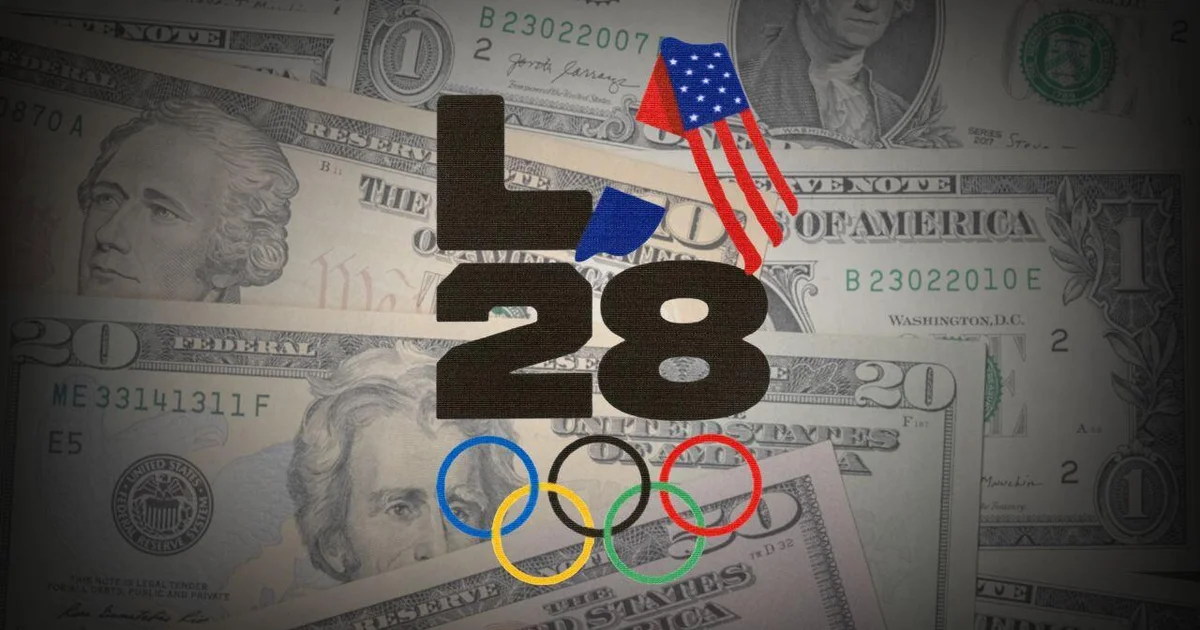
Fans lucky enough to secure tickets to the 2028 Summer Olympic Games in Los Angeles are facing steep prices, with some paying hundreds or even thousands of dollars to attend events, prompting questions about why costs have surged compared with past Games.
At the 1984 Los Angeles Olympics, ticket prices started as low as $3 — about $10 today when adjusted for inflation — and opening ceremony seats were around $100. By contrast, some tickets for LA28 are priced as much as $5,000 or more.
Debra Duncan, who served as assistant vice president of ticketing for the 1984 Games, still has the first tickets printed for that event framed.
“This is the first ticket that came off — actually the first four tickets that came off the press for the ’84 Games,” she said.
Back then, even premium events were relatively affordable. A track and field final ticket priced at $25 in 1984 would cost about $79 now when adjusted for inflation. Closing ceremony tickets that sold for $100 in 1984 would be about $315 today.
Service fees have also increased dramatically.
“We charged a dollar a ticket,” Duncan said of the 1984 Games.
For the upcoming Olympics, organizers are charging service fees which are 24% of the ticket’s value, potentially adding hundreds of dollars to already high prices. When asked why organizers opted for a percentage service fee model vs. a flat fee model, they said that fees are aligned with standard industry practices.
“Service fees cover the costs of securely processing and delivering tickets, such as ticketing platform development, customer service, payment processing, fulfillment and distribution,” LA28 officials said. “All-in pricing is displayed upfront, included within the prices people see as they shop, and a breakdown of the price and service fees are provided at checkout for further transparency.”
Duncan declined to directly criticize current pricing but acknowledged the complexity behind it.
“Not knowing what their budgets are, what their demands are, I can’t comment on their pricing,” she said.
She noted that setting higher prices upfront may help limit profits for ticket resellers.
“If you make a really cheap ticket, if they don’t put a market price out there, someone else is going to get it and that’s not fair either,” she said.
Although LA28 doesn’t have control over other resale listings, some already show steep markups. Closing ceremony tickets have been listed for as much as $7,900 for two seats, while tickets to a tennis final have topped $11,000 on some sites. Even less prominent events, such as cricket, are listed at more than $500 per ticket.
A spokesperson for StubHub says the the company does not determine or control the price a seller chooses to list, adding that tickets that are listed at an extreme price rarely sell.
Ahmed Nemale, co-founder and CEO of ticketing company KYD Labs and a former executive at Ticketmaster and Vivid Seats, said the high prices can be jarring.
“I think it gets really tough when you start seeing ticket prices in the $5,000s, the $10,000s — it’s jarring,” he said.
He also questioned rising fees.
“It gets you thinking, where’s the money really going and why are the fees so high,” Nemale said.
LA28 officials say that the ticketing program is “rooted in heavy analytics and extensive market demand research” around other entertainment and sporting events across the U.S.
“Tickets are comparable to — or well under in many cases — professional sporting and major entertainment events in the U.S.,” officials said when asked why ticket prices are so high compared to the 1984 Games.
Nemale explained that ticketing companies often function like financial backers.
“Ticketing companies act as banks,” he said. “Service fees are somewhat interest rates for the loan that the venue has taken from the ticketing company.”
He added that technology issues may contribute to limited access to lower-priced tickets.
“I definitely think they sold a lot of affordable tickets, but to whom?” Nemale said. “Why is it that in an age where AI can create Pixar movies, that we don’t have the ability to track who gets a ticket and identify a broker?”
LA28 officials say that the registration process is structured to protect fans from bots and brokers, and to ensure that tickets get into the hands of fans.
“LA28 will continue to make the best efforts to eliminate bad actors. Transactions or accounts associated with automated purchasing, duplicative accounts, or other behaviors prohibited by applicable law and/or the LA28 Ticketing Terms and Conditions, maybe canceled, terminated, or suspected, without refund or reimbursement,” officials said.
Duncan said organizers face significant financial pressure because the Los Angeles Games are privately funded.
“Our city and our country did not say, ‘We’ll give you money, we will help you out if you’re over budget,'” she said. “We were a nervous wreck the whole time, hoping we had enough money to cover everything.”
Despite the high prices, Duncan encourages fans to attend if they can.
“Just do it, just go for it,” she said. “It’s a time of the world where everybody stands still for a minute and loves each other. There’s just nothing like that.”
For those still hoping to attend, LA28 plans to launch a verified resale platform in 2027, the LA28 Official Secondary Ticket Marketplace, where officials say tickets will be sold at regulated resale prices. Tickets for resale will also be verified through AXS, Eventim, Ticketmaster and Sports Illustrated Tickets. They said the approved platforms would not make tickets available for resale until 2027.
“LA28 cannot verify the validity of any tickets sold outside of its verified network and cautions fans to wait for the launch of the verified LA28 resale program before buying or selling resale tickets to LA28 events,” organizers said.