CAIRO (AP) — Iran doubled down on its pledge to restrict ships passing through the Strait of Hormuz as long as the U.S. blockade of Iranian ports remains in place, as mediators scrambled to extend the ceasefire set to expire on Wednesday.
The dueling blockades have complicated Pakistani-led mediation attempts and raised questions about whether the truce can be extended beyond its deadline.
“It is impossible for others to pass through the Strait of Hormuz while we cannot,” Iranian parliamentary Speaker Mohammed Bagher Qalibaf said in an interview aired on state television late Saturday.
Qalibaf, who is Iran’s chief negotiator in talks with the United States, slammed the U.S. blockade as a “naive decision made out of ignorance.” He said Iran still was seeking peace despite deep-seated distrust of the United States.
“The gaps remain wide and some fundamental issues are still unresolved,” he said.
Iran had announced the strait’s reopening after a 10-day truce between Israel and the Iranian-backed Hezbollah militant group in Lebanon took hold on Friday. But after U.S. President Donald Trump said the U.S. blockade of Iran’s ports “will remain in full force” until Tehran reaches a deal with the United States. Iran said it would continue enforcing its restrictions in the strait.
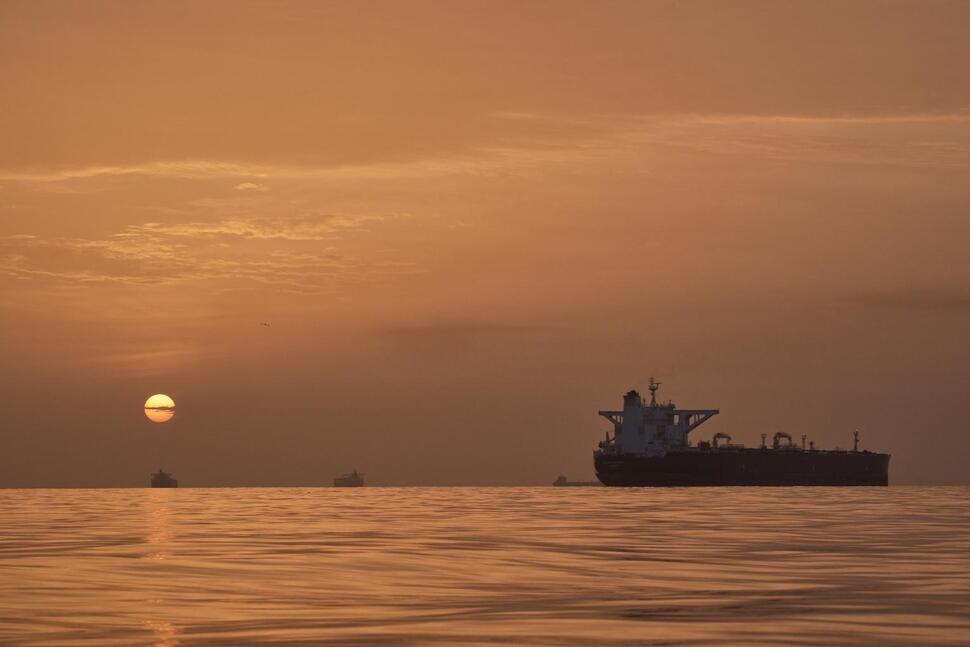
After a brief uptick in transit attempts on Saturday, vessels in the Persian Gulf held their positions, wary after two India-flagged ships were fired on mid-transit and forced to turn around. Their retreat returned the strait, through which roughly one-fifth of the world’s oil trade normally passes, to its pre-ceasefire status quo, threatening to deepen the global energy crisis and push the parties toward renewed conflict as the war entered its eighth week.
With days until the ceasefire in place between the U.S. and Iran runs out, Iran on Saturday said it had received new proposals from the United States, and Pakistani mediators were working to arrange another round of direct negotiations.
For Iran, the strait’s closure — imposed after the U.S. and Israel launched the war on Feb. 28 during talks over Tehran’s nuclear program — is perhaps its most powerful weapon, threatening the world economy and inflicting political pain on Trump. For the United States, the blockade squeezes Iran’s already weakened economy and pressures its government by denying it long-term cash flow.
Though the ceasefire has held, the standoff in the strait threatens to plunge the region back into a war that has killed at least 3,000 people in Iran, more than 2,290 in Lebanon, 23 in Israel and more than a dozen in Gulf Arab states. Thirteen U.S. service members have been killed.
Reopening hopes sink as ships come under fire
Revolutionary Guard gunboats opened fire on a tanker and a projectile hit a container vessel, damaging some containers, the British military’s United Kingdom Maritime Trade Operations center said. India’s Foreign Ministry said it summoned Iran’s ambassador over the “serious incident” of firing on two India-flagged merchant ships, especially after Iran earlier let several India-bound ships through.
“Americans are risking the international community, risking the global economy through these, I can say, miscalculations,” Iranian Deputy Foreign Minister Saeed Khatibzadeh told The Associated Press, adding that the U.S. is “risking the whole ceasefire package.”
Iran’s Supreme National Security Council issued a statement calling the blockade a violation of the ceasefire and said Iran would prevent “any conditional and limited reopening” of the strait. The council has recently acted as Iran’s de facto top decision-making body.
Since most supplies to U.S. military bases in the Gulf region come through the strait, “Iran is determined to maintain oversight and control over traffic through the strait until the war fully ends,” the council said. That means Iran-designated routes, payment of fees and issuance of transit certificates.
Pakistan pushes for progress toward a new deal
The renewed standoff over the strait came hours after Pakistani Foreign Minister Ishaq Dar said his country was working to “bridge” differences between the U.S. and Iran. Pakistan is expected to host a second round of negotiations early next week.
Iran’s Supreme National Security Council said “new proposals” from the U.S. had been put forward during a visit to Iran by Pakistan’s army chief and were being reviewed.
But Khatibzadeh said the Iranians were not ready for a new round of face-to-face talks because the Americans “have not abandoned their maximalist position.”
He also said Iran will not hand over its stock of 970 pounds (440 kilograms) of enriched uranium to the United States, calling the idea “a nonstarter.” Khatibzadeh did not address other proposals for the enriched uranium, saying only that “we are ready to address any concerns.”
Trump said Saturday that Iran “got a little cute” but that “very good” conversations were happening, and more information would come by day’s end. “They can’t blackmail us,” he added.
__ Metz reported from Ramallah, West Bank.
Copyright 2026 The Associated Press. All rights reserved. This material may not be published, broadcast, rewritten or redistributed.
Photos You Should See – April 2026
