By Parisa Hafezi and Maayan Lubell
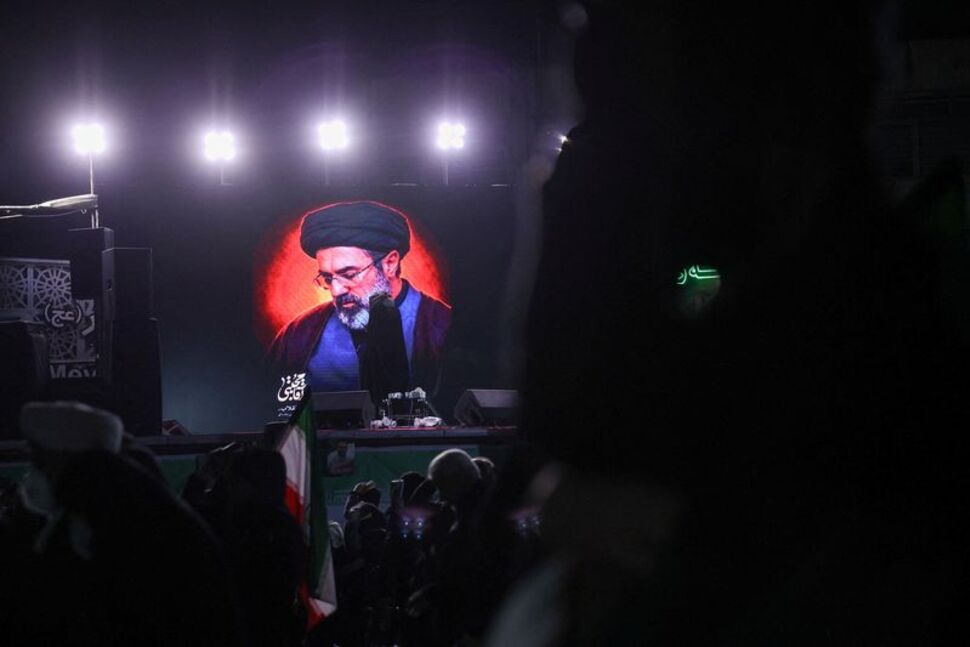
DUBAI/JERUSALEM, March 9 (Reuters) – Iran on Monday named Mojtaba Khamenei to succeed his father Ali Khamenei as supreme leader, signalling that hardliners remain firmly in charge, while the week-old U.S.-Israeli war with Iran sent oil prices surging and Asian stock markets into a nosedive.
Iranian institutions and politicians, from the foreign ministry to lawmakers, issued statements expressing their allegiance to the country’s new supreme leader as the war entered its 10th day and fresh missile and drone strikes reverberated across the Middle East.
“We will obey the commander-in-chief until the last drop of our blood,” a statement from the defence council said.
Senior cleric Ayatollah Sadeq Amoli-Larijani said Mojtaba Khamenei’s appointment was “a balm for the spiritual suffering of our people and an emphasis on the need to continue the luminous path of the late Imam (Khamenei senior).”
Mojtaba’s father, Supreme Leader Ali Khamenei, was killed in one of the first strikes launched against Iran more than a week ago.
The show of solidarity for Mojtaba comes after U.S. President Donald Trump earlier rejected him as a candidate to be Iran’s new supreme leader, and Israel saying it would target whoever leads Iran.
Mojtaba, a cleric with influence inside Iran’s security forces and vast business networks under his father, had been viewed as a frontrunner in the lead-up to Sunday’s vote by the Assembly of Experts, a body of 88 clerics tasked with choosing Ali Khamenei’s successor.
The position gives Mojtaba the final say in all matters of state in the Islamic Republic.
Trump said on Sunday that Washington should have a say in the selection. “If he doesn’t get approval from us, he’s not going to last long,” he told ABC News, adding that ending the war would be a “mutual” decision with Israeli Prime Minister Benjamin Netanyahu.
In an interview with the Times of Israel after the new supreme leader was named, Trump declined to respond, saying only “We’ll see what happens,” according to the newspaper.
Pope Leo on Sunday warned of “a tragedy of enormous proportions” due to the “widespread climate of hatred and fear” in Iran and across the region.
“Let us raise our humble prayer to the Lord that the roar of bombs may cease, that weapons may fall silent, and that space may be opened for dialogue in which the voices of peoples can be heard”, Leo said at the Angelus prayer in St. Peter’s Square.
The Israeli military said on Monday it had begun a wave of attacks in central Iran and had struck infrastructure belonging to Hezbollah militants in Beirut.
Iran and its proxies appeared to have launched attacks too, with rocket and drone strikes targeting a U.S. diplomatic facility near Baghdad’s international airport that were intercepted by C-RAM defence system, said police sources.
A drone strike targeted a U.S. military base near Erbil airport in Iraqi Kurdistan, security sources said, while Saudi authorities reported intercepting a drone east of its northern Jawf region.
Thick smoke was seen rising from the direction of the Bapco oil refinery in Bahrain, according to a Reuters witness, after the government said an Iranian drone strike hit the area causing injuries and damage. Bapco Energies later declared force majeure on its group operations following the refinery attack, adding to fears about energy supplies from the region.
The U.S. military reported a seventh American has died from wounds sustained during Iran’s initial counter-attack a week ago, a day after Trump presided over the return to the United States of the remains of the six others killed.
The Israeli military said on Sunday that two of its soldiers were killed in southern Lebanon, marking the first fatalities among its troops since Israel-Hezbollah hostilities resumed last week as Israel intensified air strikes on Lebanon.
The military did not immediately provide further details on the circumstances of the incident.
At least four people were killed when an Israeli strike hit an apartment in the Ramada hotel building in central Beirut early on Sunday, with Israel saying it targeted Iranian commanders operating in the Lebanese capital.
The U.S.-Israeli attacks have killed at least 1,332 Iranian civilians and wounded thousands, according to Iran’s U.N. ambassador.
Oil prices surged more than 25% on Monday to their highest levels since mid-2022, as major Middle Eastern oil producers cut supply because they cannot safely send shipments through the Strait of Hormuz to refiners worldwide.
Traffic through the Strait was largely closed after Iran attacked at least five ships, with a limited number of tankers transiting, choking off a key artery accounting for about 20% of global oil and LNG supply.
Brent crude futures were up $24.96 or 27% at $117.65 per barrel at 0451 GMT – on track for the biggest-ever jump in a single day, while U.S. West Texas Intermediate crude futures were up $25.72, or 28.3%, to $116.62.
The war has forced production stoppages by oil and gas exporters from Qatar to Iraq, with Kuwait announcing cuts over the weekend. Analysts predict the United Arab Emirates and Saudi Arabia will soon cut output as they run out of oil storage.
The G7 finance ministers will discuss on Monday a joint release of oil from emergency reserves coordinated by the International Energy Agency, the Financial Times reported.
Three G7 countries, including the U.S., have so far expressed support for the idea, the FT added.
A senior Japanese parliament member said on Sunday that the government instructed a national oil reserve storage site to prepare for a possible release of crude. Japan relies on the Middle East for around 95% of its crude, with roughly 70% shipped through the Strait of Hormuz.
The spike in oil prices weighed on stock markets in Asia, with Japan’s Nikkei down 5.8% and import-reliant South Korea falling 6.5%.
(Reporting by Reuters bureaux; Writing by Michael Perry; Editing by Lincoln Feast.)
Copyright 2026 Thomson Reuters.
Photos You Should See – Feb. 2026
