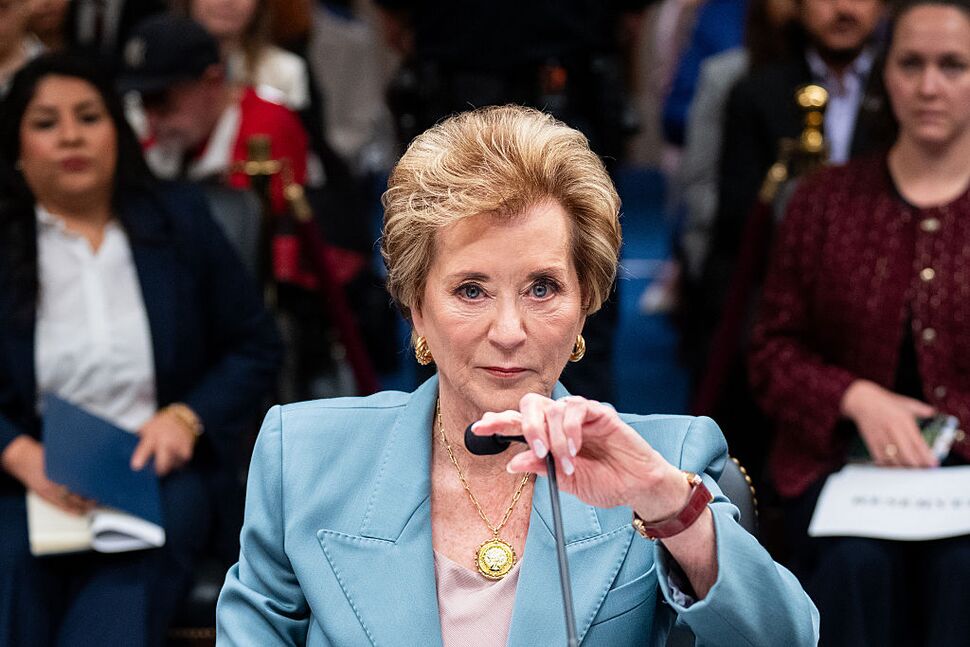
Education Secretary Linda McMahon on Tuesday defended the Trump administration’s budget for her department and its goal of shifting authority over education to the states.
McMahon said during a Senate hearing on her agency’s budget that the department “has carefully scrutinized every dollar of taxpayer investment to ensure that it supports clear pathways to success for our students and families.”
The Trump administration proposed a $2.3 billion cut to the agency’s fiscal 2027 budget when compared to 2026. The proposed budget continues the Education Department’s “path to elimination, returning control of education back to America’s families, and it roots out fraud, waste and abuse in foreign assistance funding, ensuring that every taxpayer dollar makes Americans safer, stronger and more prosperous.”
It’s been more than a year since President Donald Trump signed an executive order directing McMahon to “take all necessary steps to facilitate the closure of the Department of Education.”
The Trump administration’s $76.5 billion proposed budget still has to make its way through Congress, which doesn’t always align with a president’s proposals. Here are some of the key takeaways from McMahon’s Tuesday testimony:
Education Cuts Draw Concern
Sen. Tammy Baldwin, Wisconsin Democrat, expressed concerns about the cuts to the Education Department, including cuts for funding to address teacher shortages and international education.
“It also includes the continued focus on illegally dismantling the entire Department of Education,” Baldwin said. “None of this is about returning education to the states. The things you claimed to have returned – through waivers and flexibility – federal law already allowed.”
The proposal would end the Federal Supplemental Educational Opportunity Grant program, which is for undergraduate students with exceptional financial need, and drastically reduce the federal work-study program, which provides part-time jobs for undergraduate and graduate students with financial need. It also calls for an elimination of the federal TRIO programs, which are outreach and student services programs designed to identify and provide services for individuals from disadvantaged backgrounds.
“It is a high cost to have TRIO programs,” McMahon said. But she added that if Congress chooses to fund TRIO, the Education Department will work with it to “see what reforms we can do to make it better.”
Public Service Loan Forgiveness Program Backlog
The Trump administration’s handling of the Public Service Loan Forgiveness Program remains a problem for Democrats, who criticized the significant backlog of the program’s buyback option on Tuesday.
Sen. Jeanne Shaheen, New Hampshire Democrat, told the committee that over 88,000 applicants are waiting to hear back from the Education Department about the option, which allows borrowers to receive forgiveness of the remaining balance of direct loans after hitting the equivalent of 120 months of qualifying employment.
Applicants “have heard from your department that they will get their applications answered within 45 days,” Shaheen said. “But my staff tells me it’s often 9 months to a year before my constituents get a substantive response.”
McMahon said the work is “very complex” and “tedious” but added that her department is addressing the backlog.
The Public Service Loan Forgiveness program allows people who work in public service to get their remaining student loans forgiven after making 10 years of minimum payments.
A new rule set to take effect in July would allow McMahon to restrict employers who can participate in the program if she deems their work has a “substantial illegal purpose.”
Democrats in Congress have introduced a resolution to overturn the rulethough it’s unlikely to pass.
Lawmakers praised McMahon over the Trump administration’s proposed $33 billion in funding for the Pell Grants, which are typically reserved for undergraduate students who display exceptional financial need.
It’s a significant change from last yearwhen the Trump administration proposed to lower the maximum Pell Grant amount to avert a funding shortfall, which proved to be a sticking point for lawmakers. This year, they are proposing maintaining the maximum award per student of about $7,400, and the additional funding is expected to ease some of the program’s anticipated financial shortfall.
McMahon said the proposal is “an increase of over $10 billion dollars” for the Pell Grant program.
But the increase isn’t enough for some.
“While increased funding for the Pell Grant program is important, that just maintains current benefits,” Baldwin said. “At the same time, the budget eliminates nearly every other program to help students pursue and afford higher education.”
Pell Grants typically see bipartisan support, and that was the case at the hearing as well.
“Pell is critical to help provide financial access to postsecondary education for our students in West Virginia and across the nation who need it most,” Republican Sen. Shelley Moore Capito of West Virginia said.