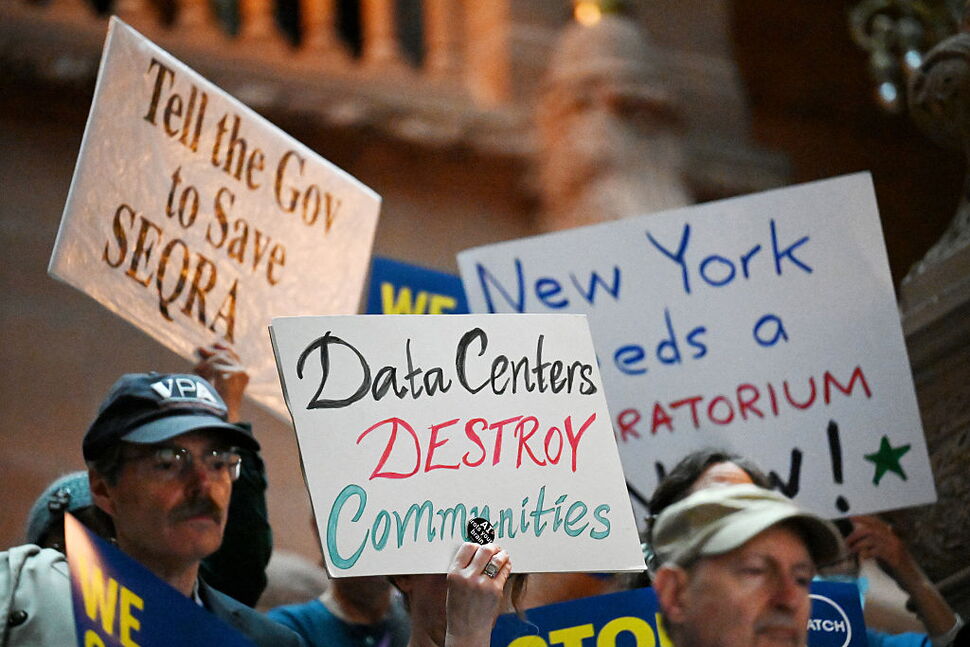
The data centers are coming! The data centers are coming!
Love it, hate it, welcome it, fear it – artificial intelligence could overhaul virtually every aspect of our lives and cause economic disruptions along the way.
But none of that happens without the physical backbone of AI: the data centers. And those cause their own array of disruptions.
Here at Decision Points Global HQ, we are doing periodic roundups of news about AI, highlighting the important, the useful, the scary and the downright weird things happening along this high-tech frontier. Here’s the latest in AI, data center edition:

Sign Up for U.S. News Decision Points
Your trusted source for breaking down the latest news from Washington and beyond, delivered weekdays.
By clicking “Sign Up”, you will receive the latest updates, including emails, from U.S. News & World Report and our trusted partners and sponsors, and you agree to our Terms and Conditions & Privacy Policy.
AI Data Center Construction Brings New Wave of NIMBYs
That’s what most Americans are saying about data centers used to power the artificial intelligence boom.
Seven in 10 Americans oppose the construction of data centers for AI in their local area, according to a Gallup poll published May 13.
Nearly half of respondents said they “strongly” opposed the construction, and an additional 23% said they “somewhat” opposed it.
“Half of opponents mention data centers’ excessive use of resources, including 18% each mentioning their use of water and energy,” according to Gallup. “Sixteen percent mention a related environmental concern of pollution, including noise pollution and air and water pollution.”
Air, noise and water pollution from data centers can lead to health problems for humans, as U.S. News has previously detailed. Long-term impacts may include increased risk of respiratory disease, cardiovascular disease, mental health struggles, stroke, diabetes and reproductive harms like miscarriage and stillbirth.
Such concerns so far haven’t been enough to halt the AI buildout. The U.S. has more than 4,000 data centerswhich is nearly eight times the number of any other country. Thousands more are planned or under construction.
Power Crunch for 50,000 Residents at Lake Tahoe
A scramble happening in the resort town of Lake Tahoe might shine some light on how data centers could affect you.
NV Energy, the energy supplier for the Lake Tahoe region in Nevada, will stop providing power to the town after May 2027 at least partially because of the energy demands of data centers, Fortune reports.
It’s just one example of how energy-hungry data centers are complicating the electrical supply and demand in the U.S.
Fortune reports that data centers used 22% of Nevada’s electricity in 2024, and that number could increase to 35% by 2030.
(There’s some debate about whether data centers are behind NV Energy’s decision to stop supplying the town power. The company says this has long been in the works, but the town’s utility company says NV Energy cited data centers as one reason for ending service in a regulatory filing.)
The nearly 50,000 utility customers in the area are concerned the move could lead to higher electricity bills – which have already risen in recent years.
The Week in Cartoons May 18-22

Utah Residents Resist Massive AI Data Center Project
It will boost the local economy. It’s crucial to national security.
That’s what the backers of a massive AI data center development in Utah – including “Shark Tank” investor Kevin O’Leary – say about the project, CNN reports.
But rural residents are protesting and asking for more time and more information to figure out how the development would affect the environment and their communities.
Despite their protests, the Utah project was approved by Box Elder County commissioners earlier this month, and developers could start work in the fall.
Now the residents are hoping to add a referendum to the local ballot in November to overturn the approval of the project. They’re hardly the first community seeking to draw a line in the sand.
From March to June of last year, 20 data center projects valued at an estimated $98 billion were blocked or delayed, according to research firm Data Center Watch.