While the number of abortions provided by clinicians in the U.S. remained largely unchanged from 2024 to 2025, fewer people traveled across state lines for abortion care and more reported accessing abortion care via telehealth, according to a new report.
Guttmacher Institute reported an estimated 1,126,000 clinician-provided abortions occurred in the U.S. last year, which is the largest number since 2009. It’s a similar number to the estimated 1,124,000 abortion provided in 2024.
But how Americans accessed their abortions shifted.
Fewer people traveled across state lines to get an abortion last year (142,000) compared to the previous year (154,000). The report says the drop “was almost entirely driven by a decline in travel among residents of states with total bans” on abortion.
Meanwhile, the use of telehealth for abortion services by patients in the 13 states with total abortion bans increased from about 72,000 in 2024 to about 91,000 in 2025. Those telehealth appointments were provided by clinicians residing in states with shield laws, which protect in-state providers from legal actions by other states where abortion is restricted.
“Taken together, these estimates suggest a substantial shift in the way people in states with total bans access abortion care, with fewer people traveling out of state and more accessing care via telehealth,” the report states.
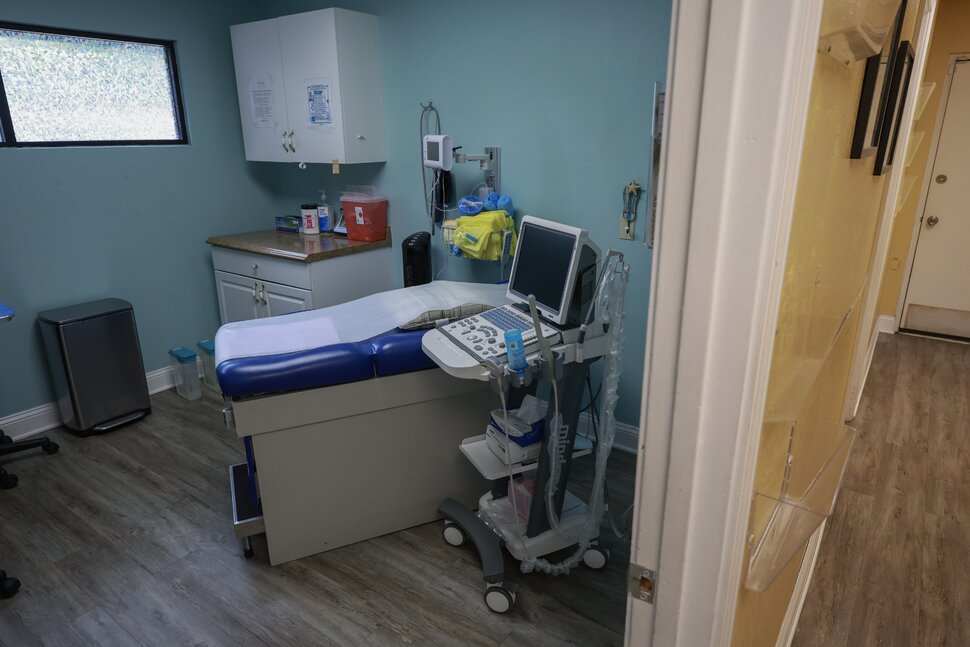
In another recent reportthe institute found that the number of brick-and-morter abortion clinics in the U.S. is on the decline.
Guttmacher reported 753 abortion clinics were active in the U.S. as of December 2025, down 12 from March 2024 and 54 from 2020.
The numbers might not seem large, but in states with only a few abortion clinics to begin with, like Alaska, Nebraska and Rhode Island, the closure of just one facility could dramatically shift access for residents and increase travel times for care.
“This net decrease, while small, nevertheless reflects substantial changes or ‘churn’ in abortion access … in response to new regulatory, financial and staffing challenges,” the report stated.
Some decreases have an obvious explanation. In Florida, for example, a six-week abortion ban went into effect in May 2024.
But in other states – like California, Illinois, Michigan and New York – the declines came without any major state policy changes. Factors in those drops likely included the Trump administration’s freezing of Title X funds – federal grants for family planning services – from reproductive health networks like Planned Parenthood.
And turbulence around abortion access continues, with the Trump administration last week launching an investigation into more than a dozen states that require state-regulated health insurance plans to cover abortion. The Trump administration argues that such policies run afoul of a federal provision that bars states from discriminating against health care entities that don’t pay for, cover or refer for abortion.