By Kyu-seok Shim and Brenda Goh
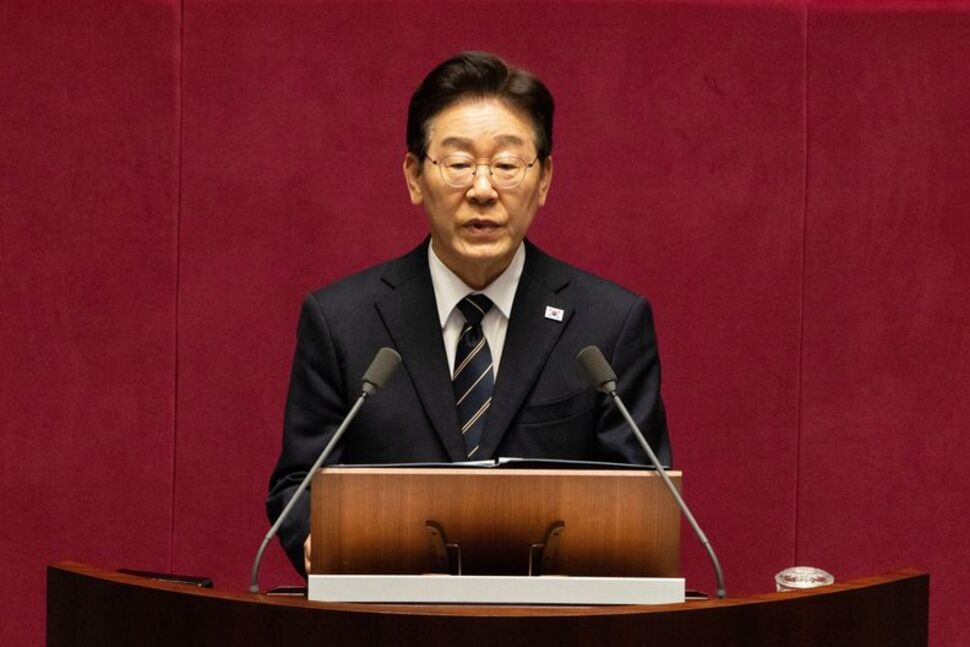
SEOUL, May 8 (Reuters) – South Korea’s martial law scandal is set to loom large over local elections in June that will test whether opposition conservatives can rein in the power of the ruling party of President Lee Jae Myung.
The June 3 contest for mayors and governors in South Korea’s 16 cities and provinces is the first nationwide vote since Lee took power in a snap election last year after disgraced former President Yoon Suk Yeol, of the conservative People’s Power Party (PPP), briefly imposed martial law in 2024.
Yoon was sentenced to life in prison in February for masterminding an insurrection and faces at least seven other trials.
Lee’s Democratic Party (DP) already controls the presidency and parliament, so a strong showing in the local elections would leave the Democrats with the most political power of any single party since 2020.
South Korea’s right has been in disarray since the martial law bid and infighting over the issue has created splits within the PPP. The conservatives have barely a month to convince voters they are a credible alternative but analysts have predicted they are heading for a landslide defeat.
Some of the right’s prominent figures say the party should avoid internal conflict and try to put the Yoon scandal behind them.
“In the end, when we fought among ourselves, we couldn’t pay attention to the lives of the people,” PPP leader and erstwhile Yoon supporter Jang Dong-hyeok said in an interview.
“Now what we need to show is how we can unite and properly keep the ruling party and the Lee Jae Myung administration in check, and thereby protect South Korea’s democracy and its future.”
A spokesperson for the Democrats said the vote was about judging the “unresolved remnants of insurrection” and building competent local governments to protect “real democracy.”
The PPP currently controls 12 out of South Korea’s 16 local governments but looks unlikely to hold on to the seats.
Its approval rating stood at 21% in the last week of April versus the DP’s at 46% and President Lee’s at 64%, according to a survey by Gallup Korea.
Lee’s popularity has been buoyed by a chip-led stock rally and his response to the energy crisis caused by the war in the Middle East, even though conservatives accuse him of using the courts and parliament to shield himself from criminal cases.
SPLIT AMONG CONSERVATIVES
Former PPP leader Han Dong-hoon, who opposed Yoon’s martial law and broke ties with him, is a vocal opponent of Jang. Han was expelled from the PPP over allegations of opinion manipulation and is running for parliament as an independent in Busan’s Buk-A district in a by-election to be held alongside the local elections.
He is facing both PPP and DP candidates in a three-way contest.
Han told Reuters in an interview that he believed the PPP is controlled by a “small faction” more interested in pleasing Yoon loyalists than winning back voters, and that he hoped to rebuild South Korea’s conservative movement and return to the party.
“The people have already crossed the sea of martial law,” Han said. “The big problem is that conservative politics still has not crossed it.”
He said the PPP could not credibly attack Lee while carrying Yoon’s baggage.
“When we criticise them, the attack that comes back is, ‘Aren’t you the party that declared martial law?'” Han said. “That weakens everything.”
Jang criticised Han’s campaign as self-serving and said he was open to uniting with other conservatives excluding Han, whom he said bore great responsibility for the party’s troubles.
Shin Yul, a professor at Myongji University, said the Busan race would test the possibility of a conservative realignment as well as Han’s own prospects to run for president in the future.
If Han wins, Shin said, he could send “a clear new message” to the struggling PPP and weaken the DP’s argument that conservatives should be judged as an insurrection-linked force.
(Reporting by Kyu-seok Shim and Brenda Goh: Editing by Ed Davies and Raju Gopalakrishnan)
Copyright 2026 Thomson Reuters.