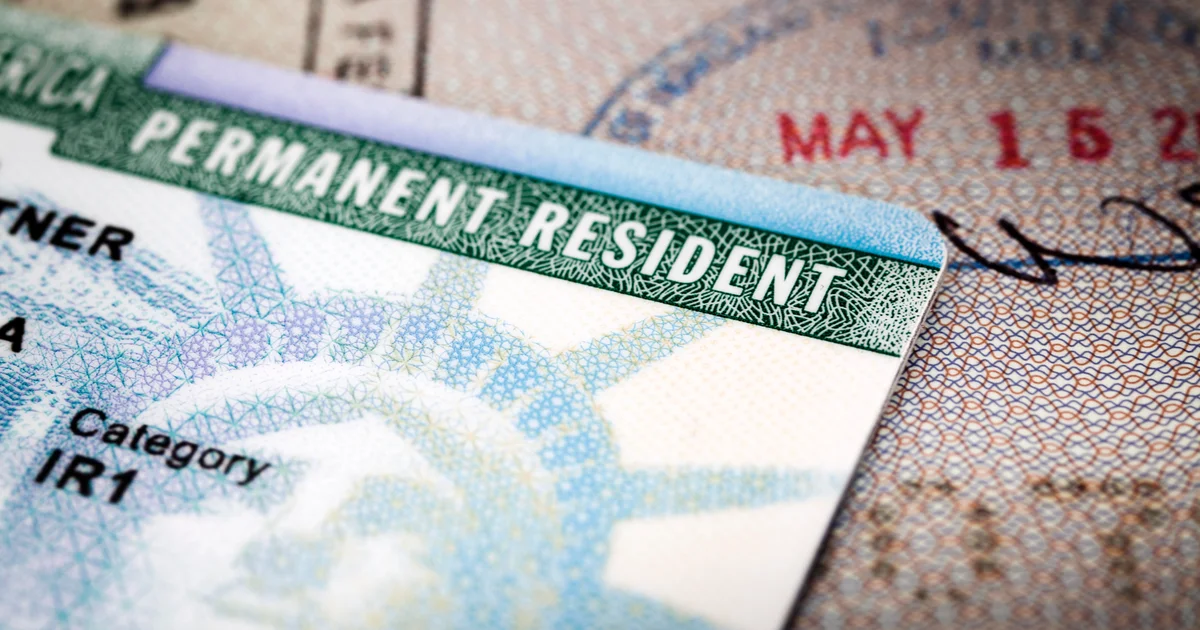
The Trump administration on Friday announced a sweeping policy designed to make it harder for immigrants already in the U.S. to get permanent residency, or a green card, furthering its campaign to sharply limit legal immigration.
Officials said they would eliminate the option for many immigrants seeking a green card to complete the process without having to leave the U.S. Instead, in most cases, those immigrants will be required to return to their home countries in order to apply for an immigrant visa overseas through an American consulate, officials said.
Current and former U.S. immigration officials told CBS News the memo published Friday would likely have wide-ranging implications, forcing groups like students, tourists and other temporary visas holders, as well as those who entered legally but overstayed their visas, to leave the country before trying to obtain a green card through sponsorships filed by U.S. citizen spouses or employers.
For many immigrants, going back home could make it difficult or impossible for them to return to the U.S.
Citizens of 39 countries, most of them in Africa and Asia, currently face outright bans or restrictions from entering the U.S. under a proclamationknown as the “travel ban,” signed by President Trump on national security grounds. A separate Trump administration policy has paused all grants of immigrant visas for people in 75 countries seeking to move to the U.S. permanently, arguing that they could become economic burdens. Additionally, in most cases, people who overstayed their visas and have lived in the U.S. illegally for some time would trigger 10-year bans from reentering the country if they leave.
Michael Valverde, who was a senior official at U.S. Citizenship and Immigration Services under Republican and Democratic administrations until his departure last year, said Friday’s announcement would “disrupt the plans of hundreds of thousands of families and employers annually.”
“This is a largely unprecedented move that will limit lawful immigration to the U.S. greatly,” Valverde said. “People who followed the rules faithfully now face tremendous uncertainty.”
The memo published by USCIS on Friday seeks to dramatically restrict when the agency can allow immigrants to get a green card through the “adjustment of status” process. That allows eligible immigrants in the U.S. to get a green card, without having to return to the U.S. and seek permanent residency through a visa application at an American consulate.
The memo instructed USCIS officers to treat the adjustment of status process as an “extraordinary” relief and act of “administrative grace,” arguing that Congress suggested in federal law that most green card applications should complete the process abroad. Officers were directed to treat someone’s decision to seek adjustment of status, instead of the consular process overseas, as “adverse factors” in their applications.
While exemptions to the policy were not precisely outlined, the memo suggested that people with so-called “dual intent” visas, such as H-1Bs for high-skilled workers, as well as refugees and asylees, would still be allowed to apply for a green card in the U.S. through the adjustment of status process.
“From now on, an alien who is in the U.S. temporarily and wants a Green Card must return to their home country to apply, except in extraordinary circumstances,” USCIS spokesman Zach Kahler said in a statement. “This policy allows our immigration system to function as the law intended instead of incentivizing loopholes.”
Kahler said the policy would also reduce the “need to find and remove those who decide to slip into the shadows and remain in the U.S. illegally after being denied residency.”
Doug Rand, a former senior USCIS official under the Biden administration, said the changes could affect hundreds of thousands of cases, since half a million people get green cards each year through the adjustment of status process. Immigrant spouses of U.S. citizens who are in the country on student and other temporary visas, he added, will likely be among those most affected by the changes.
“The primary impact of this appears to be to make it difficult or impossible for very large numbers of U.S. citizens to get on with their lives with the people they’ve chosen to marry who came here legally,” Rand said.
Many of those forced to leave the U.S., Rand added, may get stuck overseas.
“Imagine you fall in love with someone from Iran or Russia, or again, 114 different countries, where if you go back and try to apply for a permanent residency from that country, the Trump administration will not let you in,” Rand said.