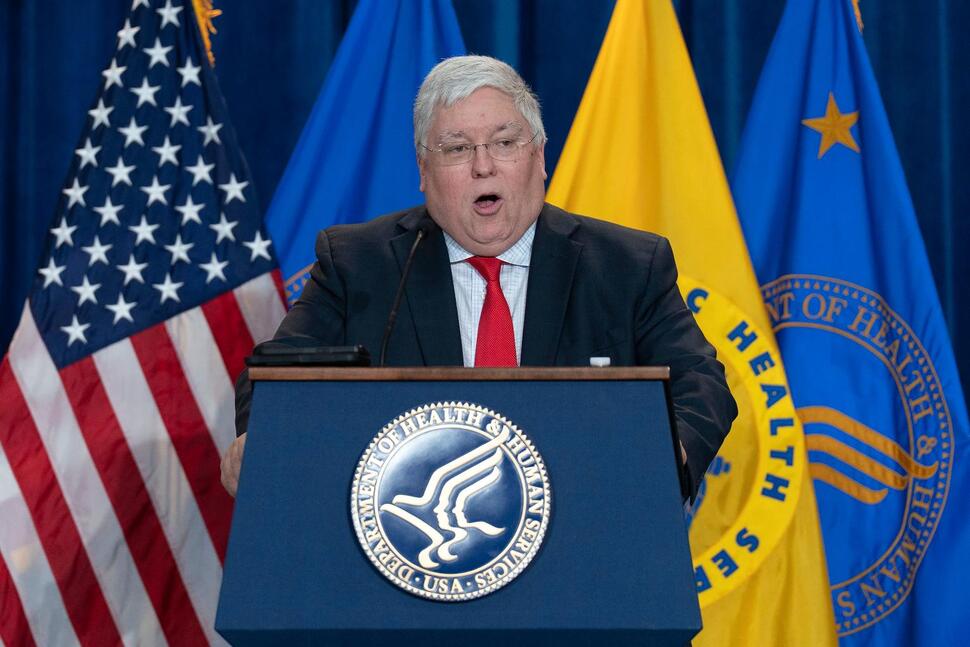
Gov. Patrick Morrisey vetoed a handful of bills meant to help vulnerable West Virginians just days after signing a 5% reduction to the personal income tax.
But the governor balked at the expense of providing help for foster children aging out of the system, home blood pressure monitoring to Medicaid patients or research into new drug treatment options.
In all, he vetoed a dozen bills.
Both the bill to help foster kids transition out of care and another vetoed bill, focused on preventing them from ending up there, would likely have saved the state money in the long run.
The foster care transition bill — which passed both the House and Senate with nearly unanimous approval — would have expanded a statewide pilot program that offers former foster kids help with independent living, finding work, or enrolling in higher education.
Morrisey’s Department of Human Services estimated the bill would cost about $11 million when fully implemented. Morrisey wrote in his veto letter that the bill “contains uncontrollable cost drivers.”
“The problem is that the bill requires the Department of Human Services to expand services that are already being offered through its Independent Living and Transitional Living programs, and this expansion will cost at least $5,000,000 in the first year,” he wrote.
As bill sponsor Del. Adam Burkhammer, R-Lewis, pointed out during a February committee meeting, not providing these kids with support now will likely mean more expensive problems in the future.
“If we’re not going to support housing them here, there’s a high probability we’re going to be housing them in one of our jails or prisons,” he said.
While he didn’t cite cost as a reason, Morrisey also vetoed a bill aimed at preventing kids from entering foster care in the first place.
“An economic need does not translate to abuse and neglect, and it is disconcerting to see that kind of linkage here. The insertion of the state into the family should only occur when children are truly at risk,” he wrote.
But research does show that impoverished families are more likely to have their kids removed, because poverty is often misperceived as neglect. That’s why researchers often advocate for measures that raise families out of poverty as a way to help overall child welfare.
“I think anti-poverty policy is child protection policy,” UC-Irvine sociology professor Kelley Fong told Mountain State Spotlight earlier this year.
Every year, more than 1,000 West Virginia kids are removed from their parents solely because of neglect, according to federal data. Another 200 are removed only because of inadequate housing.
The governor also vetoed legislation that mandated the release of funds collected by the state’s medical marijuana program, $5 million of which would have funded a commission to help with thousands of child abuse and neglect court cases.
Morrisey’s office said that his administration is trying to both meet needs of vulnerable populations and cut taxes. He said several vetoes were because costs of the programs were open-ended or lacked a clear focus.
“Families are dealing with higher costs across the board and letting them keep more of what they earn is one of the most direct ways we can help,” spokesman Lars Dalseide wrote in an email.
This story was originally published by Mountain State Spotlight and distributed through a partnership with The Associated Press.
Copyright 2026 The Associated Press. All rights reserved. This material may not be published, broadcast, rewritten or redistributed.
Photos You Should See – April 2026
