By Nolan D. McCaskill and David Morgan
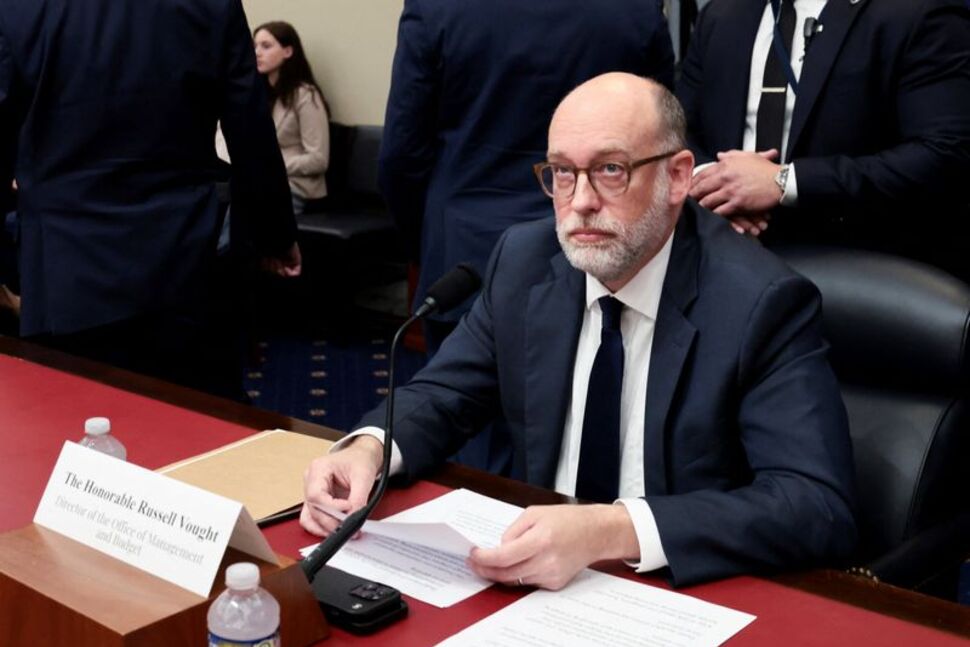
WASHINGTON, April 15 (Reuters) – White House budget director Russell Vought said on Wednesday he could not estimate the cost of the Iran war, as he defended President Donald Trump’s request for a massive $1.5 trillion annual military budget against bipartisan criticism from U.S. lawmakers who cited the Pentagon’s historic lack of financial accountability.
“We’re not ready to come to you with a request. We’re still working on it. We’re working through to figure out what’s needed,” Vought told a hearing of the House of Representatives Budget Committee. “I don’t have a ballpark.”
The cost of the war with Iran, which Trump began alongside Israel on February 28, has remained an open question on Capitol Hill. An initial $200 billion request for additional funding for the war met with stiff opposition in Congress last month.
Vought appeared before the panel to discuss Trump’s proposed budget for fiscal year 2027, with its $500 billion increase in military spending and 10% reduction for non-defense programs.
The request is intended to reflect Republican priorities heading into the November midterm elections, in which Trump’s Republicans hope to retain control over the House of Representatives and the Senate but face growing public concern about the cost of living, energy prices and the U.S.-Israeli war with Iran.
Democrats took issue with Vought’s assertions that healthcare, education and low-income energy assistance programs were marred by fraud.
“I’m so glad you asked about fraud, because you are coming back to ask for a $1.5 trillion budget for the Department of Defense,” Democratic Representative Pramila Jayapal of Washington state told the budget director. “The Department of Defense is the only federal agency that has never passed an audit … But you’re not going after any of that.”
Vought said the administration is pursuing “inefficiencies” at the Pentagon.
“I don’t think you’re doing enough,” said Republican Representative Glenn Grothman, who called for a Pentagon audit to be completed before Congress votes on defense spending.
“There is so much arrogance in that agency,” added Grothman, of Wisconsin. “They just say we don’t have to do it on audit. We’re so damn important. We don’t care what Congress thinks.”
Vought promoted Trump’s budget proposal for the fiscal year beginning October 1 as aimed at reducing spending. He promoted Trump’s 2025 tax-cut-and-spending package known as the “One Big Beautiful Bill Act” as an initiative that achieved $2 trillion in mandatory savings through cuts to Medicaid health coverage and food assistance to low-income families.
That bill, which extended 2017 tax cuts, will add $4.7 trillion to U.S. deficits over the next decade, while reduced immigration will add another $500 billion, according to the nonpartisan Congressional Budget Office.
Representative Brendan Boyle of Pennsylvania, the budget panel’s top Democrat, pointed to forecasts saying the legislation’s healthcare cuts would mean the loss of health coverage for more than 15 million people. Vought said they were able-bodied adults, people in the country illegally or ineligible for benefits.
“You’re going to sit here with a straight face and say they’re all illegals? They were all defrauding the system? That’s actually your position?” Boyle asked.
Democratic Representative Scott Peters of California pointed out to Vought that the watchdog Government Accountability Office has found the administration illegally withheld billions of dollars allocated for National Institutes of Health grants, public schools and Head Start early education programs nationwide.
“Do you dispute GAO’s findings?” Peters asked.
“Yes. GAO is typically wrong. They’re very partisan,” Vought replied.
To become law, Trump’s proposed budget needs approval from Congress at a time when Republicans are trying to overcome Democratic opposition to funding for Trump’s immigration crackdown, just months after the longest government shutdown in U.S. history. Democrats have already declared the budget proposal dead on arrival, leaving government funding to closed-door negotiations between appropriators.
(Reporting by Nolan D. McCaskill and David Morgan; writing by David Morgan; editing by Scott Malone, Rod Nickel)
Copyright 2026 Thomson Reuters.